
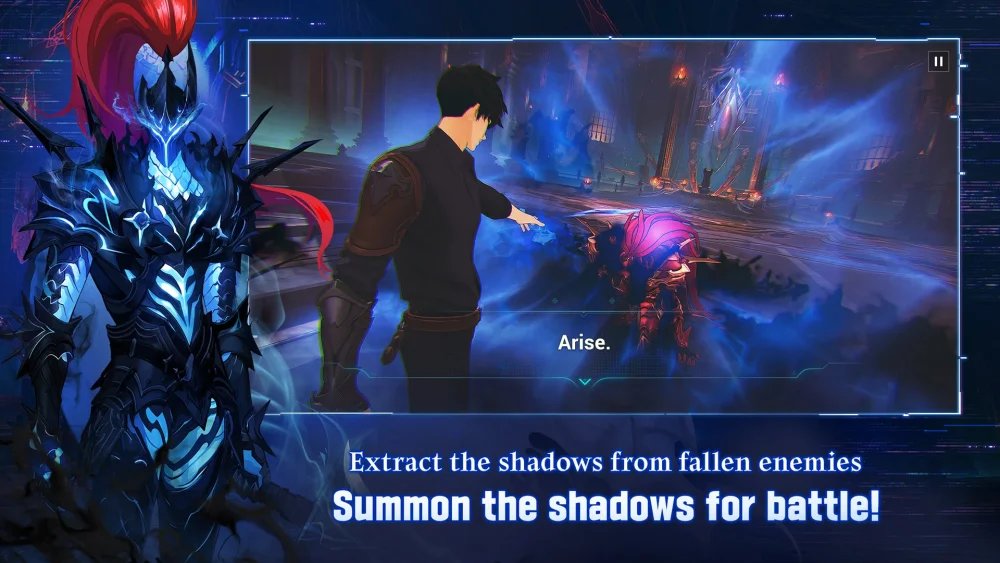
To dominate the battlefield in Solo Leveling:Arise, your build for Sung Jinwoo must prioritize offensive scaling. The most effective approach is to dump the vast majority of your stat points into Strength for base attack power and Agility to ensure consistent critical hits. By balancing these primary stats with high-tier Attack and Critical Hit Damage gems, you can clear late-game content, raid bosses, and challenge stages significantly faster.
The Optimal Stat Distribution Strategy
Stat management in Solo Leveling:Arise is the foundation of your power. As you level up, you gain points to allocate into four categories: Strength, Vitality, Agility, and Perception. For the vast majority of players, the offensive "glass-cannon" route is the only viable path for end-game progression.
- Strength (The Top Priority): This is your primary damage driver. Every point here increases your raw Attack power. For most of your progression, you should keep Strength at the maximum possible level allowed by your current player level.
- Agility (The Critical Multiplier): Once your Strength is capped for your level, dump your remaining points into Agility. Agility increases your Critical Hit Rate. In Solo Leveling:Arise, consistent crits are essential for triggering weapon-specific passives and maximizing your DPS during the "Shadow Step" windows.
- Why Skip Vitality and Perception? Vitality provides raw HP, which is redundant if you master the game’s "Perfect Dodge" mechanic. Perception increases your minimum damage and damage variance, but it does not scale your total power as effectively as pure Strength and Agility. If you are struggling with survivability, the solution is to practice your dodge timing rather than sacrificing your damage stats.
Mastering Gem Socketing for Sung Jinwoo
Gems are the "force multipliers" of your gear. While stats provide your base, gems act as the final modifier that pushes your combat power into the top tier.
Recommended Gem Priority
- Attack Gems: These are non-negotiable. Always aim for the highest rank Attack gem you can craft or obtain.
- Critical Hit Damage Gems: Once your Critical Hit Rate is stable (ideally between 40-50% through gear and Agility), shift your focus to Critical Hit Damage. This ensures that your crits hit for massive numbers.
- Critical Hit Rate Gems: Use these only if your current gear sets are failing to reach the 40% threshold.
Socketing Best Practices
Never leave a gem slot empty. Even lower-tier gems provide a percentage boost that outclasses having an empty slot. When socketing, aim for Consistency. It is better to have a uniform set of mid-tier gems across all your artifacts than to have one "perfect" gem and several empty sockets. Always prioritize upgrading your Attack gems first, as they provide the most reliable return on investment for every encounter in the game.
Weapon and Artifact Synergy
Your stat distribution is only as strong as the gear it supports. In Solo Leveling:Arise, your weapons and artifacts must complement your stat choices.
- Weapon Scaling: Check your primary and secondary weapons. If a weapon scales heavily off a specific stat, ensure your build matches that. Most top-tier weapons favor high Attack and Crit values.
- Artifact Substats: While your main stat points provide the base, your artifact substats are where you find your "hidden" power. Look for artifacts that roll with Attack %, Critical Hit Rate, and Critical Hit Damage. If you have a high-strength build but your artifacts are all focused on Defense or HP, your total combat power will stagnate.
- Set Bonuses: Always prioritize the set bonus of your artifacts over individual piece stats early on. A well-synergetic 4-piece set is often better than four high-stat pieces that don't belong to the same set.
Tactical Trade-offs: When to Pivot
The offensive-focused build requires a high level of mechanical skill. Because you are sacrificing defensive stats, you have a smaller margin for error.
- The "Glass Cannon" Reality: In high-level Workshop of Brilliant Light runs, one mistake can result in a defeat. If you find yourself getting "one-shot" by bosses, do not immediately respec into Vitality. Instead, audit your playstyle. Are you using your dash to greed for extra hits? Are you utilizing your support hunters' abilities to break shields during boss ultimates?
- When to Adjust: The only time you should consider deviating from the Strength/Agility split is when you encounter a specific stage with a hard DPS check that you cannot pass even with perfect execution. In these rare instances, swapping to a set with slightly more defensive substats can help you survive long enough to finish the fight, but your main stat points should ideally remain on the offensive path.
Long-Term Progression and Resource Management
Solo Leveling:Arise is a marathon, not a sprint. Your power will grow incrementally.
- Audit Your Progress: Every time you hit a wall in the story or a dungeon, re-evaluate your gear. Are your gems at the highest rank available to you? Are your artifact substats aligned with your build?
- Resource Allocation: Focus your gold and upgrade materials on your weapons and gems first. These provide the most permanent power increases. Artifacts can be fickle due to RNG, so save your reroll materials for gear that already has 2-3 desirable base stats.
- Practice: Use the training room to test your rotation. Understanding how your chosen weapons interact with your stats allows you to squeeze out an extra 10-15% damage without needing to upgrade a single piece of gear.
By keeping your focus on Strength and Agility, and by methodically upgrading your gem sockets, you ensure that every resource spent in Solo Leveling:Arise contributes to a more powerful Sung Jinwoo. Stay aggressive, master your dodges, and keep your gear aligned with your primary damage stats to climb the ranks.

Free Solo Leveling:Arise Codes
Current active codes and how to redeem them.

James Brown
James focuses on Android gaming on PC, emulator setup, controls, performance tuning, and practical troubleshooting for longer play sessions.
COMMUNITY
Player Comments
25 players commented on this guide.
The explanation is clear, especially for beginners.
This helped me understand strategy much better.
The tips are practical and easy to follow.
I wish I had read this before upgrading the wrong thing.