
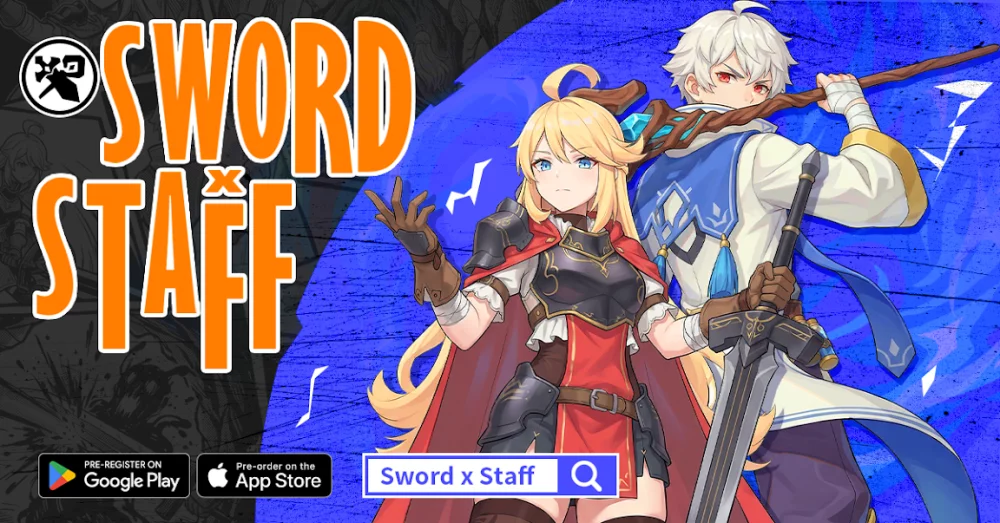
Pick Sword in Sword x Staff if you prefer durable close-quarters combat, forgiving defense against boss mechanics, and straightforward survivability. Pick Staff if you prefer clearing mob waves quickly with ranged area-of-effect spells, managing enemy spacing with crowd control, or supporting allies through healing.
Your starting weapon establishes your engagement range, defensive margin for error, and subsequent class advancement options.
Melee Resilience vs. Ranged Spellcasting
The primary distinction between the two weapons lies in combat range and baseline survival:
- Sword: Focuses on close-range physical engagement. The weapon provides higher innate health scaling and defensive resilience. Melee attacks land consistently without demanding precise positioning, allowing you to absorb boss shockwaves and mistake penalties during high-deficit campaign stages.
- Staff: Focuses on long-range elemental damage and spatial control. Spells wipe out large enemy clusters before they close the distance, significantly accelerating wave-farming speed. However, lower baseline health and physical defense mean that out-of-position casters face rapid defeat if advancing elites break through your crowd control.
Sword Advancement Paths: Knight vs. Fighter
Progressing with Sword branches into two specialized roles:
- Knight (Defensive Tank): Focuses on physical defense, shielding, and crowd-control stuns. Knights manage boss aggro and absorb burst damage, creating safe windows for party members in cooperative dungeons. Their single-target kill speed is lower, requiring steady damage output to avoid running out of time against boss enrage timers.
- Fighter (Melee Brawler): Converts durability into offensive power through critical strikes, rapid gap closers, and life leech. Fighters burn through single-target boss health pools efficiently during solo play, but they trade away the Knight's team mitigation shields.
Staff Advancement Paths: Sorcerer vs. Sage
Progressing with Staff branches into two distinct magic roles:
- Sorcerer (Area Damage): Focuses on screen-wide offensive spells to eliminate regular enemy packs in seconds. Sorcerers provide the fastest clear times for farming and resource dungeons, but they require active kiting and defensive timing against bosses that possess gap-closing attacks.
- Sage (Hybrid Support): Combines offensive elemental spells with party buffs and regenerative healing shields. Sages trade away instantaneous burst damage for high self-sustain, making them durable solo pushers and stable co-op teammates.
Starting Class Comparison
| Weapon & Path | Primary Role | Core Stat Priority | Mob Clearing | Boss Safety | Team Function |
|---|---|---|---|---|---|
| Sword (Knight) | Frontline Tank | Defense, Max HP, Block | Moderate | Very High | Main Tank & Aggro Control |
| Sword (Fighter) | Melee Brawler | Physical Attack, Crit, Penetration | Moderate | High | Secondary Melee DPS |
| Staff (Sorcerer) | Ranged Nuker | Magic Attack, Crit, Cooldown | Exceptional | Moderate | Primary AoE Damage Carry |
| Staff (Sage) | Hybrid Caster | Magic Attack, Heal Power, Cooldown | Fast | High | Buffer, Healer & Support |
How to Make Your Decision
Base your starting weapon on how you want to handle early campaign roadblocks:
- Choose Sword if you want low-stress progression where defensive stat rolls directly prevent stage wipes, allowing you to clear challenging boss content steadily through attrition.
- Choose Staff if you want maximum early farming efficiency and plan to invest in offensive stat thresholds to destroy enemy waves before they can reach your backline.

Free Sword x Staff Codes
Current active codes and how to redeem them.

James Brown
James focuses on Android gaming on PC, emulator setup, controls, performance tuning, and practical troubleshooting for longer play sessions.
COMMUNITY
Player Comments
82 players commented on this guide.
The explanation is clear, especially for beginners.
I wish I had read this before upgrading the wrong thing.
Can you add more details about strategy in a future update?
This helped me understand strategy much better.