
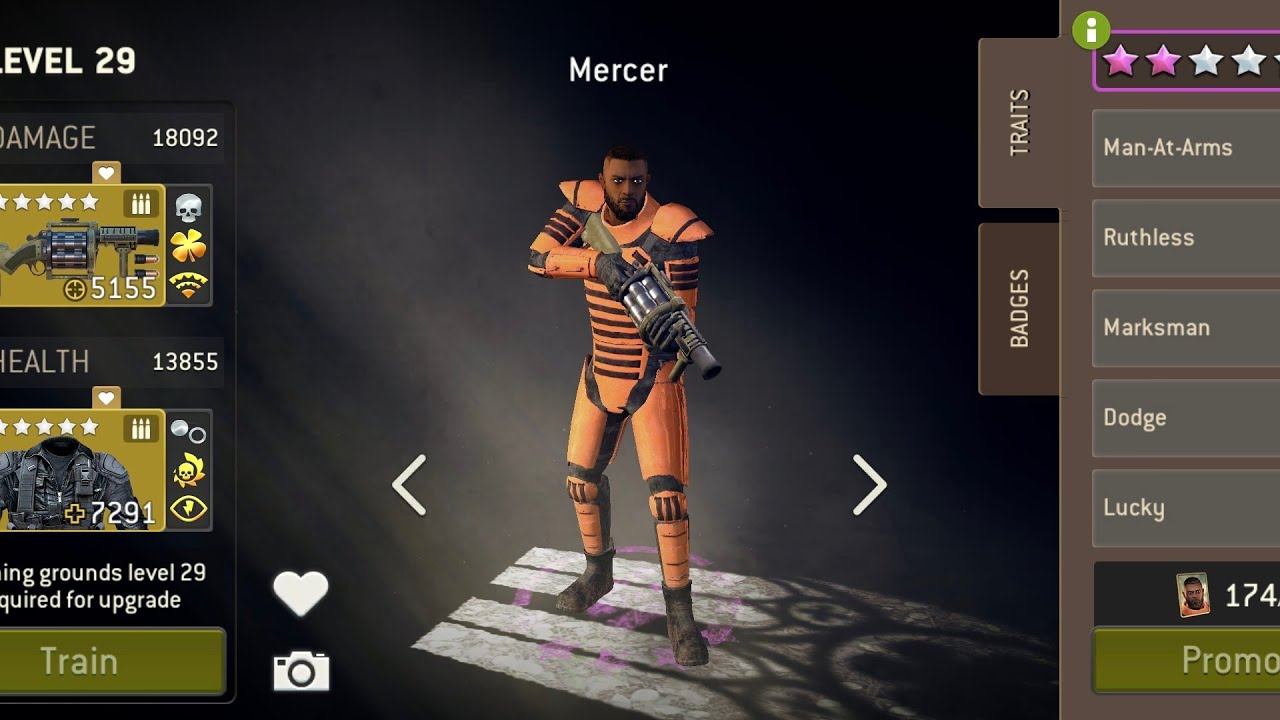
In The Walking Dead No Man's Land, a Hero is far more than just a high-stat combatant. While standard survivors fill roles based on their class, Heroes act as force multipliers. The core of their power lies in their Leadership Skills—passive, squad-wide buffs that can shift the meta of a mission from a desperate struggle for survival to a clinical clear. Mastering the selection and deployment of these Heroes is the single most important tactical decision you will make in the game.
The Mechanics of Leadership Skills
A Hero’s true value is determined by their Leadership skill rather than their raw damage or health stats. These skills are global, passive effects that trigger automatically when the Hero is placed in your squad. Because these buffs are permanent for the duration of the mission, they represent a massive mathematical advantage that standard survivors simply cannot provide.
Leadership skills generally fall into three categories: Offensive, Defensive, and Utility. Understanding these is the first step toward building a top-tier squad:
- Offensive Skills: These typically boost critical hit chances, damage output, or attack speed for specific classes or the entire team.
- Defensive Skills: These focus on damage mitigation, dodge probability, or health regeneration, providing a buffer against overwhelming walker swarms.
- Utility/Survival Skills: These include buffs that increase movement speed, provide resource drops, or enhance survivability during specific environmental conditions.
Always check the trigger condition of a skill. Some apply globally from the moment the mission starts, while others may require the Hero to be within a certain distance of an enemy or for the squad to maintain a specific formation.
Selecting Heroes for Offensive Synergy
If your goal is to speed-clear campaign chapters or maximize your score in seasonal events, offensive-focused Heroes are mandatory. These characters allow you to push the boundaries of your damage output, often allowing you to one-shot threats that would otherwise require multiple turns to eliminate.
When building an offensive squad:
- Identify the Class Constraint: Many powerful Heroes provide buffs only to specific classes (e.g., "Shooters gain +10% Crit Chance"). Build your team around this constraint. If your Hero buffs Shooters, your remaining four slots should be filled with high-level Shooters.
- Manage the Fragility: Offensive builds often lack defensive sustainability. You must play aggressively, using your superior reach and damage to clear walkers before they enter your "danger zone."
- Prioritize Target Priority: Use your boosted damage to focus on high-threat targets like Riot Gear Walkers or Armored Walkers, as your lack of defensive buffs makes prolonged engagements risky.
Mastering Defensive and Sustain Strategies
For high-difficulty missions, such as the Last Stand mode or late-game story chapters, defensive Leadership skills are your best friend. These skills essentially provide a "safety net," allowing your survivors to survive hits that would otherwise result in a "downed" state.
Focus on these key defensive metrics:
- Damage Reduction: Heroes who provide flat percentage reductions to incoming damage are the gold standard for tanky squads.
- Dodge and Evasion: High dodge chances allow your Scouts and Assault units to reposition safely. This is vital when you are forced to move through tight corridors surrounded by walkers.
- Regeneration: Passive healing is rare and precious. Heroes who provide health recovery allow you to sustain your team throughout long, multi-stage missions, reducing the need to rely on limited medical supplies.
Balancing Squad Composition
The most common mistake beginners make in The Walking Dead No Man's Land is forcing a "diverse" team that lacks synergy. A squad composed of one of every class is often weaker than a specialized squad built to maximize a single Hero's Leadership skill.
Step-by-Step Optimization:
- Audit Your Roster: Look at your most upgraded Heroes. Note their specific Leadership buff.
- Filter by Class: Sort your survivor list by the class that benefits from your Hero's buff.
- Evaluate Passive Overlap: Ensure your chosen survivors also have useful passive traits. If your Hero grants a crit buff, look for survivors who also have crit-based personal traits.
- Test the Formation: Run a simulation mission. Does the buff feel impactful? If you find yourself consistently taking damage, consider swapping an offensive-class unit for a support-focused unit, even if the synergy isn't 100% perfect.
Avoiding Common Mistakes
Even experienced players fall into traps that limit their growth. Avoid these common pitfalls to keep your progression on track:
- Over-Investing in Too Many Heroes: Upgrading a Hero requires rare tokens and resources. Do not try to level every Hero you pull. Focus on one "anchor" Hero for each primary playstyle (one defensive, one offensive).
- Ignoring the Meta Shifts: The game receives regular updates. A Hero who was top-tier last year may have been nerfed or power-crept by newer characters. Regularly check the Hero info screen to ensure your favorite unit hasn't had their percentages adjusted.
- Neglecting Positioning: Leadership skills are powerful, but they aren't magic. Even with a massive defensive buff, placing a weak unit in the middle of a walker horde will lead to death. Use your knowledge of the Hero's buff to determine how you move, not just who you bring.
Strategic Decision Making: When to Adapt
There will be missions where your primary, "meta" squad fails. In these instances, you must be willing to pivot. If a mission features environmental hazards that drain health, switch to a Hero with a recovery or survival-based Leadership skill. If the mission is a "hold the line" objective, drop your offensive Hero for one that provides armor or health buffs.
Remember that Shiva and Dog are unique additions to your team. While they function differently than human survivors, they also benefit from the broader squad synergy created by your Hero. Treat them as key components of your total output, and ensure your Hero’s Leadership skill accounts for their unique movement patterns.
By treating your Hero not just as a unit, but as the foundation of your squad’s tactical identity, you will find that The Walking Dead No Man's Land becomes significantly more manageable. Focus on synergy, play to your Hero's specific strength, and always prioritize the passive math that keeps your survivors alive and your damage output high.
Free The Walking Dead No Man's Land Codes
Current active codes and how to redeem them.

Emily Johnson
Emily writes practical mobile strategy guides with a focus on resource planning, base progression, and the early decisions that shape a long-term account.
COMMUNITY
Player Comments
88 players commented on this guide.
This guide answered the exact question I had.
I wish I had read this before upgrading the wrong thing.
I tried this today and it worked better than my old setup.
Can you add more details about heroes in a future update?