
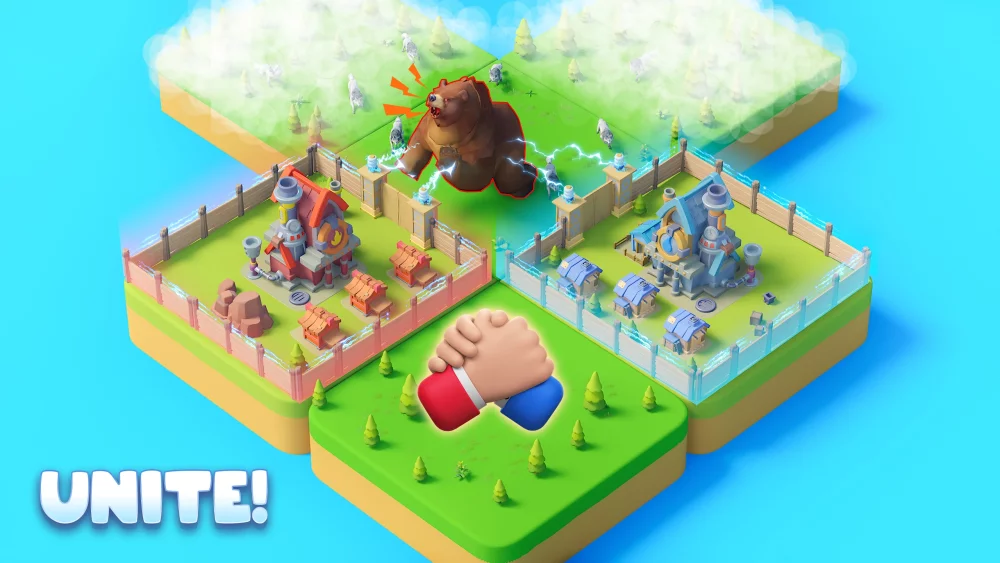
To survive the increasingly chaotic landscapes of Tiles Survive!!, you must shift your mindset from reactive jumping to rhythmic synchronization. The game is not merely a test of reflexes; it is a high-tempo survival management challenge where the grid itself acts as an instrument. By aligning your inputs with the EDM-driven audio cues and mastering proactive pathing, you can turn seemingly impossible sequences into repeatable patterns.
The Foundation of Grid Traversal: Proactive Pathing
The most common mistake players make in Tiles Survive!! is focusing on the tile directly beneath their feet. This "micro-vision" creates a cycle of panic, where you are forced to react to disappearing tiles at the last possible millisecond. To excel, you must adopt a "far-look" strategy.
- The Three-Tile Rule: Always scan at least three tiles ahead of your current position. This gives you a mental map of the upcoming gaps and allows you to adjust your trajectory before a tile begins to shake or fade.
- Identify the Anchor: In every EDM track, there are "anchor" tiles—tiles that pulse with the bass or remain lit throughout a complex sequence. Identify these early to use them as staging grounds if you need to pause your movement to regain your rhythm.
- Edge-Bias Strategy: When the grid becomes cluttered with hazards, prioritize the outer edges of the play area. Center-grid movement often exposes you to multiple crumbling zones simultaneously; the edges provide a cleaner, more predictable path for navigating around obstacles.
Synchronizing with EDM Rhythm Mechanics
In Tiles Survive!!, the music is your HUD. The developers have synced the structural changes of the grid—such as tile collapse or shift—directly to the beat of the soundtrack. If you are playing without sound, you are missing half the data required for survival.
- Listen for the "Drop": The most dangerous shifts in the environment usually coincide with the musical drop or a change in percussion. Anticipate these moments by increasing your movement speed slightly just before the beat kicks in.
- The "Percussion Input" Method: Treat your taps or swipes as an extension of the music. If the track is a fast-paced 128 BPM, your inputs should feel steady and percussive. If you are playing "off-beat," you are fighting the game’s design rather than flowing with it.
- Isolate and Analyze: If a specific level is consistently ending your run, mute the music and watch the tiles. Once you understand the visual pattern, turn the volume back up to "feel" the sync points. This dual-layer training—visual analysis followed by auditory integration—is the fastest way to master difficult tracks.
Managing Reflex Fatigue and Input Precision
Tiles Survive!! is a high-intensity experience that demands high cognitive load. After 15–20 minutes of intense gameplay, your synaptic reaction time naturally declines. Managing this "reflex fatigue" is the key to pushing for high scores.
- Burst Sessions: Break your gameplay into "focus bursts" lasting no longer than 15 minutes. Step away from the screen for at least two minutes between sessions to reset your focus.
- Ergonomic Consistency: Ensure your mobile device is held at a consistent angle. Subtle shifts in how you grip the device can change the effective "drag distance" of your thumb, leading to overshooting or undershooting your jumps.
- The "Reset" Threshold: If you find yourself missing jumps that you previously mastered, stop playing immediately. This is a physiological indicator that your brain is no longer tracking the rhythm accurately. Pushing through this fatigue will only reinforce poor timing habits.
Navigating Environmental Hazards
Beyond the standard rhythmic disappearances, Tiles Survive!! introduces dynamic hazards that require specific movement strategies. Recognizing these threats before they trigger is essential for long-term survival.
- Crumbling Tiles: These tiles have a distinct visual "cracked" animation before they vanish. If you see a cluster of these, do not linger. Plan a path that utilizes them as temporary stepping stones rather than permanent platforms.
- Syncopated Patterns: Occasionally, the game will throw off-beat obstacles at you to break your rhythm. When the pattern feels "wrong," stop trying to time it to the main melody and focus strictly on the visual indicators of the tiles themselves.
- Pattern Loops: Many levels feature repeating sequences. Once you successfully navigate a difficult segment, attempt to memorize the sequence of movements required to clear it. Most Tiles Survive!! challenges follow a 4-bar or 8-bar loop structure; once you identify the loop, you can "autopilot" through the sequence.
Comparison: Reactive vs. Rhythmic Play
Understanding the difference between reactive and rhythmic play is vital for progressing through the game's difficulty tiers.
| Feature | Reactive Play | Rhythmic Play |
|---|---|---|
| Input Style | Panic-based, erratic | Steady, percussive |
| Focus | The tile beneath you | The path ahead |
| Outcome | High failure rate on fast beats | High consistency on all beats |
| Mental State | High stress, "tunnel vision" | Flow state, calm |
Final Strategy: The Art of the "Safe Pivot"
The most advanced maneuver in Tiles Survive!! is the "Safe Pivot." This involves using a quick, controlled swipe to change your direction on a single tile just before the beat strikes. This is useful when the path ahead is blocked, and you need to stall for a fraction of a second to wait for a tile to respawn or a hazard to clear.
By mastering the timing of the pivot, you gain the ability to navigate tight corners and complex mazes that would otherwise force a restart. Remember: the goal is to survive the music, not just the grid. Keep your movements intentional, listen to the rhythm, and prioritize the long-term path over the immediate jump. With these strategies, you can transition from a casual player to a high-score survivor in Tiles Survive!!.

Free Tiles Survive! Codes
Current active codes and how to redeem them.

Sarah Williams
Sarah specializes in RPG and collection games, explaining team building, character growth, and beginner-friendly ways to avoid expensive early mistakes.
COMMUNITY
Player Comments
67 players commented on this guide.
I tried this today and it worked better than my old setup.
This helped me understand strategy much better.
Nice guide. I am checking the other Tiles Survive! articles next.
The explanation is clear, especially for beginners.