
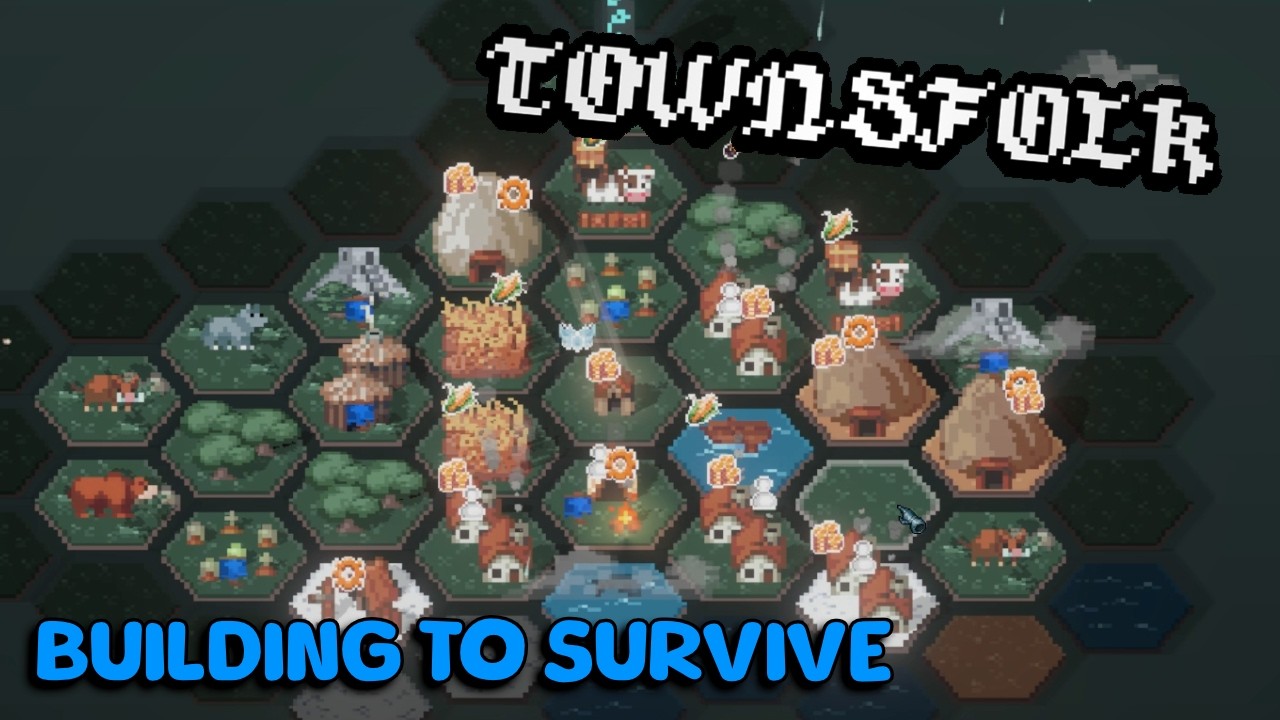
To survive and satisfy the King in the TownsFolk demo, you must establish tight logistical loops, scout surrounding sectors cautiously, and maintain production buffers before royal deadlines appear. Pushing borders outward without securing food and material reserves quickly stalls your settlement.
Early Build Order and Labor Allocation
Settlers spend a large portion of their work cycle hauling goods between harvest sites and storage. Minimizing walk distances is essential to avoid early bottlenecks. Place your town center and storage hubs near dense timber and surface stone.
Assign roughly two-thirds of your starting labor force to raw resource extraction, keeping the remaining workers free to clear land and construct basic buildings. Follow this opening construction sequence:
- Primary Storehouse: Position this centrally between raw resource deposits and planned housing plots to minimize transit times.
- Lumber Camp: Build directly along the edge of the densest tree line to maintain quick timber harvesting for building and fuel.
- Forager's Hut or Food Gathering Post: Target nearby berry bushes or fishing spots to generate immediate sustenance before establishing farms.
- Basic Shelters: Erect housing early to protect settlers from harsh weather, which otherwise causes health and morale penalties.
Hold off on advanced refining buildings until basic food and timber flows operate continuously without manual oversight.
Scouting New Sectors Safely
Uncovering map tiles reveals necessary resources, potential trading partners, and landmarks, but pulling workers away from labor drains your production.
- Scout adjacent perimeter tiles first: Clear the fog immediately surrounding your town center to locate fertile soil, stone quarries, and iron nodes.
- Stop at hazards: If a scout detects hostile fauna nests or dangerous terrain, halt expansion in that direction until you have defensive structures or watchtowers ready.
- Build forward depots: When expanding into a claimed sector far from your town center, construct an outpost or secondary collection depot. Without localized storage, workers spend entire shifts walking across multiple map tiles to deliver raw stone or wood.
Fulfilling Royal Tribute Demands
The King periodically issues decrees requiring deliveries of specific goods within a strict time limit. Failing to meet these demands damages royal standing, triggering penalties such as punitive taxes or reduced supply drops.
Track the royal deadline timer on your settlement ledger as soon as a decree arrives. Do not wait for the courier to start gathering items. Maintain a permanent stockpile buffer using the following targets:
| Demand Category | Target Stockpile Buffer | Primary Facilities | Common Pitfall |
|---|---|---|---|
| Raw Timber & Stone | 30% to 40% above domestic use | Lumber Camps, Quarries | Deforesting nearby plots and increasing walk times |
| Grain & Harvest Crops | 1 full season of reserves | Farms, Crop Plots | Scheduling harvests too late in the seasonal cycle |
| Processed Goods | 15 to 20 surplus units | Sawmills, Masonry Workshops | Depleting raw materials needed for base construction |
If a decree requests refined goods, calculate your refinery throughput against the deadline timer. For example, if two sawmills produce four planks per cycle and the King demands twenty planks with five cycles remaining, immediately reassign workers from raw extraction to processing and pause nonessential construction projects.
Preventing Settler Attrition and Expansion Traps
Settlers who lack food, shelter, or heat suffer severe productivity penalties. Starving or freezing workers abandon their designated tasks to seek food or warmth independently, which collapses automated supply chains.
- Diversify food sources: Basic foraging prevents early starvation, but long-term reliance on a single food item triggers malnutrition. Combine wild berries, fish or meat, and farmed crops to maintain worker health and productivity.
- Gate population growth: Each new house creates room for population growth. Only construct additional shelters when your food reserves reliably cover at least two full cycles of consumption.
- Pave transport routes: Lay roads between distant extraction outposts and your central storehouses to increase movement speeds.
- Monitor haulers over extraction camps: If production slows down, verify whether existing storehouses are full or too far away. Adding more lumber camps or quarries will not increase output if existing materials sit uncollected due to a shortage of dedicated haulers.

Free TownsFolk Codes
Current active codes and how to redeem them.

Sarah Williams
Sarah specializes in RPG and collection games, explaining team building, character growth, and beginner-friendly ways to avoid expensive early mistakes.
COMMUNITY
Player Comments
98 players commented on this guide.
Good guide for TownsFolk players. The strategy part was useful.
I tried this today and it worked better than my old setup.
This saved me time in the early game.
Nice guide. I am checking the other TownsFolk articles next.