
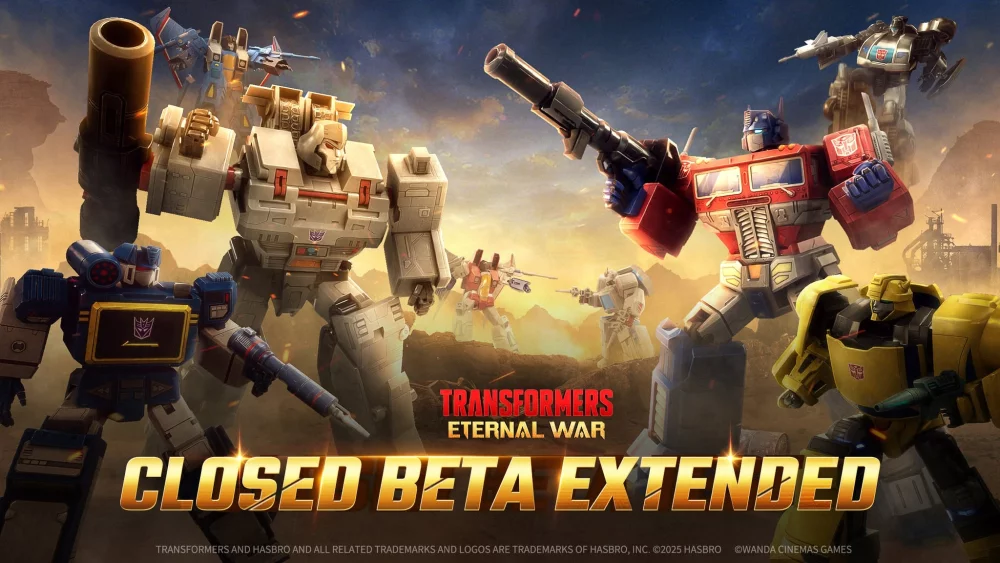
In Transformers: Eternal War, the Ultrabee combiner represents the pinnacle of squad-based tactical gameplay. By merging four individual Autobot units into a single, massive entity, players can shift the tide of battle, turning a disadvantageous skirmish into an overwhelming display of force. Mastering the Ultrabee is not just about raw power; it is about understanding the mechanical synergy, the risks of the transformation sequence, and the long-term investment required to keep your combiner viable against the Chaos Legion.
The Foundation: Building the Ultrabee Squad
The Ultrabee is not a single character you unlock; it is a mechanical state achieved by fielding four specific compatible units. To deploy this combiner, your active squad must contain all four components simultaneously.
The most common mistake players make is neglecting one of the four units while over-leveling the others. Because the statistics of the Ultrabee are calculated based on the average health, attack power, and defense of its constituent parts, an unbalanced squad leads to a weak, "brittle" combiner.
Expert Tip: Focus on "horizontal progression." When allocating upgrade materials, distribute them equally across all four units. If one component is lagging in gear or level, the entire combiner will suffer, rendering it ineffective against high-level Chaos Legion bosses that require sustained DPS.
Mechanics of the Transformation Sequence
Initiating the Ultrabee transformation is a tactical commitment that requires spatial awareness. When you trigger the combination command, the game initiates a synchronization sequence.
- Field Positioning: Before clicking the combine button, ensure all four units are in close proximity. If units are scattered across the map, the "sync" time increases, leaving your individual robots exposed to enemy fire.
- The Vulnerability Window: During the animation, your units are effectively locked in place. This is a "vulnerability window." Seasoned players wait for the enemy to expend their crowd-control (CC) abilities or high-damage ultimate attacks before committing to the transformation.
- Interrupt Protection: If a unit is suppressed, frozen, or stunned by a Chaos Legion ability, the transformation will fail, and your cooldowns may be wasted. Always clear the immediate area of threats before initiating the fusion.
Tactical Advantages of the Combined Form
Once Ultrabee is active, your team benefits from three primary advantages:
- Consolidated HP Pool: By merging four units, you create a massive health pool that is significantly more difficult to "burst down" than the individual robots. This makes Ultrabee the perfect front-line anchor.
- Unique Ability Set: Ultrabee gains access to abilities that no individual unit possesses. These are typically high-impact Area-of-Effect (AoE) skills designed to clear out waves of smaller enemies or deal massive single-target damage to bosses.
- Increased Durability: The combined form inherently receives a damage reduction buff. This allows you to stand in fire or tank heavy hits that would otherwise destroy your individual units in seconds.
Strategic Trade-offs: When to Stay Divided
The greatest tactical error in Transformers: Eternal War is over-relying on the combiner. Merging your squad into Ultrabee effectively reduces your "map presence" from four points of interest to one.
If you are playing a mission that requires capturing multiple objective points or dealing with enemies flanking from different directions, transforming into Ultrabee is a strategic liability. You become a "glass cannon" in terms of map control—powerful in one spot, but completely absent everywhere else.
Decision Matrix for Players:
- Boss Battles: Merge immediately. The raw damage output and shared health pool are essential for survival.
- Wave Defense: Merge when the screen is crowded. Ultrabee’s AoE capabilities can clear the path for your squad.
- Objective Grabs: Stay divided. Use your four units to cover multiple lanes or capture points simultaneously.
The "De-transformation" Vulnerability
Perhaps the most overlooked mechanic is the state of your units after the Ultrabee form expires. When the duration ends or the combiner is defeated, there is a brief "re-deployment delay." During these few seconds, your units are incredibly vulnerable.
To mitigate this, never trigger the transformation in the middle of a hostile pack. Always pull back to a slightly safer position or ensure that you have backup support units—such as healers or stationary turrets—placed nearby to provide cover while your units recalibrate.
Long-Term Optimization: Gear and Synergy
As you progress through the harder tiers of Transformers: Eternal War, base stats will not be enough. You must look at the synergy between the gear equipped on your four units.
Since the Ultrabee is a "cluster" unit, gear pieces that provide "Aura" buffs—such as +Attack for nearby allies or +Armor for the squad—are exponentially more powerful. When these four units merge, these auras stack and apply to the massive Ultrabee form, creating a feedback loop that can make the combiner nearly invincible.
Summary Checklist for Ultrabee Deployment:
- Check the Squad: Ensure all four components are healthy and present.
- Clear the Area: Eliminate immediate threats to avoid transformation interrupts.
- Assess the Goal: Is map control more important than raw power right now?
- Plan the Exit: Know where your units will land once the combiner expires.
By balancing your resource investment and playing with a clear understanding of when to merge and when to split, you will ensure that your squad remains the most effective force against the corruption spreading across Earth. Mastering the Ultrabee is about knowing that true power lies not just in the combination itself, but in the tactical wisdom of when to unleash it.

Free Transformers: Eternal War Codes
Current active codes and how to redeem them.

James Brown
James focuses on Android gaming on PC, emulator setup, controls, performance tuning, and practical troubleshooting for longer play sessions.
COMMUNITY
Player Comments
66 players commented on this guide.
Good guide for Transformers: Eternal War players. The strategy part was useful.
This helped me understand strategy much better.
The explanation is clear, especially for beginners.
I tried this today and it worked better than my old setup.