
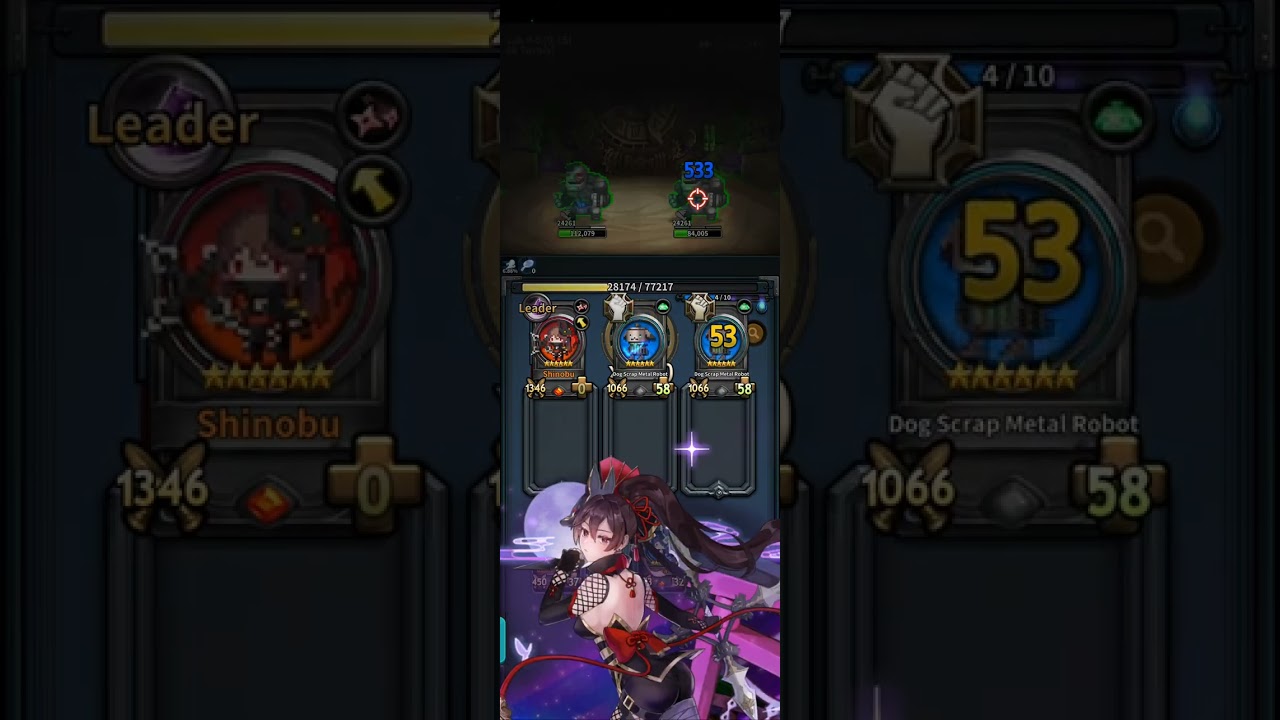
To conquer Lab 9-6 in Triple Fantasy, you must shift your mindset from sustained attrition to high-impact burst execution. This stage serves as a major difficulty spike that tests your understanding of deck synergy, hand management, and the game’s core combat arithmetic. Because the boss possesses advanced defensive mechanics that punish slow, low-impact play, your goal is to identify the precise moment of vulnerability and unleash your maximum potential damage in a single, devastating turn.
Understanding the Boss Threat Level
Lab 9-6 is designed to punish "chipping away" at the boss’s health. The boss utilizes a periodic damage-mitigation shield that renders low-to-mid-range attacks largely ineffective. If you attempt to play standard, balanced hands every turn, you will find your damage output negated, allowing the boss to survive long enough to trigger its high-damage rotation.
The boss's internal "threat meter" increases based on the number of turns taken. The longer the battle persists, the higher the damage output of the boss’s frontline-wiping abilities. To succeed, you must force the boss into its next phase before it can overwhelm your sustain. This requires you to recognize the boss's rhythm: ignore the urge to play every card in your hand, and instead treat your hand as a resource to be stockpiled until the boss drops its guard.
Optimal Deck Composition for 9-6
Standard, general-purpose decks rarely cut it in the higher floors of the Laboratory. For 9-6, your deck should be built around a "hyper-carry" strategy or a synergistic combo core. When selecting your units, prioritize these three categories:
- Massive Damage Multipliers: Look for heroes that provide passive or active buffs to total damage, critical hit probability, or elemental damage amplification. A hero that turns your next two cards into "Critical Hits" is significantly more valuable here than a hero that provides minor healing.
- Card Draw and Cycle Efficiency: Because you are holding out for a "burst turn," you need a deck that can filter through cards quickly. Units that grant extra draws or allow you to discard low-impact cards are essential to ensuring your hand is fully optimized for your big turn.
- Elemental Specialists: The boss will cycle through elemental phases. Ensure your deck contains at least one high-tier unit for each major element so you can capitalize on the boss’s brief windows of elemental weakness.
Strategic Card Sequencing
The difference between a failed run and a victory in Lab 9-6 is the order in which you commit your cards to the battlefield. Because Triple Fantasy relies on combos (3-card sequences, etc.), you must ensure your "setup" cards—those that apply debuffs or increase damage—are played before your high-damage finishers.
The Golden Rule of 9-6: Always calculate your total potential damage before playing. If you play your damage-boosting support cards while the boss has its shield active, you have effectively wasted your win condition. Use early turns to discard trash cards and "dig" for your damage-multiplying combinations. Only when you have a hand containing at least two massive damage dealers and a supporting multiplier should you commit to the board.
Mastering Positioning for Maximum Synergy
In Triple Fantasy, position is not just a tactical choice; it is a mathematical requirement. For Lab 9-6, you should arrange your units to maximize the chaining effect of your abilities.
- Support Placement: Place your units that provide debuffs or buffs in positions that trigger automatically before your heavy hitters.
- Chain Activation: Ensure that your primary damage dealer is positioned to benefit from the maximum number of chains possible. If a unit gains a damage boost from being next to another specific element or type, prioritize that formation, even if it means sacrificing a small amount of defensive coverage.
- Targeting: If the boss has minions, ignore them unless they are actively preventing your main attack from hitting the boss. Your sole objective is to reduce the boss's HP to zero; every card spent on a minion is a card not spent on your win condition.
Troubleshooting and Difficulty Spikes
If you are consistently dying before you can land your burst, it is a sign that your stat floor is too low. Even the best strategy cannot compensate for under-leveled heroes or poor rune optimization.
- Rune Optimization: Prioritize runes that provide flat attack bonuses or critical damage. Defensive stats like HP or evasion are secondary to the raw speed and power needed to end the fight early.
- Hero Levels: Ensure your core burst unit is at the level cap. If you are struggling, spend time in lower-tier dungeons to farm enhancement materials.
- The "Swap" Strategy: If you find yourself consistently missing the kill by a small margin, experiment with swapping one utility unit for a "pure damage" unit. Sometimes, the best defense in Triple Fantasy is simply ending the fight one turn earlier.
Final Decision Making: When to Push
The final component of mastering Lab 9-6 is knowing when to abandon your perfect setup. If you have been waiting for the "perfect" hand for four turns, you might already be too far behind to recover. If the boss's health is low, don't be afraid to pull the trigger on a "good enough" combo rather than waiting for the "perfect" one.
Success in Triple Fantasy requires a balance of cold, hard calculation and the intuition to know when to strike. By focusing on high-burst combinations, optimizing your positioning, and prioritizing offensive runes, you will be able to pierce through the defenses of Lab 9-6 and progress further into the Laboratory.

Free Triple Fantasy Codes
Current active codes and how to redeem them.

James Brown
James focuses on Android gaming on PC, emulator setup, controls, performance tuning, and practical troubleshooting for longer play sessions.
COMMUNITY
Player Comments
50 players commented on this guide.
This helped me understand strategy much better.
I tried this today and it worked better than my old setup.
Good guide for Triple Fantasy players. The strategy part was useful.
I wish I had read this before upgrading the wrong thing.