
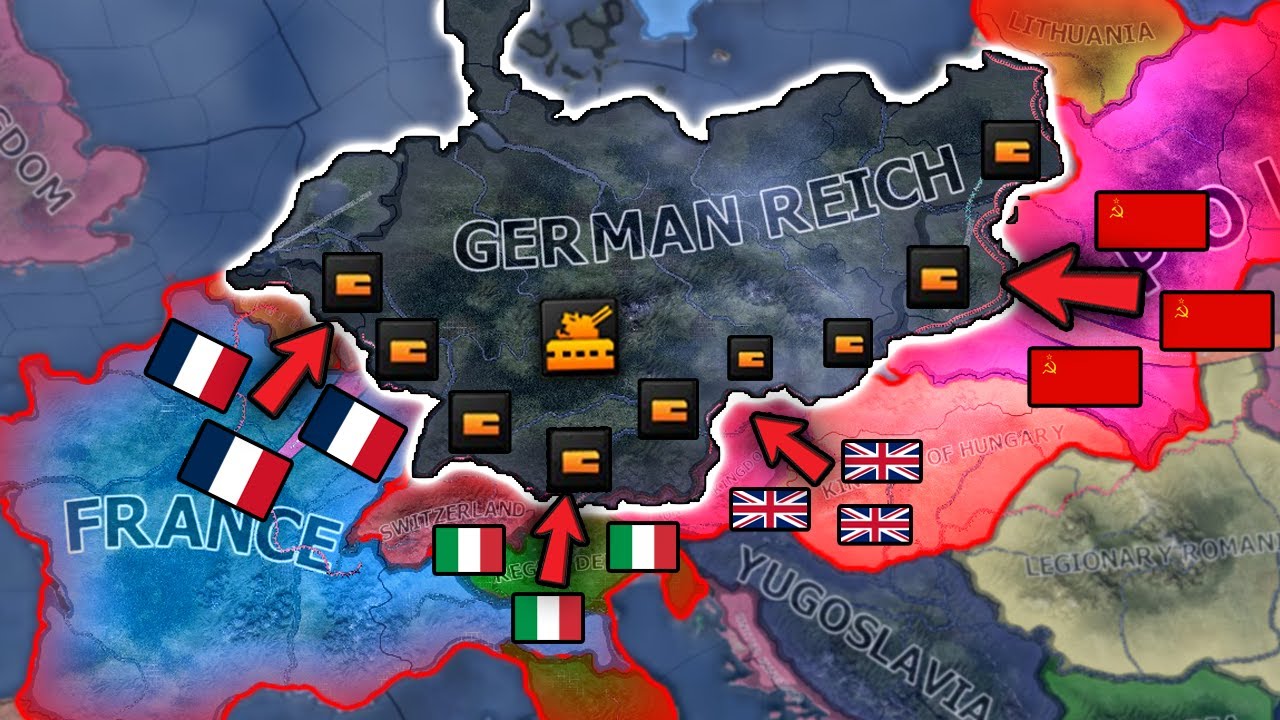
In WW2: Strategy World War Games, the path to victory is not always through rapid expansion. When facing a global coalition or a multi-front war, the most effective strategy is to transition your military into a static, defensive juggernaut. By transforming your borders into an impenetrable "bunker" system, you can force the AI into a meat-grinder scenario, exhausting their manpower and industrial output while your own territory remains untouched.
The Foundation: Prioritizing Border Fortification
The core of a defensive-centric strategy is the construction of land forts along your most contested borders. In WW2: Strategy World War Games, the AI’s pathfinding and aggression often target sectors with lower defensive values. By investing heavily in construction, you can build level 10 land forts, which impose massive combat penalties on attackers.
- Strategic Placement: Focus construction on "choke points" and tiles where the enemy has high troop density.
- The Bunker Effect: High-level forts drastically reduce the success rate of enemy breakthroughs. Even if the AI brings superior numbers, the sheer math of the fortification bonus makes their attacks nearly impossible to sustain.
- Economic Trade-off: While fort construction consumes a massive portion of your civilian industrial capacity, the trade-off is the preservation of your army. Since you are not actively pushing, you can shift your focus away from fuel-intensive armored units and toward high-efficiency defensive infrastructure.
Optimizing Division Composition for Defense
Holding the line against a global onslaught requires a shift in military doctrine. You no longer need divisions designed for speed or breakthrough; you need units designed for maximum "staying power."
Essential Defensive Template Traits:
- Organization and Defense Values: Prioritize equipment that boosts raw defensive stats. High organization allows your units to remain in the fight even under sustained artillery fire.
- Support Companies: Engineers are non-negotiable. They provide essential bonuses to entrenchment and allow your units to benefit from environmental defensive multipliers. Recon companies can also help in choosing the right tactics during combat.
- Concentrated Force: Avoid spreading your manpower thin across too many small, weak divisions. It is far more efficient to maintain a smaller number of high-quality, fully-supplied divisions that can hold large segments of the front line.
By keeping these units stationary, you maximize their entrenchment bonus, which stacks with your land forts to create a nearly unbreakable defensive perimeter.
Resource Management and Production Shifts
In a defensive war, your production priorities must pivot away from offensive assets like heavy tanks and toward the "defensive staples" of infantry equipment and artillery.
- Prioritize Infantry Equipment: Ensure your factories are churning out small arms and support equipment at maximum capacity. Since your units are stationary, they will be hit by constant bombardment, leading to high equipment attrition that must be replaced immediately.
- Artillery as a Force Multiplier: Artillery provides the soft attack values necessary to punish enemy infantry that tries to approach your forts.
- Logistics and Supply: Even the best forts will fail if your troops are out of supply. Monitor your logistical hubs constantly. A unit without supplies will lose its organization, effectively bypassing your defensive bonuses and leading to a quick collapse of your line.
Exploiting AI Combat Behavior
The AI in WW2: Strategy World War Games often utilizes "human wave" tactics, throwing endless infantry into fortified positions regardless of the cost. You can, and should, exploit this behavior.
The Attrition Trap
The AI often fails to account for the massive combat penalties imposed by level 10 fortifications. You will frequently see the enemy suffering casualty rates five to ten times higher than your own forces.
- Let Them Grind: Do not feel the need to counter-attack immediately when the AI slams into your lines. Let them bleed their equipment and manpower dry.
- Identifying the Window: Monitor the enemy’s equipment status. When you see their divisions losing strength and organization rapidly, that is your indicator that their offensive capability is exhausted.
- Controlled Counter-Offensives: Once the enemy is depleted, initiate limited, surgical counter-attacks. Do not aim to conquer the map; aim to retake key strategic tiles or shorten your front line. Once the objective is met, return to a defensive posture immediately.
Common Mistakes to Avoid
Even with level 10 forts, your defense can fail if you fall into these common traps:
- Over-Expansion: The biggest mistake is continuing to expand while under siege. Defensive strategies require a short, manageable front line. If your border is too long, your divisions will be spread thin, and the AI will eventually find a weak point.
- Ignoring Air Superiority: Even with forts, you need to protect your lines from enemy air support. Ensure you have anti-air emplacements or a small air wing focused on defensive interception to prevent the enemy from destroying your supply lines.
- Ignoring Research: Defensive warfare requires constant improvement in infantry and artillery tech. Ensure your research labs are focusing on increasing the stats of your defensive equipment, as "static" warfare is a race of technology and industrial output.
By forcing the enemy to attack into your prepared, entrenched positions, you retain total control over the pace of the conflict. In WW2: Strategy World War Games, patience is a weapon; use it to wear down your enemies until they are forced to sue for peace or collapse under the weight of their own failed offensives.
Free WW2: Strategy World War Games Codes
Current active codes and how to redeem them.

Sarah Williams
Sarah specializes in RPG and collection games, explaining team building, character growth, and beginner-friendly ways to avoid expensive early mistakes.
COMMUNITY
Player Comments
105 players commented on this guide.
This helped me understand strategy much better.
The explanation is clear, especially for beginners.
I wish I had read this before upgrading the wrong thing.
Nice guide. I am checking the other WW2: Strategy World War Games articles next.