

In WW2: Strategy World War Games, success is not determined by a single tactical maneuver, but by your ability to scale your army size in alignment with your territorial growth. As you progress through the historical timeline from 1939 to 1945, the game shifts from small-scale skirmishes to massive, attritional conflicts. Mastering the relationship between your industrial capacity, population centers, and troop deployment is the key to maintaining frontline stability and achieving total victory.
The Foundation: Territory and Mobilization Capacity
Your army size in WW2: Strategy World War Games is directly tethered to the regions you control. Specifically, territory serves two primary functions: providing raw resources for production and granting the population capacity required to recruit new divisions.
Many players make the mistake of expanding into low-value, isolated territories. While this increases your border length, it does not necessarily increase your capacity to replenish your army. To scale effectively:
- Identify Industrial Hubs: Prioritize the capture of cities and industrial zones. These act as force multipliers, increasing your base recruitment rate.
- Buffer Zones: Once a hub is secured, use surrounding low-value tiles as a defensive screen. This keeps your production centers safe from enemy harassment.
- The Population Cap: Every nation has a ceiling on how many units it can effectively support. You must continuously capture high-population areas to raise this ceiling, or your army will hit a growth wall mid-game.
Transitioning to Mid-Game Intensity
As you move into the mid-game, the "global army size" metric—the total number of divisions fielded by all AI and player factions—will spike. If you are still relying on early-game infantry, you will find your lines collapsing under the sheer pressure of superior numbers.
To adapt, you must pivot from static defense to active mobilization. This means moving away from "cheap" units and investing in specialized, high-impact divisions. When the global army size increases, your goal should be to achieve local numerical superiority. You do not need to outnumber the enemy on every tile of the map; you need to outnumber them at the point of contact. Concentrate your forces to create a breakthrough, capture an enemy industrial center, and immediately transition that new territory into your own mobilization network.
The Risks of Over-Expansion
A common pitfall for new players is the "Expansion Trap," where an army is spread so thin across a massive front that it loses its defensive integrity. In WW2: Strategy World War Games, logistics are implicit in your territorial connectivity.
If your frontline becomes too long, your ability to reinforce damaged units is severely hindered. Before committing to a massive offensive, conduct a logistical audit:
- Check Connectivity: Ensure all your frontline units can trace a path back to an industrial hub.
- Evaluate Attrition: If you are fighting in difficult terrain (mountains or forests), your reinforcement costs are higher. Do not overextend into these areas without a robust supply of reserves.
- Consolidate: If you find your army size is large but your frontlines are buckling, pull back to a shorter, more defensible line. A shorter front allows you to stack more units per tile, making it significantly harder for the AI to achieve a breakthrough.
Managing Reserves and Operational Efficiency
You should never feel compelled to have every single unit on the front line. An essential strategy in WW2: Strategy World War Games is the maintenance of a "Strategic Reserve."
Keeping 15–20% of your total army size in rear-area cities or behind the front serves two purposes:
- Rapid Response: If the AI exploits a gap in your line, your reserves can plug the hole before your industrial hubs are threatened.
- Counter-Offensive Capability: The best defense is a localized counter-attack. Once the enemy exhausts their momentum against your fortified positions, use your reserves to strike their exposed, weakened divisions.
By keeping these units in reserve, you are effectively increasing your "operational" capacity without overextending your reach. This prevents your main force from becoming fatigued and ensures you always have the manpower to capitalize on enemy mistakes.
Adapting to Global Military Thresholds
WW2: Strategy World War Games features distinct "power spikes" where the AI becomes significantly more aggressive as global army sizes reach new thresholds. These spikes usually occur as the war enters its later years.
When you notice a sudden surge in enemy unit density, you must shift to an emergency mobilization policy. At this stage, focus on:
- Quality over Quantity (Initially): If you are falling behind, focus on producing units with high defense stats to stabilize the front.
- The "Breakout" Tactic: Once the line is stabilized, pivot back to offensive units. If you can force the enemy into a reactive stance, they will be forced to spend their resources reinforcing, allowing you to dictate the pace of the conflict.
Summary of Tactical Best Practices
To maintain an authoritative edge in your campaigns, keep these core principles at the forefront of your decision-making:
| Action | Strategic Reason |
|---|---|
| Prioritize Cities | Cities provide the population and industrial throughput required for large-scale armies. |
| Shorten Frontlines | A shorter line allows for higher unit density and more efficient reinforcement. |
| Maintain Reserves | Prevents total collapse during enemy breakthroughs and allows for decisive counter-attacks. |
| Observe Global Trends | Adapting your mobilization speed to match global shifts prevents you from being overwhelmed by AI numerical superiority. |
Ultimately, WW2: Strategy World War Games rewards the player who treats their army as an extension of their industrial and territorial reach. If you focus on securing high-value hubs, maintaining flexible reserves, and avoiding the dangers of an overextended frontline, you will find that you can sustain a dominant military force from 1939 all the way through to 1945. Stay disciplined, monitor your expansion, and ensure your logistics can support the weight of your ambitions.
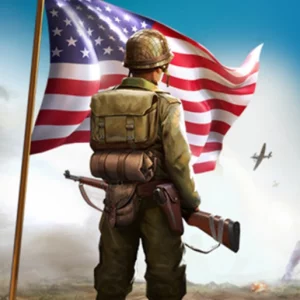
Free WW2: Strategy World War Games Codes
Current active codes and how to redeem them.

Sarah Williams
Sarah specializes in RPG and collection games, explaining team building, character growth, and beginner-friendly ways to avoid expensive early mistakes.
COMMUNITY
Player Comments
109 players commented on this guide.
This guide answered the exact question I had.
Good guide for WW2: Strategy World War Games players. The strategy part was useful.
I wish I had read this before upgrading the wrong thing.
The tips are practical and easy to follow.