
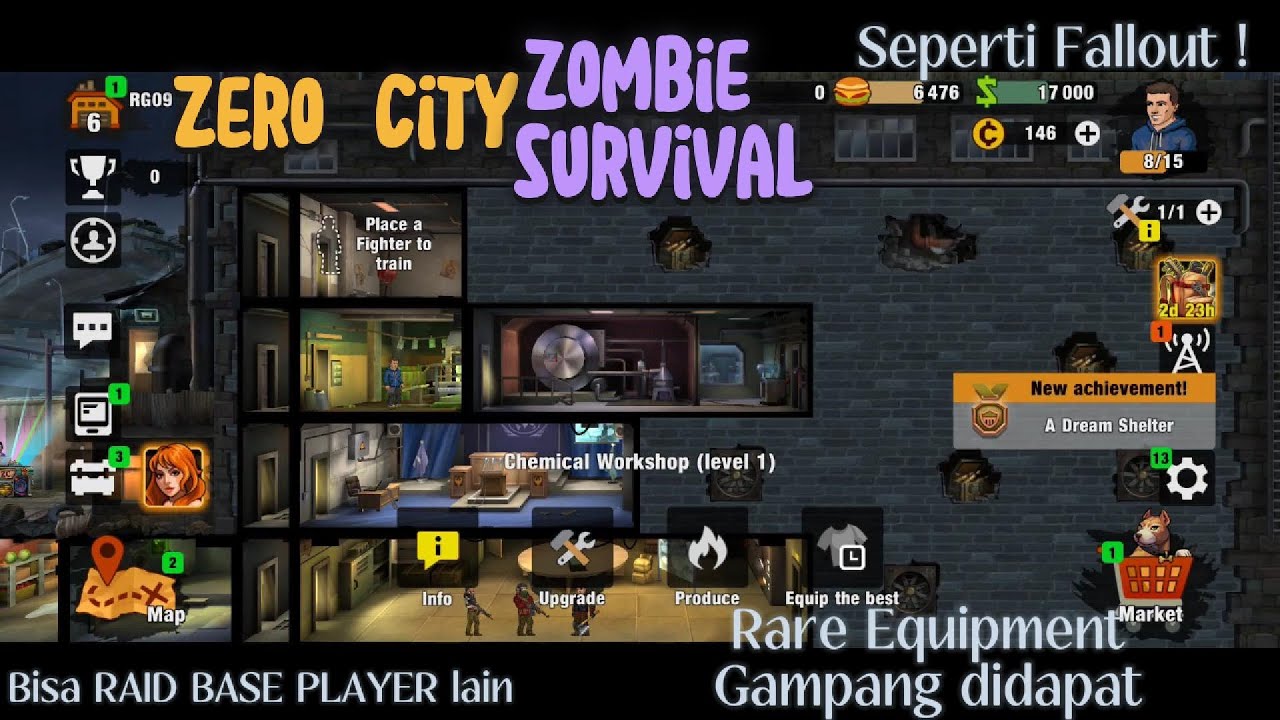
In Zero City: Zombie Shelter Game, equipment is the single most important factor determining your squad’s ability to survive the later stages of the apocalypse. Unlike games where gear is purely cosmetic, your survivors' survivability, damage output, and success in PvP depend entirely on the stats provided by their armor and weapons. To farm equipment efficiently, you must move beyond passive play and master the synergy between combat mission loops, resource production, and the game’s crafting mechanics.
The Combat Loop: Farming Equipment Drops
The most direct way to acquire gear is through active combat. Every mission on the world map carries a chance to drop crates or specific equipment pieces. However, not all combat is equal.
- The Difficulty Scaling Rule: Loot quality is strictly tied to the difficulty rating of the mission. Do not waste time farming low-level nodes once you have out-leveled them. Instead, push the main campaign as far as your current squad power allows.
- Repeatable Farming: If you hit a wall in the main story, identify the most difficult mission you can clear with minimal casualties. Replaying these "high-difficulty" nodes is your most consistent source of mid-tier loot and upgrade materials.
- Arena Combat: Participation in the Arena is non-negotiable for serious players. The Arena offers specific currency that can be traded for chests and high-rarity blueprints. Even if you don't win every match, the participation rewards accumulate faster than raw map drops.
Crafting vs. Finding: The Long-Term Strategy
While combat drops provide a steady stream of gear, you cannot rely on RNG (random number generation) forever. To truly gear up, you must utilize the Weapon Workshop and Armor Workshop.
To optimize your production:
- Prioritize Blueprints: Always spend your resources or currency on high-tier blueprints before individual items. A blueprint allows you to craft the gear infinitely, provided you have the materials.
- Material Management: Do not dismantle high-rarity gear unless you are desperate. Instead, hoard common and uncommon items to use as "fodder" for upgrading your epic and legendary pieces.
- Upgrade Cycles: Focus your crafting efforts on one survivor at a time. It is better to have one "tank" survivor with maxed-out Legendary armor than four survivors with mediocre, mismatched gear.
Survivor Roles: Matching Gear to Stats
One of the most common mistakes in Zero City is equipping items that do not complement a survivor’s innate potential. Before gearing a character, look at their star rating and their specialized combat attributes.
- Tanks (Frontline): Prioritize armor with high Health and Physical/Energy Resistance stats. Even if the weapon damage is low, a tank’s job is to soak up damage to let your backline perform.
- DPS (Backline): Focus entirely on damage-per-second (DPS) stats. Look for weapons with high critical hit rates or armor that boosts attack speed.
- Utility/Support: If a survivor has high Intelligence or specific support traits, equip them with gear that provides healing bonuses or cooldown reduction.
By assigning gear based on these roles, you maximize the effectiveness of every piece of equipment you find, preventing you from wasting resources on "jack-of-all-trades" builds that fail in high-difficulty encounters.
Managing Your Shelter for Equipment Production
Your shelter is the engine that powers your gear acquisition. If your production rooms are under-leveled, you will constantly lack the materials needed for crafting.
- The Resource Balance: Ensure your Food and Materials production rooms are upgraded in tandem with your Workshop levels. If your workshop is high-level but your material income is low, you will have the capacity to craft but no resources to fuel it.
- Survivor Allocation: Assign your highest-skill survivors to the production rooms. A survivor with a high stat in the relevant field (e.g., Chemistry or Carpentry) will produce materials significantly faster, shortening the wait time between crafting batches.
- The "Idle" Strategy: When you are logged off, ensure your queues are full. Never leave a workshop empty. Calculate how long your crafting takes and align it with your real-life schedule to ensure the machines are running 24/7.
Avoiding Common Pitfalls
Players often fall into traps that stall their progression. Avoid these common mistakes to keep your gear farming efficient:
- Over-investing in Low-Tier Gear: Do not spend precious resources upgrading "Common" or "Uncommon" items. These will be obsolete within a few days of play. Save your materials for "Epic" (Purple) or "Legendary" (Orange) gear.
- Neglecting the PvP Shop: Players often ignore the PvP store because they fear losing battles. Even if you lose, you gain tokens. Spend these tokens exclusively on gear chests or high-tier materials to jump-start your crafting.
- Ignoring Room Prerequisites: Don't rush your Command Center level if your production rooms and workshops aren't at the maximum level allowed by your current tier. Upgrading the Command Center increases the difficulty of zombies in missions, which may leave you unable to clear content if your gear isn't ready.
Finalizing Your Strategy
To succeed in Zero City, treat your bunker as a professional production facility. The key is a sustainable cycle: Farm Arena/Campaign for materials and blueprints -> Use high-stat survivors to process resources -> Craft specialized gear for specific roles -> Upgrade your squad's power level -> Repeat.
Consistency is more important than speed. By focusing on upgrading your workshop efficiency and only spending materials on high-rarity gear, you will consistently maintain a squad capable of handling the toughest threats the wasteland throws at you. Stay patient, focus on the stats that matter for your specific survivors, and never let your crafting queues stay empty.

Free Zero City: Zombie Shelter Game Codes
Current active codes and how to redeem them.

Sarah Williams
Sarah specializes in RPG and collection games, explaining team building, character growth, and beginner-friendly ways to avoid expensive early mistakes.
COMMUNITY
Player Comments
144 players commented on this guide.
The explanation is clear, especially for beginners.
This guide answered the exact question I had.
The tips are practical and easy to follow.
Can you add more details about strategy in a future update?