
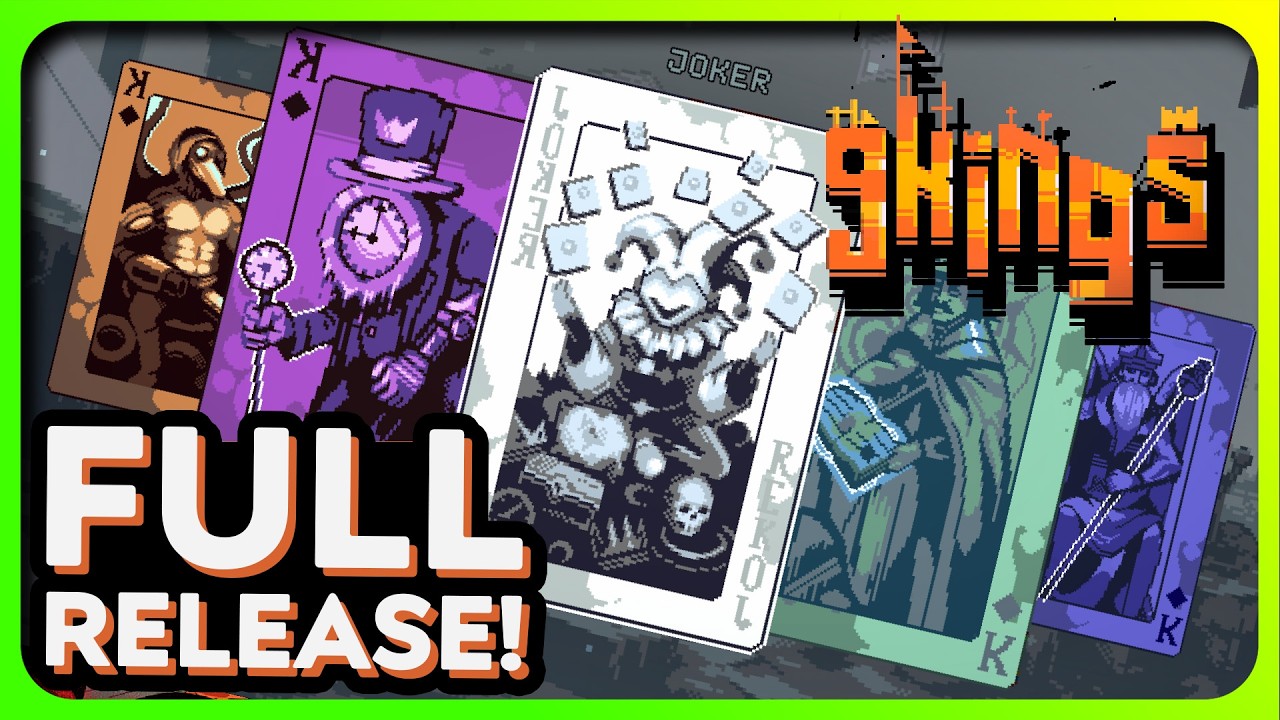
To survive a full nine-year campaign in 9 Kings 1.0, replace passive gold hoarding with an immediate focus on early board tempo, aggressive deck thinning, and strict grid positioning. In version 1.0, rival armies scale sharply between Years 4 and 5, leaving no room for bloated decks or unregulated economic loops. Winning standard runs and King IX difficulty requires securing sturdy frontline blockers by Year 3, locking in dedicated damage carries by Year 5, and tailoring every card and perk selection directly to your monarch's innate mechanics.
Campaign Drafting Priorities by Phase
Drafting a lean, focused deck is essential because every unnecessary card dilutes the draw rate of your key units and defense structures. Reroll gold sparingly in the early game, and use deck-thinning options like Executioner cards or selective discards to purge obsolete starter units before late-game rounds.
| Campaign Phase | Primary Drafting Priority | Danger to Avoid |
|---|---|---|
| Years 1–3 (Early) | Low-cost frontline tanks, baseline income, early board tempo | Buying costly late-game units without an active engine |
| Years 4–6 (Mid) | Dedicated archetype carries, deck-thinning tools, synergy multipliers | Diluting deck draw consistency with unfocused utility picks |
| Years 7–9 (Late) | High-tier Rainbow perks, boss-countering burst damage, sustain | Drafting off-synergy cards that clog draws against the Ninth King |
Adapting to Monarch Playstyles
Monarch traits in 1.0 dictate your drafting path from the opening round. Generic build templates fail because leader passives require strict specialization:
- King of Blood: Relies on sacrificial altar mechanics and active health spending to produce elite demon troops. Defensive turtling wastes this kit.
- King of Stone: Focuses on fortified structures, barricades, and retaliation perks to construct an immovable attrition defense.
- Gun King: Needs precise tile spacing and physical protection to keep Ballistas and ranged artillery firing continuously.
- King of Nothing: Provides a neutral baseline focused on cost-effective soldier swarms, requiring card drafting alone to establish scaling and win conditions.
Battlefield Grid Positioning
Unit collision and spatial organization govern combat in 1.0. Place resilient frontline melee units—such as Defenders, Iron Soldiers, or Paladins—directly in forward tiles to absorb charging swarms. If your frontline breaks, enemy units advance directly into the backline and interrupt fragile units before attack animations finish.
Reserve rear tiles exclusively for sustained damage dealers, including Wizards, Spire towers, and Ballistas. Avoid clumping fragile carries together in adjacent tiles where piercing shots and area-of-effect splash damage can hit multiple units simultaneously. Funnel enemy paths into dedicated kill zones covered by your ranged backline.
Perk Synergies and the Ninth King
Perks offered between battle rounds supply the scaling needed to pass late-game stat checks. Rainbow perks deliver strong universal utility across diverse boards, but King IX completions typically require archetype-specific perks that multiply your monarch's core engine. Take advantage of Perk Surge triggers when your board meets the activation criteria to boost unit stats and building outputs.
The Year 9 showdown against the Ninth King features high-health boss phases backed by continuous waves. Clearing this final encounter requires three components working together:
- Crowd Control and Frontline Sustain: Durable blockers to halt the boss and keep secondary waves off your backline.
- Burst Damage and Armor Shred: High single-target damage to eliminate elite units before your defenses wear down.
- Card Draw Consistency: A lean deck that delivers reinforcements steadily across long, multi-phase combat rounds.

Free 9 Kings Codes
Current active codes and how to redeem them.

Emily Johnson
Emily writes practical mobile strategy guides with a focus on resource planning, base progression, and the early decisions that shape a long-term account.
COMMUNITY
Player Comments
25 players commented on this guide.
This saved me time in the early game.
I tried this today and it worked better than my old setup.
Can you add more details about strategy in a future update?
The explanation is clear, especially for beginners.