
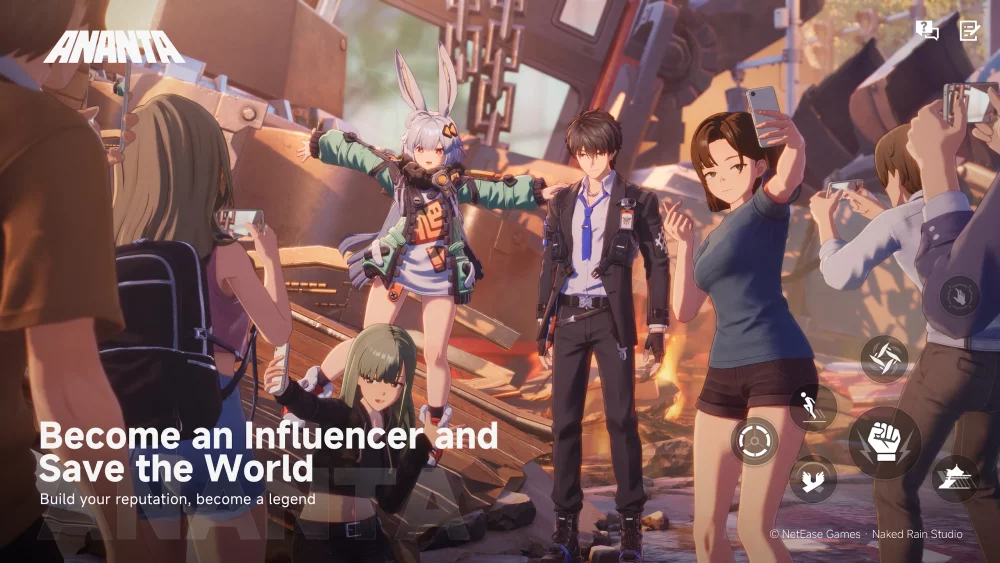
Navigating the sprawling, high-fidelity landscape of ANANTA requires more than just curiosity; it demands a disciplined, strategic approach to exploration. Because the game balances massive, GTA-style urban density with complex, long-term resource management systems, players can easily fall into the trap of "open-world fatigue." To maintain a competitive edge and ensure steady progression, you must treat the environment as a series of segmented tactical zones rather than a single, aimless playground. This guide provides the expert framework needed to balance narrative momentum with the massive scale of the game world.
Evaluating the Impact of Map Scale on Progression
In ANANTA, the sheer size of the environment is both a primary strength and a potential progress-killer. The game features significant visual depth, but not every square inch of the city is designed for mechanical advancement.
To manage this scale effectively, you must categorize your surroundings into two distinct types: Density Zones and Transit Corridors.
- Density Zones: These are the heart of your progression. They are packed with mission-critical NPCs, essential resource hubs, and narrative-heavy interactions. When you are in a density zone, your priority should be task completion and optimization of your current loadout.
- Transit Corridors: These areas are designed for scale and immersion. While they look impressive, they often offer low mechanical value. Spending too much time here without a clear objective will lead to wasted time and resources.
By identifying these zones early, you can minimize time spent in low-value areas and focus your energy on the high-density locations that drive your character’s growth.
The "One-Objective-At-A-Time" Rule
A significant risk in ANANTA is narrative dilution. Because the world is so densely packed with side activities, it is easy to lose the thread of the primary storyline. To prevent this, implement the "one-objective-at-a-time" rule during your initial sessions.
When you accept a mission, resist the temptation to detour for side activities until the immediate goal is achieved. The narrative threads in ANANTA are the primary drivers for unlocking advanced features and character upgrades. By staying focused, you ensure you have the necessary tools—such as high-tier gear or access to restricted areas—before tackling the more challenging side content. If you find yourself drifting, use the game’s objective-tracking markers to re-anchor your position. View the stunning city vistas as visual set-pieces rather than active gameplay nodes until you have secured your primary mission rewards.
Optimizing Traversal for Resource Efficiency
Traversal in ANANTA is a mechanical component of your success. If you are relying on standard ground-level movement, you are likely losing precious time that could be spent on project development or resource gathering.
- Master Verticality: Always prioritize high-ground access. Not only does this provide a tactical overview of the district, but it also allows you to identify shortcuts (like rooftop paths) that bypass heavy ground-level traffic.
- Identify Transit Shortcuts: The city is designed with complex alleyways and interconnected structures. Learning these routes is critical for moving between mission hubs efficiently.
- Limit Deviation: If a route looks unnecessarily complex, stick to the main arterial roads unless you are specifically farming for environmental resources. The time-to-reward ratio of off-road exploration is often lower than following the game’s primary navigation path.
Strategic Resource Management and Project Development
ANANTA isn't just about movement; it’s about long-term resource management. Your progression is tied to how effectively you turn your mission rewards into project development.
Avoid the "hoarder trap." Many players collect resources without funneling them into their project development trees. Regularly check your menu to see if your current resources can be converted into upgrades that simplify future navigation, such as improved vehicle speed, stamina buffs, or faster hacking capabilities. Treat every mission completion as a financial and material milestone. If you have the capital, reinvest immediately; the game’s difficulty spikes are designed to punish players who wait too long to upgrade their core systems.
Navigating Technical and Pacing Hurdles
Large-scale games like ANANTA can sometimes experience performance fluctuations due to the sheer density of the assets being loaded. To ensure a smooth experience, focus your gameplay on specific regions for extended periods.
Rather than jumping from one side of the map to the other, "clear" a district of its primary missions and side-activities before moving on. This minimizes the stress on the game’s engine and keeps your narrative experience consistent. Furthermore, if you find yourself in an area that feels sparsely populated or underutilized, use that as a natural "cooldown" phase. This is the perfect time to manage your inventory, review your skill loadouts, and prepare for the next high-density mission.
Final Verdict: Why Quality of Engagement Matters
Ultimately, ANANTA rewards players who treat the open world as a resource to be managed rather than a map to be "completed." Success in this game comes down to your ability to distinguish between essential narrative hubs and secondary environmental set-pieces.
Do not fall into the trap of thinking that every corner of the map must be explored to be successful. By prioritizing verticality, adhering to the one-objective-at-a-time rule, and actively managing your resource reinvestment, you ensure that the massive scale of the world remains a strategic advantage. Focus your energy on the density zones, keep your narrative goals in sight, and you will navigate the complexities of ANANTA with ease and efficiency.

Free ANANTA Codes
Current active codes and how to redeem them.

Emily Johnson
Emily writes practical mobile strategy guides with a focus on resource planning, base progression, and the early decisions that shape a long-term account.
COMMUNITY
Player Comments
135 players commented on this guide.
I wish I had read this before upgrading the wrong thing.
Nice guide. I am checking the other ANANTA articles next.
This guide answered the exact question I had.
I tried this today and it worked better than my old setup.