
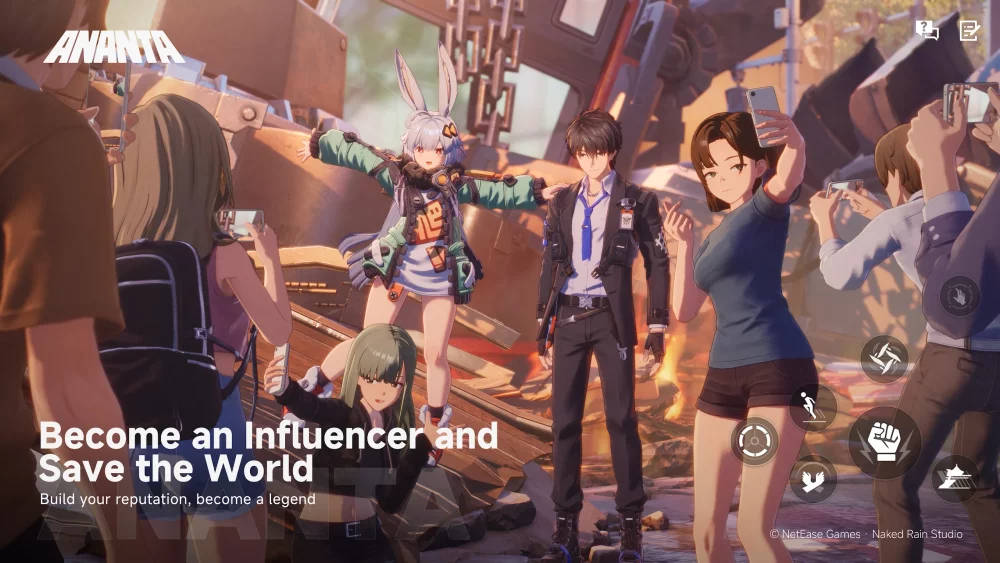
To achieve peak synchronization in ANANTA, players must look beyond basic inputs and embrace the "Mirror Dance" philosophy. This technique treats character movement not as a series of disjointed commands, but as a continuous, rhythmic stream of kinetic energy. By aligning your inputs with the internal tempo of the game’s animation cycles, you can eliminate input lag, maximize traversal efficiency, and maintain character responsiveness even in the most high-stakes combat scenarios.
The Core Philosophy: Why "Mirror Dance" Matters
The "Mirror Dance" is a high-level approach to movement in ANANTA that emphasizes fluidity and spatial awareness. In most games, players treat movement as a binary "on/off" state—you are either moving or you are not. In ANANTA, movement is a spectrum. The Mirror Dance technique requires you to synchronize your inputs with the character’s center of mass and animation arcs.
When you master this, you stop "fighting" the game’s physics engine. Instead, you work with it, using the natural momentum of an animation to fuel the start of the next. This creates a state of "flow" where your character appears to move with effortless grace, making you harder to track for opponents and more efficient at navigating complex terrain.
Understanding the Rhythmic Flow of Movement
Success in ANANTA relies on the fluidity of your character's transitions between actions. The Mirror Dance highlights the importance of animation chaining, where one move seamlessly bleeds into the next without clipping or stuttering.
Identifying "Rest" Points
Every animation in ANANTA has a "rest" point—a brief window at the tail end of a cycle where the character completes their weight transfer before the next animation begins.
- The Trap: Inputting a command during the peak of an animation often forces the game to "buffer" or cut the current move short, leading to sluggishness.
- The Solution: Train yourself to identify the visual cue of the character’s limbs returning to a neutral position. Input your next command at the start of this recovery frame to create a seamless chain.
Precision Timing and Animation Synchronization
Synchronization in ANANTA is about the coordination of limb movements and environmental interaction. If your timing is off, the energy efficiency of your character drops, leading to "stutter-stepping" that leaves you vulnerable.
To refine your synchronization, adhere to these three core principles:
- Visual Anchoring: Focus on the character’s feet and hips. The feet indicate where the character is "planted," while the hips/center of mass indicate the direction of momentum. If your visual focus is on these points, you will naturally time your shifts more accurately.
- Tempo Consistency: Practice basic movement loops in an open area of the game. Keep a steady "1-2, 1-2" rhythm. Once you build the muscle memory for the timing of a standard dash or turn, you can begin layering complex maneuvers on top of that established beat.
- Animation Cancellation: High-level play requires knowing which moves can be interrupted. Not every move is a "hard" commitment. Identify the moves that allow for an immediate directional pivot, and use these as your "escape valves" when you need to switch tactics mid-sequence.
Utilizing Spatial Awareness for Tactical Positioning
In ANANTA, the environment is a dynamic participant in your movement. Spatial awareness is the difference between a fluid traversal and getting stuck on geometry.
When navigating high-density areas, adopt the "Low Center" approach. By keeping your movement inputs small and controlled, you ensure your character’s center of gravity remains stable. This allows for instantaneous directional changes. If you rely on wide, sweeping camera and movement inputs, your character will take longer to "reset" their orientation after a sharp turn, causing you to lose the rhythm of your Mirror Dance.
Managing Momentum Through Kinetic Energy
In the ANANTA engine, momentum is a finite resource. If you input too many erratic commands, you dissipate this energy, causing your character to stumble or lose speed.
The Weighted Movement Strategy
The secret to moving faster than other players is utilizing "weighted" movements. Instead of trying to force a change of direction, commit to the arc of the current movement. Allow the game to complete the physics-based transition. You will notice that during the recovery phase of these weighted moves, your character gains a subtle speed boost. By chaining these boosts together, you can maintain a high-velocity flow that feels almost rhythmic. This is the hallmark of expert ANANTA players who seem to navigate the map twice as fast as their peers.
Adapting to Dynamic Environmental Changes
Even the most perfectly planned sequence will face disruptions. The goal of the Mirror Dance is not rigidity; it is the ability to redirect momentum.
When an enemy attack or environmental hazard forces you to change your path, do not reset your inputs. Instead, seek the nearest "neutral" animation frame—the point where your character is centered. Use this as a pivot point to redirect your trajectory. By treating the disruption as a new "beat" in your dance, you turn a mistake into a recovery, maintaining your flow rather than coming to a dead stop.
Common Mistakes to Avoid
- Over-Inputting: Beginners often mash buttons to compensate for slow movement. This creates a queue of conflicting inputs that causes the character to stutter.
- Ignoring the Hips: Many players focus only on the head or the weapon. Always watch the hips; they are the true indicator of where the character's momentum is traveling.
- Static Camera Usage: In ANANTA, your camera is part of your movement. If your camera is erratic, your character's pathing will be erratic. Keep your camera rotations as smooth and rhythmic as your character's footwork.
Conclusion: Achieving Mastery
Mastering synchronized movement in ANANTA is a journey of refinement. By moving away from frantic, reactive play and toward the rhythmic, intentional flow of the Mirror Dance, you unlock a level of control that most players never reach. Remember: watch the weight, respect the animation frames, and let the momentum of the game carry you. When you align your intent with the game’s internal tempo, you aren't just playing ANANTA; you are choreographing your victory.

Free ANANTA Codes
Current active codes and how to redeem them.

Emily Johnson
Emily writes practical mobile strategy guides with a focus on resource planning, base progression, and the early decisions that shape a long-term account.
COMMUNITY
Player Comments
134 players commented on this guide.
This saved me time in the early game.
This guide answered the exact question I had.
I tried this today and it worked better than my old setup.
The explanation is clear, especially for beginners.