
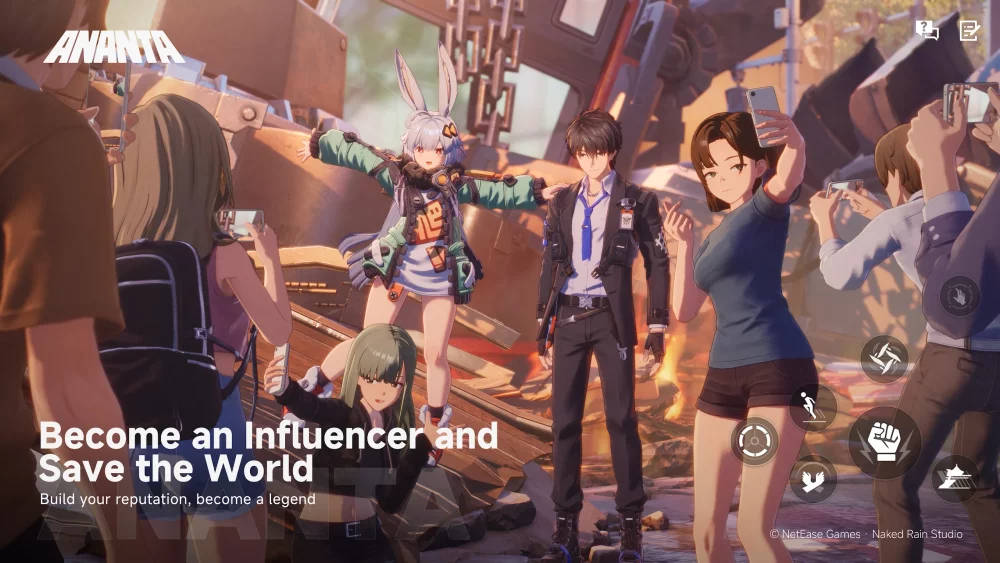
In ANANTA, the city is not merely a backdrop for your actions; it is a complex, multi-layered puzzle designed to be solved through fluid, physics-based movement. To excel in this strategic simulation, you must abandon traditional ground-level navigation in favor of verticality. By treating the skyline as your primary highway, you can bypass urban congestion, discover hidden objectives, and maintain the momentum necessary to stay ahead of the competition. Mastering these traversal mechanics is the difference between a player who merely walks through the world and one who actively dominates it.
The Philosophy of Verticality: Why Up is Better
In ANANTA, the most effective way to navigate the dense urban landscape is to stop viewing the city as a flat plane. The game’s vertical design is intentional, rewarding players who look toward the rooftops rather than the streets. When you prioritize verticality, you unlock three distinct strategic advantages:
- Vantage Point Acquisition: Reaching higher ground allows you to survey the city’s layout, revealing points of interest, resource nodes, and enemy patrol patterns that are obscured from street level.
- Path Efficiency: Ground-level navigation is often cluttered with crowd density, NPC interactions, and physical barriers. Vertical paths are typically streamlined, allowing for faster transit between districts.
- Tactical Disengagement: Should you find yourself in a disadvantageous position, the ability to rapidly ascend a building allows you to reset a combat or social encounter, giving you the control to choose when to engage.
Begin your sessions by identifying the "climbable language" of the environment—distinct textures, protrusions, and architectural features that signify a path upward. Developing this "vertical eye" early is essential for efficient resource gathering and project management.
Mastering Momentum and Physics-Based Traversal
ANANTA features a sophisticated physics engine that treats your character’s movement as a continuous flow. Momentum is your most valuable resource; if you stop, you lose the ability to clear larger gaps or reach higher ledges.
The Momentum Chaining Technique
To move effectively, you must link your movement states seamlessly. A standard sprint should transition directly into a vault, followed immediately by a wall-run or climb.
- Sprinting: Always initiate movement with a sprint to build initial velocity.
- Vaulting/Jumping: Use jumps to clear obstacles without breaking stride.
- Wall-Running: When you encounter a vertical surface, engage the wall-run to maintain speed while gaining height.
- The Ascent: Conclude your movement chain with a targeted climb to reach the desired platform.
Object Utilization
The environment in ANANTA is interactive. Look for physics-enabled props—crates, structural scaffolding, or even dynamic urban assets—that can be manipulated. Sometimes, the intended path is not a direct climb but a sequence of jumps across movable objects that you must reposition to create a bridge or a launch point.
Navigating High-Density Urban Environments
The urban density in ANANTA is designed to be high-fidelity, which can lead to sensory overload for new players. When navigating these sectors, focus on visual cues rather than the minimap.
- Architectural Lighting: Pay attention to how light hits buildings. Developers often use specific lighting patterns or color-coded architectural elements to signal "traversal-friendly" routes.
- Indoor-Outdoor Seamlessness: Never treat a building as a solid wall. Many structures in ANANTA feature interior corridors, balconies, and stairwells that serve as shortcuts between external streets. If you are stuck at a dead end, look for a building entrance or an open window; the path forward often lies through the architecture.
- Sector Transitions: When moving between different districts, look for high-level transit hubs. These areas are specifically designed to allow for high-speed, long-distance traversal, often utilizing mechanical systems or architectural slopes to maintain your momentum.
The Trade-offs of High-Speed Movement
While fluid movement is a powerful asset, it is not without risks. The primary danger of high-speed traversal is disorientation. If you focus too intently on your immediate next jump, you may lose track of your overall position on the map, leading to unnecessary detours.
Managing Stamina and Risk
- Stamina Costs: Repetitive climbing consumes stamina. If your stamina bar depletes while you are in a precarious position, you will fall, losing both time and momentum. Always check for ledges where you can stand or crouch to regenerate stamina mid-climb.
- Fall Recovery: Falling from a significant height is a major penalty. Not only do you lose your position, but you are also forced into a recovery animation. If you find yourself in a "vertical maze," pause for a moment to orient yourself using permanent, large-scale landmarks like towers or water features.
- Spatial Awareness: Practice the "Stop and Scan" method. Every few minutes of high-speed travel, pause on a rooftop to re-evaluate your path to the mission objective. This prevents the "lost in the city" syndrome that plagues many high-speed traversal systems.
Strategic Benefits for Long-Term Progression
Mastering traversal in ANANTA is not just about moving fast; it is about controlling the pace of your game. By moving fluidly, you dictate when to interact with the world and when to bypass it.
- Resource Optimization: When you are working on long-term project development, time is your most precious currency. Efficient traversal allows you to complete more tasks within a single content cycle, giving you a competitive edge over players who spend their time navigating traffic and crowds.
- Combat Avoidance and Engagement: In scenarios where you need to reach a specific location without being detected, verticality is your best defense. Enemies in ANANTA typically have ground-level or low-altitude patrol paths. By staying high, you remain invisible to the majority of threats. Conversely, if you choose to engage, the high ground grants you a massive advantage in tactical positioning, allowing you to strike from angles that AI or opponents are not programmed to monitor.
Conclusion: Turning the World into an Asset
To master ANANTA, you must shift your perspective. The city is not a barrier to your progress; it is a tool. By prioritizing verticality, managing your momentum, and utilizing the physics-based environment to your advantage, you transform your traversal from a necessity into a strategic skill. Practice these techniques in the lower-density districts first, then slowly move into the high-fidelity urban centers as your confidence grows. In the world of ANANTA, the sky is not the limit—it is your path to success.

Free ANANTA Codes
Current active codes and how to redeem them.

Michael Smith
Michael covers live-service games, events, reward systems, and efficient daily routines, turning frequent updates into clear actions for players.
COMMUNITY
Player Comments
152 players commented on this guide.
Nice guide. I am checking the other ANANTA articles next.
I wish I had read this before upgrading the wrong thing.
This guide answered the exact question I had.
The tips are practical and easy to follow.