
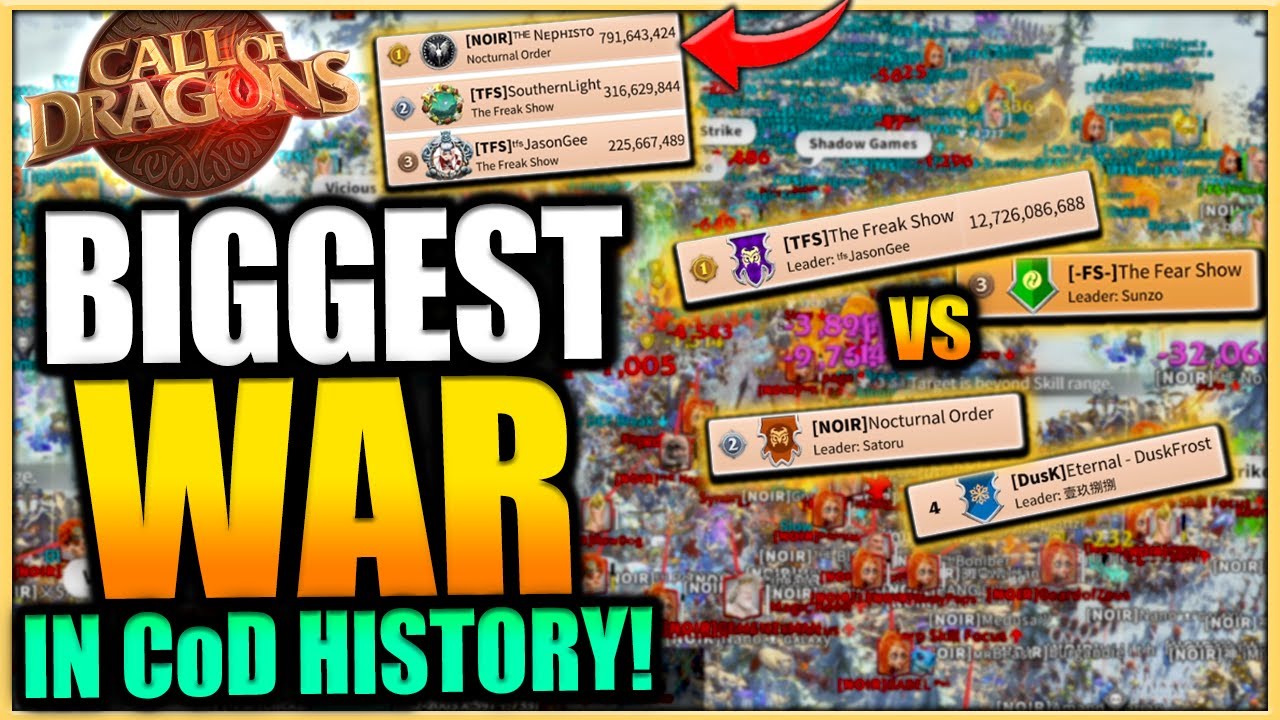
In Call of Dragons, the difference between a decisive victory and a territorial collapse in Season 2+ Zone 5 battles often comes down to one factor: coordination. While individual power is important, large-scale wars—like those between top-tier alliances such as TFS and Nephisto—are won through collective operational synchronization. To dominate the battlefield, you must move beyond the "solo-player" mindset and function as a single, unified entity. This guide provides the tactical framework required to master large-scale alliance warfare and secure seasonal objectives.
The Foundation of Coordinated Frontlines
Successful alliance warfare in Call of Dragons begins with establishing and maintaining a cohesive frontline. When fighting for high-value objectives in Zone 5, individual roaming is a liability that leads to being picked off by enemy rallies. Your goal is to create a "wall of steel" that forces the opposition to commit massive resources just to dent your perimeter.
- Squad Clustering: Always keep your legions within the radius of allied healing stations and defensive buff zones. This ensures your troops remain topped off and protected by passive alliance bonuses.
- Choke Point Control: Zone 5 is defined by complex 3D terrain and narrow corridors. Position your tankiest infantry legions at the mouths of these chokes to block enemy advancement, forcing them into a bottleneck where your AoE damage dealers can maximize their impact.
- Rotation Discipline: Do not let your marches return to base at random. Coordinate "wave rotations" where half your alliance holds the line while the other half retreats to resupply. This ensures a constant, unbroken presence on the objective.
Mastering Hero and Artifact Synergy
In the heat of a Dragon War, individual duels are secondary to the collective damage output and utility provided by your commander pairings. When hundreds of legions collide, heroes with high-impact Area of Effect (AoE) abilities are the undisputed kings of the battlefield.
- Prioritize Support and Control: Use commanders who provide debuffs to enemy movement speed or increase the damage taken by clustered enemy forces. Slowing an enemy push gives your alliance the precious seconds needed to collapse on them.
- Synchronized Artifact Activation: This is the hallmark of elite alliances. Do not trigger your artifact buffs whenever they are off cooldown. Coordinate with your group lead to trigger "Artifact Waves." When 20+ players activate defensive or damage-boosting artifacts simultaneously, you create a power spike that can wipe out an opposing force’s healing capacity in seconds.
- Unified Targeting: Focus your combined fire on the specific target called by your rally leader. Rapidly depleting an enemy legion’s troop count forces them into the hospital, permanently reducing their alliance’s total combat strength for the remainder of the engagement.
Navigating Zone 5 Environmental Dynamics
Zone 5 is a unique battlefield that demands high situational awareness. The 3D terrain allows for flanking maneuvers, but it also creates traps. Understanding the "rubber-banding" effect—where both alliances trade ground back and forth—is key to timing your push.
- Avoid Overextension: The most common mistake in Call of Dragons war is chasing a retreating enemy unit. Doing so pulls you out of your alliance’s defensive aura, making you an easy target for a counter-collapse.
- Patience as a Weapon: Maintain your formation even when the enemy appears to be retreating. Often, they are attempting to bait you into a disadvantageous position. Wait for the enemy to commit to a poor position, then capitalize on their overextension by surrounding them.
Resource Management and War Sustainability
War in Call of Dragons is a marathon, not a sprint. If you run out of speedups or hospital capacity mid-fight, your contribution to the alliance drops to zero, and you become a liability.
- Heal with Intent: Only heal the specific troops required to get back into the fight. Avoid burning through all your universal speedups during minor skirmishes, as you will need them for the final push on the Dragon or major seasonal forts.
- Know When to Withdraw: If your alliance is losing a specific engagement, know when to pull back. Throwing units into a hopeless battle just to pad your kill count is a net loss for the alliance. Save your high-tier troops for when your rally leads have a genuine chance to flip the objective.
- Monitor Troop Tiers: Your alliance’s power is tied to the availability of Tier 5 (or highest available tier) troops. If you deplete your elite pool, focus on holding territory rather than engaging in direct combat until your reserves are replenished.
Exploiting Enemy Organizational Gaps
The most effective way to defeat a powerful adversary is to exploit the "communication lag" that inevitably happens in large, chaotic wars. Watch for moments when the enemy frontline becomes disorganized or their pathing becomes erratic.
- The Focused Strike: When you spot a gap in the enemy line or a moment of hesitation, execute a "Focused Strike." This is a rapid, coordinated movement of all available marches toward their most vulnerable high-value target, such as a weakened rally leader or an isolated cluster of support units.
- Predicting Movement: By analyzing the enemy's formation, you can often predict their intended path. If you notice their main damage dealers shifting toward a flank, use your mobile cavalry units to intercept them, or shift your main body to collapse on their center while their attention is divided.
In Call of Dragons, the strongest alliance is not necessarily the one with the most individual power, but the one that moves as one. By mastering these coordination tactics, managing your resources for the long haul, and synchronizing your abilities, you can turn the tide of even the most lopsided conflicts in Zone 5. Stay disciplined, communicate clearly, and fight as one.

Free Call of Dragons Codes
Current active codes and how to redeem them.

Emily Johnson
Emily writes practical mobile strategy guides with a focus on resource planning, base progression, and the early decisions that shape a long-term account.
COMMUNITY
Player Comments
42 players commented on this guide.
I wish I had read this before upgrading the wrong thing.
This saved me time in the early game.
Good guide for Call of Dragons players. The heroes part was useful.
This guide answered the exact question I had.