
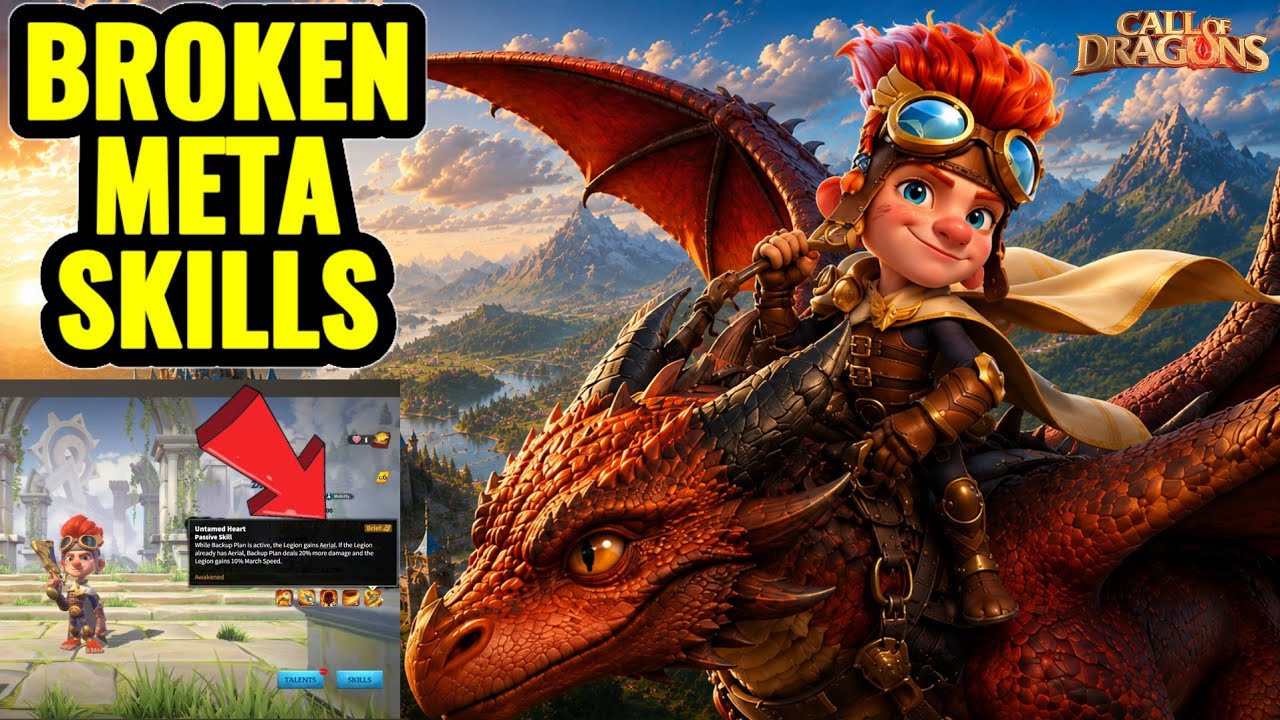
In the evolving landscape of Call of Dragons, Elio has emerged as the definitive centerpiece for players looking to command a high-impact Mage march. By combining devastating area-of-effect (AOE) magical damage with the unprecedented tactical mobility of Wyvern Riders, Elio shifts the battlefield dynamic, forcing opponents to adapt or face total annihilation. This guide breaks down the mechanics, strategies, and nuances required to master Elio and secure your dominance in large-scale warfare.
Understanding Elio’s Mechanical Strengths
Elio is not merely a damage dealer; he is a force multiplier for your Mage squads. His kit is designed to punish clusters of enemy units, making him an essential asset during alliance wars and major skirmishes.
- Active Skill Efficiency: Elio’s active skill provides consistent AOE damage. The key to maximizing this is identifying "tight formations"—groups of enemy squads clumped together. In Call of Dragons, damage is calculated based on the number of targets hit; by landing your skill on multiple squads, you exponentialize your damage output.
- Passive Synergy: His passive skills are built to amplify magical lethality. These passives often trigger or scale based on the duration of the fight or the intensity of your damage output. Consequently, Elio performs significantly better in sustained engagements than in "burst-and-retreat" scenarios.
- The "Skirmisher" Archetype: Elio bridges the gap between traditional stationary casters and highly mobile units. His stats favor positioning over raw defensive bulk, requiring you to play him as a "glass cannon" that survives through movement rather than armor.
The Wyvern Rider Advantage
The "Rise of Wyvern Riders" update fundamentally changed Mage viability. Before, Mages were often static targets for cavalry; now, Elio leading a Wyvern Rider march can dictate the pace of any engagement.
- Bypassing the Frontline: Standard infantry compositions rely on their "tank" units to absorb damage. Wyvern Riders allow Elio to fly over these barriers, targeting the enemy's squishy backline archers or healers directly.
- Hit-and-Run Tactics: Never let your Wyvern Riders become stationary. If you are being targeted by enemy cavalry, use your mobility to reposition to a new altitude or location. Because Wyvern Riders ignore standard terrain movement penalties, you can transition between high-ground positions that are inaccessible to ground units.
- Kiting Mastery: By maintaining a distance that forces melee units to chase you, you create a "kiting" loop where your AOE spells deal damage while your units remain effectively untouchable.
Strategic Positioning: The Art of the Flank
In Call of Dragons, positioning is 80% of the battle. When running an Elio march, you should never be the first person into the fray.
- The Flanking Maneuver: Use the edge of the map or terrain features to approach the enemy from the side. Attacking from the flank prevents the enemy from easily collapsing their formation onto you.
- Target Priority: Always prioritize enemy Ranged or Mage squads. These units have the lowest defensive stats. By deleting their damage dealers first, you minimize the incoming damage your own march takes, effectively "tanking" through offense.
- The Exit Path: Before committing to an engagement, identify your retreat route. If you see high-mobility enemy cavalry closing in, disengage immediately. Elio’s strength relies on his ability to survive long enough to fire multiple rounds of skills; dying early is a total failure of tactical awareness.
Tactical Limitations and Counter-Play
Elio is a powerhouse, but he has clear vulnerabilities that seasoned opponents will exploit. Recognizing these is vital for self-correction.
- Fragility: Mage units have the lowest HP pools in the game. If you are caught in a silence effect or stunned by a tanky infantry commander like Garwood or Madeline, your march will melt. Always keep an eye on enemy crowd-control (CC) abilities.
- AOE Dilution: If an opponent senses you are using an AOE-heavy composition, they will "spread" their squads. If your opponent spreads out, your damage potential drops drastically. In this scenario, you must be prepared to manually target the most valuable squad rather than relying on automatic targeting.
- Resource Management: Because Elio is a high-tier commander, he requires significant investment in talent trees and artifact upgrades. Spreading your resources too thin will result in an "under-leveled" Elio that lacks the stats to back up his skill kit.
Long-Term Investment and Team Composition
To extract maximum value from Elio, you must treat him as a long-term project.
- Secondary Commanders: Pair Elio with commanders who provide either "Magic Damage %" buffs or "Survivability" passives. A dual-threat composition ensures that even if one commander is silenced, the other can continue to output pressure.
- Artifact Synergy: Choose artifacts that provide either additional mobility or burst magic damage. Mobility artifacts can save your Wyvern Riders from a bad engagement, while magic damage artifacts can push your AOE over the threshold needed to wipe out an enemy squad in a single cast.
- Alliance Integration: In major alliance events, coordinate with your allies. A single Elio is a threat; three Elio-led Wyvern Rider marches working in tandem can break the strongest defensive walls in Call of Dragons.
Conclusion: Mastering the Meta
Transitioning to an Elio-led Mage march is the fastest way to increase your impact in competitive Call of Dragons play. By prioritizing mobility, mastering the flanking maneuver, and respecting the inherent fragility of your units, you transform from a casual player into a battlefield commander. Focus your progression on his skill trees, coordinate with your alliance, and always stay on the move. With Elio, the battlefield is not a place to stand and trade—it is a playground for tactical superiority.

Free Call of Dragons Codes
Current active codes and how to redeem them.

Michael Smith
Michael covers live-service games, events, reward systems, and efficient daily routines, turning frequent updates into clear actions for players.
COMMUNITY
Player Comments
146 players commented on this guide.
This saved me time in the early game.
This guide answered the exact question I had.
Good guide for Call of Dragons players. The strategy part was useful.
I wish I had read this before upgrading the wrong thing.