
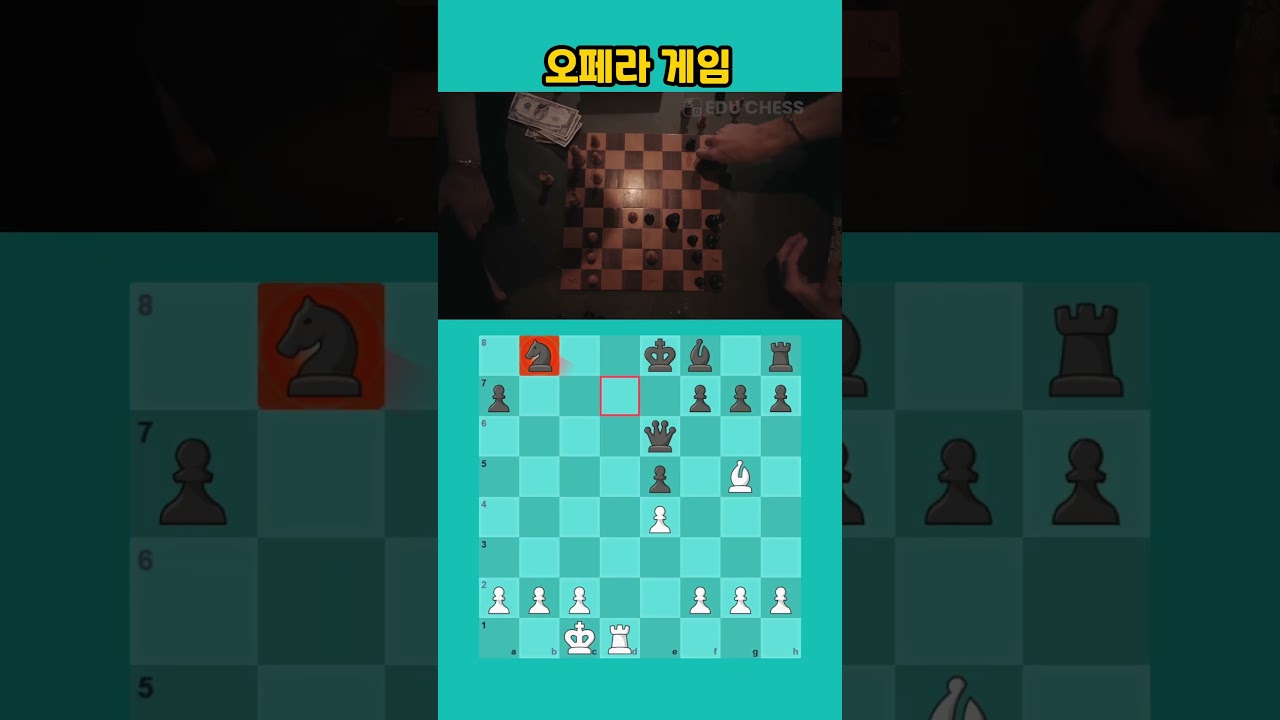
Studying Paul Morphy’s 1858 Opera Game in Chess.com - Play and Learn shows you how to punish passive openings through rapid piece development, central control, and attacking tempo. Meeting 1. e4 e5 2. Nf3 d6 with active piece coordination and queenside castling allows White to exploit pinned defenders and sacrifice material to force checkmate.
Countering the Philidor Defense with Central Tension
Striking the center with 3. d4 challenges Black's cramped Philidor Defense and punishes premature pins before Black can secure their king:
- Confront the center: 1. e4 e5 2. Nf3 d6 3. d4. Black's setup solidifies their central pawn on e5 but limits central space and restricts the dark-squared bishop on f8.
- Punish the premature pin: When Black plays 3... Bg4, White responds with 4. dxe5 Bxf3 5. Qxf3 dxe5. Exchanging on f3 surrenders Black's bishop pair and cedes White an uncontested queen outpost on f3. This exchange exposes both f7 and b7 to immediate tactical pressure.
Generating Double Threats and Keeping the Initiative
Developing pieces with multiple threats forces defensive concessions that hinder back-rank development:
- Threaten scholar-style mate: White plays 6. Bc4, targeting f7 with Qxf7#. Black parries with 6... Nf6.
- Fork two weaknesses: White unleashes 7. Qb3, attacking both the f7 pawn and the undefended b7 pawn simultaneously.
- Reject greedy pawn grabs: Black plays 7... Qe7 to guard f7, but this blocks the f8 bishop and hinders kingside castling. Grabbing the pawn with 8. Qxb7 allows Black to offer a queen trade via 8... Qb4+, diffusing the attack. Instead, White plays 8. Nc3, securing b2, activating a minor piece, and preserving attacking momentum.
Complete Move Breakdown of Morphy's Opera Game
The complete 17-move sequence demonstrates how converting tempo into development leads produces an unavoidable mating net:
| Move Number | White Move | Black Move | Tactical Theme |
|---|---|---|---|
| 1–3 | 1. e4 e5 2. Nf3 d6 3. d4 | 3... Bg4 | Striking the center against a premature pin |
| 4–5 | 4. dxe5 Bxf3 5. Qxf3 | 5... dxe5 | Claiming the bishop pair and activating the queen |
| 6–7 | 6. Bc4 Nf6 7. Qb3 | 7... Qe7 | Creating dual threats against f7 and b7 |
| 8–9 | 8. Nc3 c6 9. Bg5 | 9... b5 | Developing with tempo and pinning enemy pieces |
| 10–11 | 10. Nxb5 cxb5 11. Bxb5+ | 11... Nbd7 | Sacrificing minor pieces to open king lines |
| 12–14 | 12. O-O-O Rd8 13. Rxd7 Rxd7 14. Rd1 | 14... Qe6 | Castling queenside and doubling rooks on an absolute pin |
| 15–17 | 15. Bxd7+ Nxd7 16. Qb8+ | 16... Nxb8 17. Rd8# | Deflecting the back-rank defender for checkmate |
Exploiting Absolute Pins with Queenside Castling
Sacrificing pieces to strip away pawn cover exposes defending pieces to absolute pins:
- Break the pawn shield: When Black plays 9... b5 to threaten the c4 bishop, White plays 10. Nxb5 cxb5 11. Bxb5+. This piece sacrifice checks the king and pins Black's d7 knight.
- Castle with tempo: White plays 12. O-O-O, bringing the a1 rook directly into the attack on the open d-file.
- Double down on pinned pieces: When Black defends with 12... Rd8, White plays the exchange sacrifice 13. Rxd7 Rxd7 14. Rd1. Replacing the traded rook with the h1 rook keeps the d7 square completely immobilized, neutralizing Black's extra material.
Finishing with a Deflection Queen Sacrifice
Removing the final defender allows minimal surviving pieces to deliver checkmate:
- Clear the key square: Facing Black's 14... Qe6 queen-trade offer, White plays 15. Bxd7+ Nxd7, forcing Black's f6 knight to leave the f-file and recapture on d7.
- Deflect the back-rank guard: White delivers the queen sacrifice 16. Qb8+!!, forcing 16... Nxb8.
- Deliver mate: With the d7 knight deflected away from guarding the back rank, White concludes the game with 17. Rd8#. White checkmates with only two active minor pieces, while Black's rooks and dark-squared bishop finish the match trapped on their starting squares.
Tactical Rules for Rated Matches on Chess.com
Reviewing your games with the Chess.com Game Review tool reinforces these three habits:
- Prioritize development over pawn grabbing: Avoid taking peripheral pawns like b7 when developing another minor piece introduces threats against the king.
- Increase pressure on pinned pieces: Add attackers to an opponent's pinned piece rather than trading out of the pin early.
- Use queenside castling aggressively: Castling queenside activates your rook directly onto the open central file while tucking your king to safety.

Free Chess.com - Play and Learn Codes
Current active codes and how to redeem them.

Emily Johnson
Emily writes practical mobile strategy guides with a focus on resource planning, base progression, and the early decisions that shape a long-term account.
COMMUNITY
Player Comments
26 players commented on this guide.
Can you add more details about strategy in a future update?
The explanation is clear, especially for beginners.
Good guide for Chess.com - Play and Learn players. The strategy part was useful.
The tips are practical and easy to follow.