
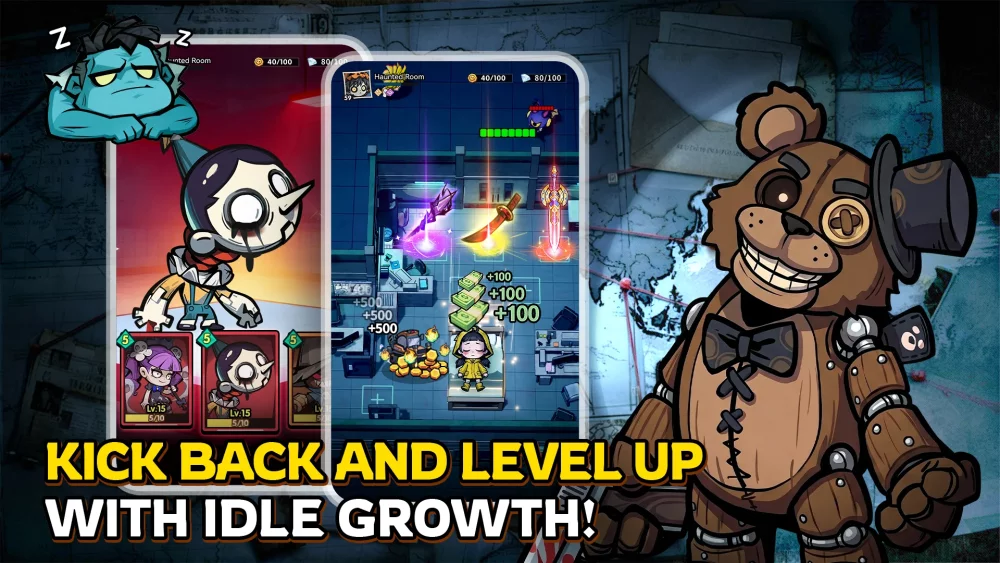
By the fourth day of playing Knock Knock: Room Defense, the game shifts from a simple survival experience to a tactical puzzle where your management of hero positioning and resource efficiency determines your success. At this stage, your progression must transition from basic wave-clearing to optimizing your hero roster and team composition to overcome the spike in difficulty. This guide provides the strategic framework needed to identify must-pull characters, execute effective unit synergies, and manage your economy to ensure you remain competitive throughout the mid-game.
Prioritizing Essential Hero Acquisitions
By day four, your primary objective is to evaluate your current roster against meta-defining units. Not all heroes offer equal value; some provide utility that remains relevant throughout the entire game, while others fall off quickly as enemy health pools scale.
To maximize your progression, prioritize pulls that focus on Crowd Control (CC) and Area-of-Effect (AoE) damage. These are essential for clearing waves efficiently and preventing enemies from overwhelming your room defenses. When evaluating your roster:
- Identify Core Carries: Look for heroes with high scaling on their active skills. These are your "must-slot" units.
- Passive Buffers: Heroes that provide team-wide attack speed or defense buffs are invaluable for keeping your damage dealers alive longer.
- Investment Thresholds: If you pull high-tier heroes, do not hesitate to slot them into your main squad immediately. The power jump provided by S-tier units is significantly higher than the incremental gains from leveling lower-rarity heroes. Avoid spreading your experience materials across too many units; focus your investment on a core squad of 3–5 heroes to ensure they hit key level milestones.
Optimizing Team Composition and Synergy
Effective team composition in Knock Knock: Room Defense relies on balancing defensive stability with offensive pressure. A common pitfall for new players is over-investing in pure damage dealers while neglecting the support or control units required to manage the room’s threat level.
Your team should feature a healthy mix of units that can stun, slow, or knock back incoming waves. When building your team, consider the following synergies:
- The Bottleneck Strategy: If your room layout favors funneling enemies into a tight space, prioritize heroes with wide-reaching physical attacks or piercing damage.
- Speed Management: If you are struggling with fast, high-health enemy types, prioritize heroes that apply speed-reduction debuffs. This allows your damage dealers more time to process targets before they reach your front line.
- Element/Type Matching: Check if your current artifacts provide bonuses to specific hero types. Aligning your team composition with your artifact loadout can create a multiplicative damage effect that is necessary for clearing higher-difficulty stages.
Strategic Resource Management for Mid-Game
Resource management by day four is about balancing immediate power gains against long-term growth. While it is tempting to spend all your currency on every banner, focus instead on completing daily missions and event-specific tasks. These often provide the rare materials needed to awaken your best heroes, which is a more reliable path to growth than relying solely on luck through the gacha system.
Maintain a strict budget for your gold and enhancement stones. Only upgrade equipment that will be used by your core team for at least the next few stages. If you are uncertain about a hero's longevity, check their base stats and skill scaling. Investing in gear that provides universal benefits—such as health percentage or attack speed—is generally safer than investing in niche items that only serve one specific hero.
Evaluating Trade-offs in Hero Investment
Every hero upgrade comes with an opportunity cost. Before committing rare materials, consider the trade-off between leveling a high-rarity hero that requires difficult-to-find materials and a mid-tier hero that is easier to ascend. Often, an early-game player gains more power by having a fully ascended mid-tier hero than by holding onto a rare hero that cannot be upgraded due to a lack of dupes.
Be mindful of these limitations when choosing which heroes to focus on:
- Material Scarcity: Avoid spreading resources across too many characters; focus on a core of 3–5 heroes to ensure they remain at the level cap.
- Synergy Requirements: Some high-tier heroes perform poorly unless paired with specific companions or room layouts. If you lack the required support, a "lower-tier" unit with better self-sustainability might be the better choice.
- Stage-Specific Needs: Certain stages require specific damage types (e.g., magic vs. physical) to clear effectively. Keep a "bench" of specialized units leveled to a functional point, even if they aren't your primary carries.
Long-Term Progression and Event Preparation
As you pass the four-day mark, start planning for upcoming event cycles. Knock Knock: Room Defense frequently introduces challenges that reward players for reaching specific combat power thresholds. By keeping your team lean and your resources focused on high-impact heroes, you ensure that you are always ready to capitalize on these limited-time opportunities.
Stay engaged with the community to identify which upcoming banners align with your current progression goals. If you have already secured a solid core, it is often better to hoard resources for "power-spike" banners rather than pulling on every rotation. This disciplined approach is what separates players who hit a "progression wall" from those who continue to climb the ranks in the higher-difficulty chapters. By focusing on smart, incremental improvements and prioritizing efficiency, you will maintain a dominant position throughout the mid-game.

Free Knock Knock: Room Defense Codes
Current active codes and how to redeem them.

Emily Johnson
Emily writes practical mobile strategy guides with a focus on resource planning, base progression, and the early decisions that shape a long-term account.
COMMUNITY
Player Comments
154 players commented on this guide.
This saved me time in the early game.
This helped me understand resources much better.
This guide answered the exact question I had.
I tried this today and it worked better than my old setup.