
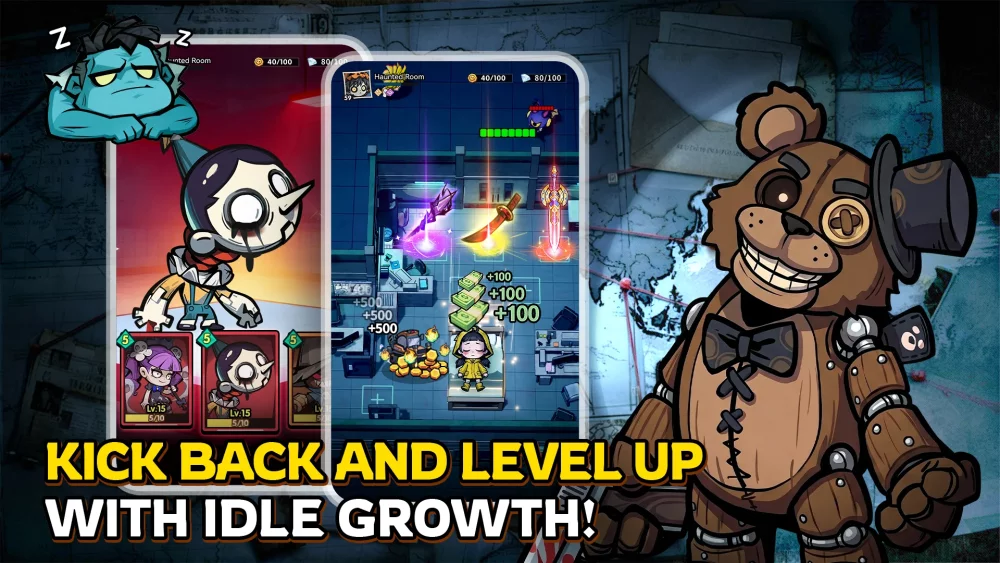
Stage 282 in Knock Knock: Room Defense represents a significant difficulty spike that separates casual players from those who have mastered the game’s core economic loop. At this stage, the ghost AI is significantly more aggressive, and the damage output from incoming waves scales rapidly. If you are struggling to keep your door intact or finding that your gold production is perpetually lagging behind the ghost’s assault speed, you need to shift your tactical focus.
Clearing Stage 282 isn’t about building a diverse array of defenses; it is about absolute efficiency in resource management. This guide breaks down the precise strategies required to optimize your economy, fortify your structural defenses, and deploy your heroes for maximum impact.
The Economic Foundation: Prioritizing Bed Upgrades
The golden rule for Stage 282 is simple: Economy is your primary defense. Many players fall into the trap of building turrets or auxiliary rooms too early, which drains the capital needed to keep your bed—the engine of your progression—at the required level.
To survive the early-to-mid game of Stage 282, you must dedicate nearly 100% of your initial gold to upgrading your bed tier. Higher bed tiers provide exponential increases in passive gold generation. In Knock Knock: Room Defense, gold is not just a currency; it is your "health" because gold buys the door repairs necessary to keep the ghosts out.
- The 3-Minute Rule: Aim to reach your target bed tier within the first three minutes. If you are still at base-level production after the initial ghost waves start hitting consistently, your door will inevitably fail.
- Avoid "Feature Creep": Do not build secondary utility rooms or early turrets until your bed is at the maximum capacity for the current wave. If you feel like you are struggling to keep your door health above 75%, it is almost always because your gold-per-second (GPS) is too low, not because you lack turrets.
Strategic Door Reinforcement: Repair vs. Upgrade
Once your bed is generating a consistent surplus, you must manage your door integrity with surgical precision. Stage 282 features "burst ghosts" that can take a door from full health to critical in a single pass.
The Repair-First Protocol
Never let your door integrity drop below 50% without triggering a repair. While it is tempting to save up for a massive structural upgrade, the cost of a broken door is much higher than the incremental cost of repairs. A broken door requires a full replacement, which is a massive gold sink that will set your progression back significantly.
Strategic Upgrade Windows
Rather than performing small, incremental door upgrades, look for "safe windows" created by hero abilities or minor lulls in ghost waves.
- Wait for the Wave Break: After a large ghost wave is cleared, immediately dump your excess gold into a major door tier jump.
- Maintain Surplus: Always keep a "buffer" of gold equal to at least two full repair cycles. This ensures that even if you get hit by a surprise wave while your door is mid-upgrade, you have the liquidity to stabilize the room immediately.
Mastering Hero Placement and Ability Rotations
Your heroes are not just damage dealers; they are your "panic buttons." On Stage 282, the ghosts have high health pools that render basic turrets insufficient. You must use your hero abilities to control the flow of the breach.
Optimal Hero Positioning
- The Anchor: Place your highest-defense hero directly behind the door. Their role is to soak up any stray damage that bypasses your primary defenses and to act as a physical buffer during critical repair moments.
- The AoE Specialist: Position heroes with Area-of-Effect (AoE) abilities in the center of your room setup. Wait until the ghosts cluster tightly against your door before triggering these abilities. Using AoE skills on one or two ghosts is a waste; using them on a cluster of five or six is the difference between surviving and failing.
Managing Cooldowns
Do not use your hero abilities as soon as they are available. In Knock Knock: Room Defense, the rhythm of the waves is predictable. Watch the ghost patterns: there is always a "hard" wave and a "soft" wave. Save your most powerful hero cooldowns for the hard waves. If you burn them during a soft wave, you will be defenseless when the boss or the elite ghost swarm arrives.
Common Mistakes to Avoid
Even with a strong strategy, small tactical errors can lead to a game-over on Stage 282. Avoid these common pitfalls:
- Panic Repairs: Do not mash the repair button. Each click costs gold. Wait until the door is damaged enough to warrant a repair, but not so low that it risks being destroyed. Mastering this "repair rhythm" saves thousands of gold over the course of a long stage.
- Over-Investing in Turrets: Turrets are secondary. They provide supplemental damage, but they cannot win Stage 282 on their own. If your door is falling, your gold should have gone to door upgrades, not more turrets.
- Ignoring Hero Synergy: Ensure your team composition includes at least one hero that focuses on crowd control (slows or stuns). Slowing down the ghosts provides your door with more time to recover its natural integrity, which is a passive form of "free" healing.
Final Decision Making: The Mid-Stage Pivot
As you approach the final minutes of Stage 282, you will reach a point where your gold production reaches a plateau. This is the moment to pivot from "Economy First" to "Survival First."
At this stage, stop all bed upgrades. If you have any remaining gold, dump it entirely into your door tier and the highest-damage turrets you have available. If your door is at max level and you have surplus, upgrade your heroes. By shifting your priorities from growth to sustainability, you can weather the final, most intense waves that characterize the end of this stage. Stay disciplined, trust your economic foundation, and do not let the chaos of the final assault force you into reactive, inefficient spending.

Free Knock Knock: Room Defense Codes
Current active codes and how to redeem them.

Michael Smith
Michael covers live-service games, events, reward systems, and efficient daily routines, turning frequent updates into clear actions for players.
COMMUNITY
Player Comments
32 players commented on this guide.
This guide answered the exact question I had.
Nice guide. I am checking the other Knock Knock: Room Defense articles next.
Good guide for Knock Knock: Room Defense players. The heroes part was useful.
This helped me understand heroes much better.