
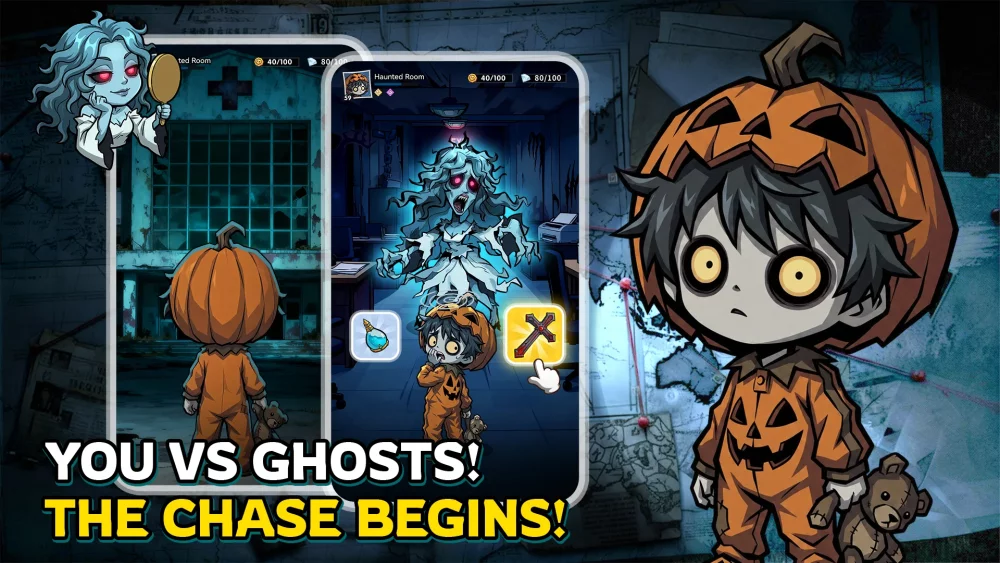
Stage 130 of Knock Knock: Room Defense represents a significant difficulty spike, often acting as a "gear check" for players who have relied on brute force rather than strategic synergy. To clear this stage, you must transition from a generalist playstyle to a specialized defensive setup. The most reliable method to overcome the overwhelming enemy density is to pair room-based damage mitigation buffs with the Angel hero’s ultimate ability, creating a sustainable loop of protection and crowd control.
Understanding the Stage 130 Threat Profile
Before optimizing your loadout, it is critical to understand why Stage 130 is a notorious bottleneck. Unlike previous levels, the enemy waves in Stage 130 feature high-health "tank" ghosts and rapid-fire swarms that deplete door durability in seconds.
If your current strategy involves simply placing the highest-damage heroes available, you are likely failing because you aren't addressing the "door chip damage" that accumulates over the course of the stage. The game’s difficulty curve at this level is designed to outpace standard hero DPS, meaning you must pivot toward a "stall and burst" tactical approach.
The Synergy: Room Buffs vs. Door Health
The secret to longevity in Knock Knock: Room Defense is realizing that your door is a resource, not just an end-state condition.
Prioritizing Damage Reduction
Select room buffs that specifically lower the percentage of damage dealt to your door. In Stage 130, these are exponentially more valuable than raw hero attack speed buffs.
- Mitigation over Repair: While healing the door is useful, damage reduction is superior. Reducing incoming damage by 20–30% effectively multiplies your total "door HP pool," buying your heroes more time to cycle their abilities.
- Placement Strategy: If your room allows for specific utility slots, prioritize items that offer passive structural reinforcement. These function as a floor for your survival, preventing "one-shot" failures during high-intensity wave spikes.
Maximizing the Angel Hero
The Angel hero is the definitive meta-pick for Stage 130. Her ultimate ability provides the necessary board wipe to reset the pressure on your door. However, the difference between a failed run and a clear is how you manage her progression.
Skill Leveling Priority
Do not spread your gold thin across your entire roster. To survive Stage 130, you must rush the Angel to her maximum ultimate level. The scaling on her ultimate doesn't just increase damage—it often increases the duration of the stun or the area of effect, both of which are vital for suppressing enemy spawns.
Tactical Ultimate Activation
A common mistake is using the Angel’s ultimate the moment the cooldown finishes. To clear Stage 130:
- Wait for Density: Only trigger the ultimate when at least 60% of the screen is occupied by enemies.
- Save for Bosses: If the wave includes a boss-type ghost, hold your ultimate. You need the burst damage to burn through their health pool before they reach the door.
- The "Safety Net" Rule: Always keep the ultimate ready if your door health drops below 50%. Using it prematurely is the most frequent cause of failure in the final minute of the stage.
Balancing Resource Efficiency
Managing your gold in Knock Knock: Room Defense is a high-stakes balancing act. Your economy dictates your survival.
- Early Game (Waves 1–5): Focus exclusively on base income generation and initial door fortification. Avoid buying low-tier heroes that will be obsolete by the middle of the stage.
- Mid Game (Waves 6–10): Begin funneling every spare coin into the Angel. If you have to choose between a minor room buff and a hero level, prioritize the hero level to unlock the next ultimate tier.
- Late Game (Waves 11+): If your Angel is maxed, spend remaining resources on final room upgrades to ensure you survive the final boss wave.
Addressing Common Pitfalls
Even with the perfect strategy, players often struggle with specific execution errors. Here is how to troubleshoot your runs:
Why You Are Still Failing
- The "Idle" Trap: Do not leave your heroes on auto-pilot if the game mode allows for manual input. Timing the Angel’s ultimate manually is significantly more effective than letting the AI trigger it during a low-density wave.
- Ignoring Crowd Control: If you rely solely on the Angel, you might struggle with "leakers"—small, fast ghosts that slip past your main AoE. Ensure you have at least one secondary hero with a slow or stun effect to support the Angel.
- Resource Throttling: If you find yourself consistently short on gold, re-evaluate your early-game hero choices. Are you buying too many cheap heroes that don't provide long-term value? Selling suboptimal early-game units to fund the Angel is often a necessary sacrifice.
Expert Strategic Summary
To conquer Stage 130, follow this core loop:
- Select defensive room buffs to keep the door stable.
- Hyper-level the Angel to reach the maximum ultimate tier.
- Hold your ultimate for moments of high enemy density or boss arrivals.
- Monitor door HP as your primary indicator for when to use utility abilities.
By treating the Angel’s ultimate as a strategic tool rather than a constant DPS source, you turn the tide of Stage 130. Remember, Knock Knock: Room Defense is a game of management. If you can keep the door standing through the mid-wave spikes, the late-game scaling of the Angel will carry you through to victory. Stay disciplined with your gold, focus your defensive investments, and prioritize the Angel's ultimate timing to clear the stage efficiently.

Free Knock Knock: Room Defense Codes
Current active codes and how to redeem them.

Sarah Williams
Sarah specializes in RPG and collection games, explaining team building, character growth, and beginner-friendly ways to avoid expensive early mistakes.
COMMUNITY
Player Comments
68 players commented on this guide.
I tried this today and it worked better than my old setup.
The explanation is clear, especially for beginners.
Nice guide. I am checking the other Knock Knock: Room Defense articles next.
I wish I had read this before upgrading the wrong thing.