
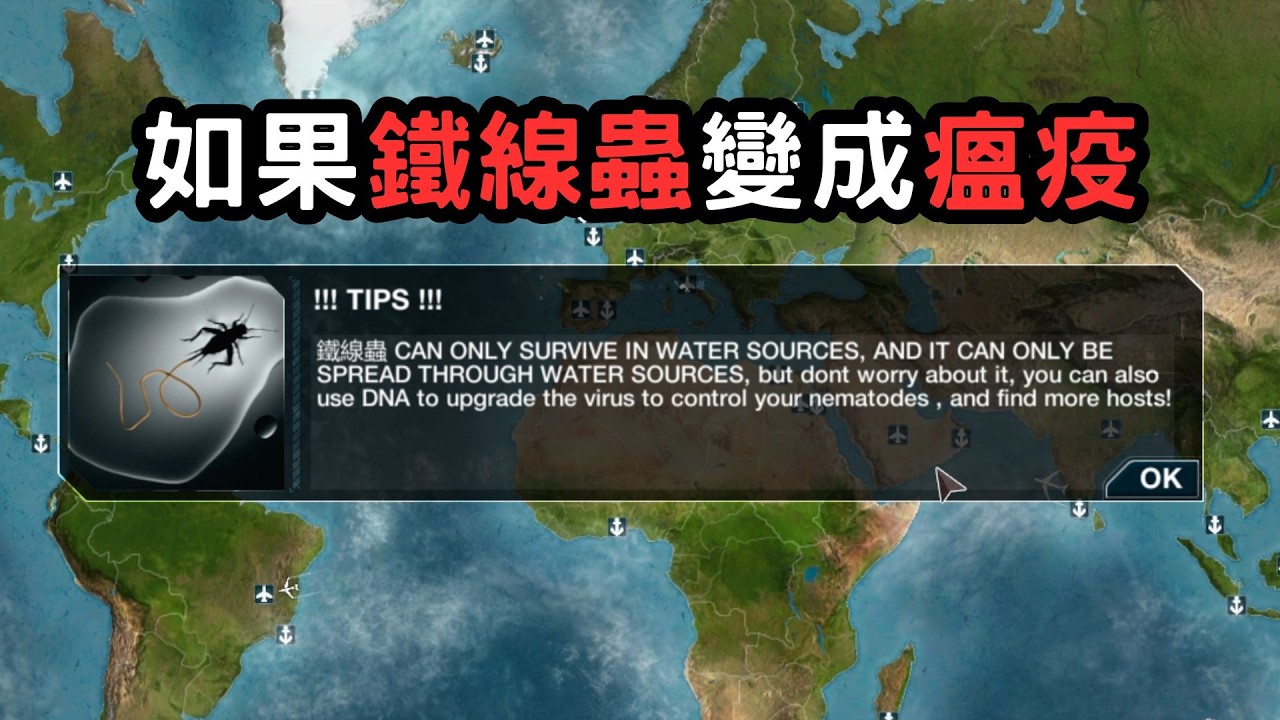
To beat the Horsehair Worm custom scenario in Plague Inc., prioritize aquatic transmission, keep lethality low until every country is infected, and reserve DNA to disrupt late-game cure research. The scenario models the waterborne life cycle and behavioral control traits of parasitic nematomorph worms, making silent early spread across international sea routes your main strategic requirement.
Select an Optimal Origin and Aquatic Vectors
Begin your outbreak in a densely populated, humid coastal nation such as China or South Korea. These regions provide immediate access to municipal freshwater networks and active maritime shipping routes, generating rapid early DNA from infection bubbles. Starting in a dry, landlocked country will stall early expansion because the parasite depends on reliable water access to incubate and spread.
Invest your earliest DNA points directly into waterborne transmission upgrades:
- Water 1 and Water 2: Rush these traits immediately to increase larval survival in tap water systems and cargo ships.
- Insect or Air Vectors: Add secondary dispersal traits after securing basic water spread to bridge infection into inland territories and commercial hubs.
Balance Climate Resistances and Pathogen Stealth
Cold climates severely impede aquatic larval spread, making northern territories like Greenland, Iceland, and Norway major choke points. Purchase Cold Resistance 1 and Cold Resistance 2 before year two so ship arrivals successfully establish local clusters. Pair these with Drug Resistance 1 to ensure steady transmission across wealthy healthcare systems in North America and Europe.
Throughout this expansion phase, keep pathogen visibility near zero. If random mutations introduce severe symptoms such as internal hemorrhaging, devolve them immediately. Premature lethality alerts healthcare authorities, triggers port closures, and speeds up cure development before island nations are infected. Keep your symptoms limited to mild traits that do not draw global monitoring.
Follow the Three-Stage Symptom Tree
Transition from stealth to lethal host destruction in three distinct phases based on global infection levels.
| Evolution Stage | Recommended Symptoms | Strategic Purpose |
|---|---|---|
| Stage 1: Incubation | Dehydration, Mild Thirst, Fatigue | Builds base infectivity without raising severity or triggering high-level cure research. |
| Stage 2: Behavioral Urge | Hydrophilia, Delirium, Compulsive Bathing | Drives hosts toward open water sources to rapidly accelerate municipal and regional aquatic spread. |
| Stage 3: Terminal Emergence | Abdominal Rupture, Internal Hemorrhage, Organ Failure | Converts universal infection into rapid mortality once every border and port is breached. |
Evolve Stage 2 traits once self-sustaining infection clusters exist across all populated continents. Hydrophilia and extreme thirst simulate the real-world behavioral manipulation of nematomorph parasites, overwhelming public sanitation systems. Do not trigger Stage 3 lethal symptoms until every isolated island—particularly Greenland, Madagascar, and New Guinea—registers active infection cases.
Counter the Cure and Secure Isolated Islands
Once Stage 3 symptoms activate, international cure research will accelerate rapidly. Reserve 40 to 50 DNA points before evolving your lethal traits to counter this response immediately:
- Genetic Hardening 1 and 2: Increases the total research points required for laboratories to complete the cure.
- Genetic Reshuffle: Knocks back active cure completion percentages, neutralizing progress made by dedicated research fleets.
Monitor isolated island ports continuously during the late game. If an uninfected territory seals its borders, the scenario cannot be won. Confirm active cases in all territories before unleashing terminal lethality, using any leftover DNA to upgrade water filtration bypasses or extreme aquatic traits if slow-moving island infections need an immediate boost.

Free Plague Inc. Codes
Current active codes and how to redeem them.

James Brown
James focuses on Android gaming on PC, emulator setup, controls, performance tuning, and practical troubleshooting for longer play sessions.
COMMUNITY
Player Comments
78 players commented on this guide.
Can you add more details about early game in a future update?
The tips are practical and easy to follow.
I tried this today and it worked better than my old setup.
This helped me understand early game much better.