
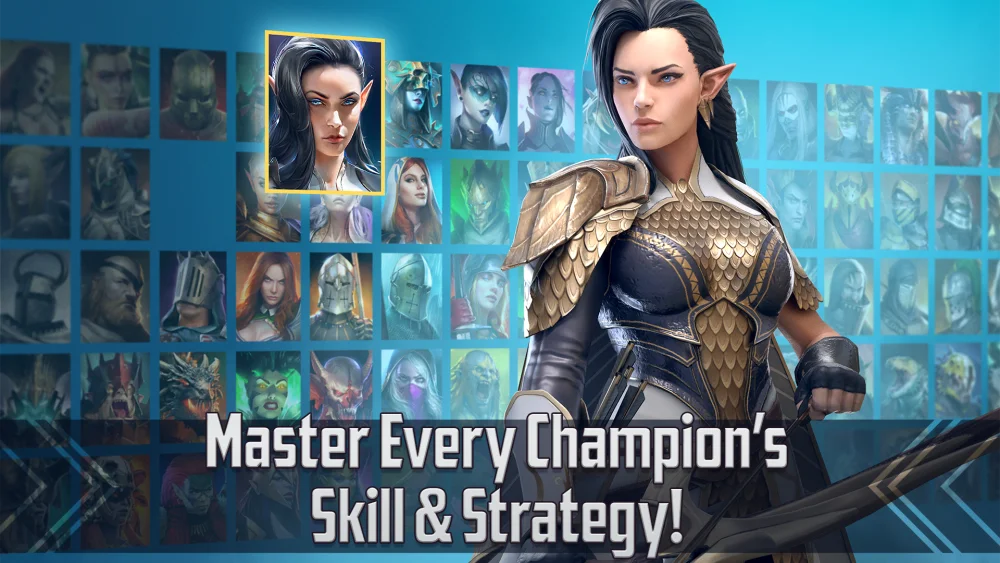
In RAID: Shadow Legends, the landscape of the meta is constantly evolving. For veteran players and newcomers alike, the ability to interpret pre-release information, developer trailers, and ability showcases is a high-level skill that separates efficient accounts from those stuck in a cycle of resource mismanagement. By learning to "read" new content reveals, you can effectively anticipate meta shifts, decide when to hoard your shards, and determine if an incoming champion is a game-changer or a trap.
Decoding Visual Fidelity and Animation Mechanics
RAID: Shadow Legends uses visual cues as a proxy for power levels. When a new champion is revealed, developers often utilize high-fidelity, fluid animations to highlight their most impactful abilities. Understanding these visual cues can provide immediate insights into a unit’s potential:
- Ability Complexity: If a champion features complex, multi-stage animations, it often indicates a kit that relies on multiple status effects or passive interactions. These champions typically require higher mechanical investment but offer a higher power ceiling.
- The "Centerpiece" Indicator: Mythical and top-tier Legendary champions are almost always accompanied by unique, frame-intensive combat animations. If a trailer highlights a character with sweeping, high-detail effects, they are likely designed to be a cornerstone unit for your roster.
- Performance Benchmarking: Watch for how the champion interacts with enemy waves in the preview. If they are clearing high-HP mobs or landing debuffs consistently during the showcase, they are being positioned as a potential speed-farming or boss-killing specialist.
Identifying Meta-Shifting Ability Indicators
Beyond the spectacle, you must look for the "mechanic markers" hidden in combat footage. These are the specific buffs, debuffs, and passives that define the modern meta.
Recognizing Debuff and Shield Mechanics
Keep an eye out for unique status icons. If a new champion’s reveal shows them bypassing "Unkillable" buffs or stripping "Shield" sets in the Arena, you are looking at a direct counter to the current turtle-meta defense compositions.
Turn Meter and Utility
If the combat footage shows the champion manipulating turn meters—either boosting allies or decreasing enemy speed—they are an immediate candidate for high-level Dungeons, the Cursed City, or the Live Arena. These units are rarely "niche"; turn-meter control is the most valuable utility in the game, and a champion demonstrating these traits is almost always worth your attention.
Strategic Resource Allocation: The Art of Hoarding
One of the most common mistakes in RAID: Shadow Legends is pulling shards the moment a new banner drops. To maintain a competitive edge, you must treat your shards—Sacred, Void, and Primal—as long-term investments rather than instant gratification.
The Pre-Pull Checklist
Before committing resources to a new champion, run the reveal through this evaluation framework:
- Role Utility: Does this champion fill a gap in your roster? If you already have a top-tier wave clearer, a new, slightly faster one is a luxury, not a necessity.
- Synergy Requirements: Does this champion require a specific team composition to function? If they need a highly specific legendary support that you don't own, their value is significantly lower.
- Event Conflict: Check the current event rotation. Is there a Fusion event on the horizon? If you exhaust your shards on a new release, you may find yourself unable to complete a Fusion that offers a guaranteed, meta-defining champion.
- Gear Thresholds: Does the champion require high-end, specialized gear (like Instinct or high-speed Speed sets) to be effective? If your gear quality isn't there yet, the champion will underperform regardless of their multipliers.
Balancing Anticipation with Account Progression
It is easy to get caught up in the hype of a new, flashy champion. However, you must differentiate between "horizontal growth" (adding more champions) and "vertical growth" (improving your gear and core team stats).
If you are struggling to clear stage 20+ of a Dungeon or failing to reach the top chests in Clan Boss, your resources are better spent on gear farming or building current champions who can solve those specific bottlenecks. Only invest in a new champion if they offer a clear path to overcoming a current progression wall. If a champion is designed for a mode you have already mastered (e.g., a specialist for a dungeon you can already speed-farm), they are a "skip" unless you are a competitive PvP player looking for marginal gains in the Live Arena.
Leveraging Community and Data Analysis
While your own analysis is critical, the RAID: Shadow Legends community is an invaluable resource. When a new champion is announced:
- Wait for the "Theorycrafters": Within 24–48 hours of a full kit reveal, community experts often calculate estimated damage multipliers and potential synergy combinations.
- Search for Consensus: Look for a general consensus on the champion’s role. If the community identifies a unit as a "must-pull," it is usually because they break an existing game mechanic or offer unprecedented utility.
- Filter the Hype: Avoid streamers or content creators who label every new unit as "game-breaking." Instead, look for creators who provide breakdown videos that compare the new unit’s stats and skills to current meta champions.
Final Decision: To Pull or Not to Pull?
The final decision should always be based on your current account stage. Use the following logic for your final decision:
- The "Must-Pull" Criteria: The champion provides a unique buff/debuff, counters a dominant meta team, or provides an essential skill (like AoE revive or passive damage mitigation) that you are currently missing.
- The "Wait and See" Criteria: The champion seems strong but relies on complex synergies you haven't built yet, or they fill a role you already have covered with a solid, albeit slightly weaker, champion.
- The "Skip" Criteria: The champion is a "win-more" unit—they only perform well if you already have a fully maxed account or they occupy a niche that doesn't help you progress in high-value areas like the Clan Boss or Cursed City.
By treating every champion reveal as a data point rather than a hype-driven event, you will maintain a more powerful, flexible, and sustainable roster in RAID: Shadow Legends. Remember: the best players aren't the ones with the most champions; they are the ones who know exactly which champions are worth the investment.
Free RAID: Shadow Legends Codes
Current active codes and how to redeem them.

James Brown
James focuses on Android gaming on PC, emulator setup, controls, performance tuning, and practical troubleshooting for longer play sessions.
COMMUNITY
Player Comments
146 players commented on this guide.
This guide answered the exact question I had.
Good guide for RAID: Shadow Legends players. The resources part was useful.
The tips are practical and easy to follow.
Can you add more details about resources in a future update?