
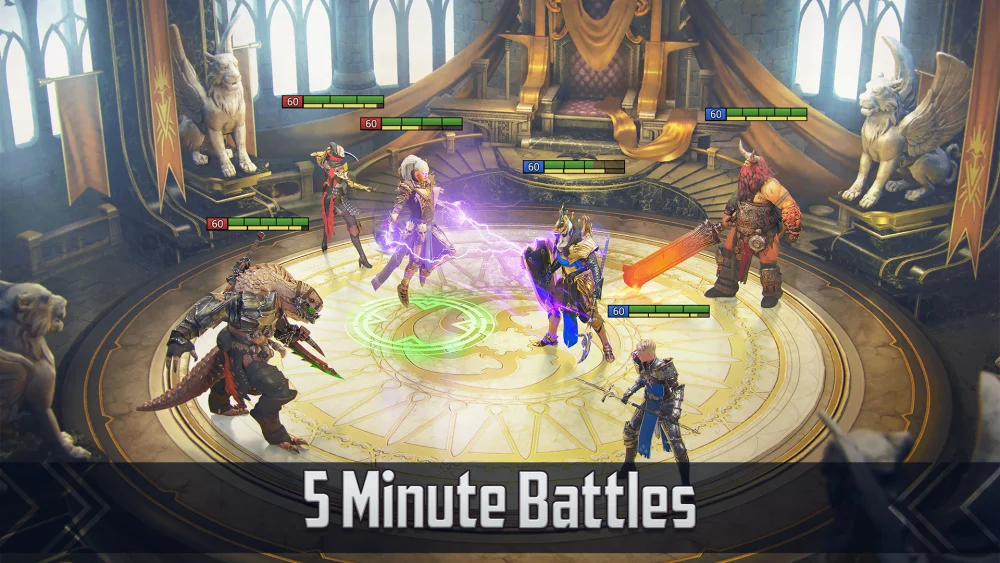
You can conquer the most challenging content in RAID: Shadow Legends without spending a single cent by shifting your focus from RNG-based shard summons to high-value, accessible champions. While the allure of legendary pulls is strong, consistent progression in RAID is dictated by team synergy, mechanical knowledge, and stat optimization rather than raw champion rarity. By leveraging login rewards, mission milestones, and farmable heroes, you can build a cohesive, endgame-ready team capable of dismantling the game’s hardest bosses.
The Power of Accessible Champion Kits
Your success in RAID: Shadow Legends is fundamentally determined by how well your team’s abilities interact, not by the color of a champion's border. Many players fall into the "Legendary Trap," investing heavily in high-rarity units that lack the specific utility required for dungeon progression.
Instead, view your roster as a functional toolset. When evaluating a hero for your team, ignore their base rarity and focus strictly on:
- Skill Modifiers: Does the champion provide essential debuffs like Decrease Attack or Decrease Defense?
- Cooldowns: Can the champion maintain these debuffs with high uptime?
- Role Compression: Does the hero provide multiple benefits, such as healing combined with a turn meter boost?
Champions like Kael (your starter), High Khatun (login reward), and Scyl of the Drakes (long-term login reward) are staples for a reason. They offer reliable, high-impact skills that outperform many niche Legendary units in specific dungeon encounters. Focus on building units that provide consistent control—this is the secret to F2P longevity.
Mastering Debuff Application for Boss Survival
The most common point of failure for players in RAID: Shadow Legends is prioritizing damage output at the expense of boss mitigation. If your team dies before the boss does, your damage is irrelevant. To survive high-level dungeons, you must maintain a 100% uptime on the "Big Three" debuffs: Decrease Attack, Decrease Defense, and Weaken.
The Hierarchy of Survival
- Decrease Attack: This is your highest priority. It reduces the incoming damage from boss AoE attacks by 50%. If this debuff isn't active, your team will likely be one-shot in later dungeon stages.
- Decrease Defense: This serves as your primary damage multiplier. By reducing the boss's defense, you allow your team to clear waves and bosses significantly faster.
- Turn Meter Control: Utilize heroes that can reduce the boss's turn meter. This prevents them from cycling through their abilities, giving you more "free" turns to deal damage and heal.
- Utility Support: Bring a cleanser or healer to mitigate the impact of boss-applied debuffs, such as Poison or Stun, which can disrupt your rhythm.
Strategic Gear Allocation for F2P Units
Even the most perfectly composed team will crumble if equipped with suboptimal gear. In RAID: Shadow Legends, stats always trump set bonuses.
Prioritizing Stats
- Accuracy: This is the most critical stat for any debuffer. If your champion has a 100% chance to land a debuff but lacks the Accuracy to bypass the boss's Resistance, the skill is effectively useless. Aim for at least 10x the dungeon level (e.g., 200 Accuracy for Stage 20).
- Speed: Speed is the most important stat in the game. It dictates how often your team acts. A slower team is a dead team. Ensure your support and debuffers are faster than your damage dealers.
- Broken Sets: Do not feel forced to complete a four-piece set if it means sacrificing core stats. Using two "broken" pieces to reach your required Accuracy or Speed thresholds is almost always superior to forcing a set bonus that provides irrelevant stats.
Evaluating Champion Synergy Over Rarity
A successful RAID squad functions like a machine, where every piece serves a purpose. When building your team, look for "force multipliers"—champions that make your other units more efficient. A Speed Aura lead, for example, effectively grants your entire team more turns, which translates into higher debuff uptime and more frequent healing.
If you find yourself stuck, analyze your champion roles:
- The Lead: Does your leader provide a Speed Aura that helps your team hit the necessary speed benchmarks?
- The Debuffer: Is their Decrease Defense skill booked to a 100% proc chance?
- The Support: Does your healer have enough HP/Defense to survive being targeted by the boss?
Transitioning from Mid-Game to Hard Dungeons
As you transition into Stage 20+ dungeons, you must stop relying on brute force and start playing the mechanics. Each boss in RAID: Shadow Legends has unique behaviors that you can exploit.
Iterative Improvement Strategy
- Identify the Weak Link: When you fail a run, watch the replay. Who died first? Was it because they were too slow, too squishy, or did they miss a crucial debuff?
- Adjust Gear First: Before pulling new champions, try swapping gear pieces. Often, moving a high-speed piece from a damage dealer to a support unit is enough to stabilize the run.
- Optimize for the Encounter: If a boss punishes you for having too many buffs, swap out your team-wide buffer for a single-target debuffer. If a boss has high resistance, re-farm gear with better Accuracy substats.
Progression in RAID is a marathon, not a sprint. By focusing on champion utility, maintaining strict stat thresholds, and learning the specific mechanics of each encounter, you can clear the hardest content the game has to offer without ever needing to rely on the luck of a shard pull. Remember: a team of well-geared, properly synergized Rare and Epic champions will consistently outperform a team of poorly built Legendaries.

Free RAID: Shadow Legends Codes
Current active codes and how to redeem them.

Emily Johnson
Emily writes practical mobile strategy guides with a focus on resource planning, base progression, and the early decisions that shape a long-term account.
COMMUNITY
Player Comments
33 players commented on this guide.
The tips are practical and easy to follow.
I wish I had read this before upgrading the wrong thing.
Nice guide. I am checking the other RAID: Shadow Legends articles next.
The explanation is clear, especially for beginners.