
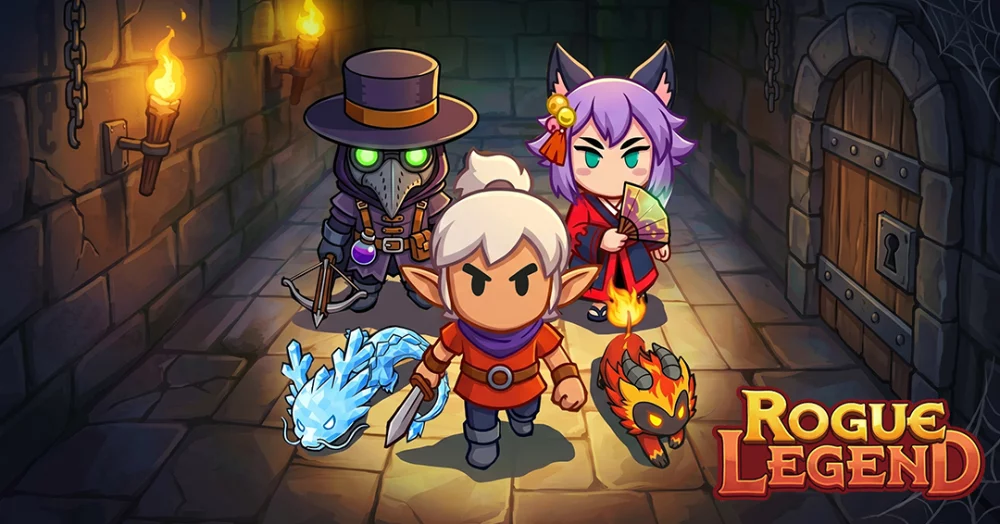
To achieve competitive speedrun times in Rogue Legend, players must fundamentally shift their approach from traditional, survival-oriented playstyles to hyper-aggressive, high-damage strategies. In a 1v1 competitive modded environment, victory is dictated by how efficiently you can clear board-based encounters, force pressure onto your opponent, and maximize your in-game economy.
Speedrunning this action roguelike RPG requires a deep understanding of deck archetypes, character customization, and precise spatial awareness on the board. This comprehensive guide breaks down the tactical shifts required to outpace your opponents, highlighting the importance of early-game aggressive deckbuilding, optimal board positioning, and the trade-offs of sacrificing late-game security for raw offensive momentum.
Understanding the Modded 1v1 Speedrun Format
In a standard Rogue Legend run, the goal is longevity—building a deck and customizing your hero to survive increasingly difficult board-based encounters. However, the modded 1v1 speedrun format turns the game into a race. Your objective is to clear your randomized boards faster than your opponent, which in turn sends "garbage" enemies or direct damage to their side of the screen.
Because mods often introduce accelerated scaling, custom card interactions, and altered resource generation, the meta revolves around "tempo." Tempo means doing the most damage in the fewest turns, spending your Action Points (AP) with ruthless efficiency. If you play defensively, you give your opponent the time they need to assemble an infinite damage loop or overwhelm your board with fast clears.
Prioritizing Burst Damage Over Defensive Utility
In 1v1 speedrun scenarios, the goal is to dismantle the opponent’s board state through sheer elimination speed rather than attrition. You must prioritize deck archetypes and hero traits that offer massive burst damage over those providing crowd control, shielding, or healing. While slows, stuns, and defensive buffs are essential for standard survival runs, they consume valuable AP and card draws early on that could be better spent on primary damage dealers.
When drafting cards or selecting skills for a 1v1 match, evaluate the Action-Point-to-Damage ratio of every option.
- Area-of-Effect (AoE) Supremacy: Cards that provide wide-reaching AoE damage are universally preferred because they clear multiple enemies simultaneously. Clearing a board in two turns instead of four fuels your economy faster and triggers the next encounter instantly.
- Piercing and Chaining Attacks: Abilities that strike a target and chain to adjacent hexes or squares are incredibly valuable. They allow you to bypass heavily armored frontline enemies and clear weaker backline units without wasting precious movement points.
- Deck Thinning: To ensure you consistently draw your highest-damage cards, you must actively remove basic strikes and defensive blocks from your deck at rest sites or shops. A smaller, highly focused deck guarantees that your best speedrun combos are always in your hand.
By focusing on raw power, you create a "snowball" effect. Faster clear times generate more gold and experience, allowing you to upgrade your offensive capabilities long before your opponent stabilizes their own deck.
Aggressive Early-Game Economy Management
The most critical factor in a Rogue Legend speedrun is how you handle your initial gold and resource surplus. Spending your starting currency on expensive, long-term investments—like scaling artifacts that take 20 encounters to pay off—is a common trap.
Instead, invest in low-cost, high-efficiency cards and temporary buffs that allow you to obliterate the first few waves without needing significant setup. This approach allows you to funnel your remaining gold into immediate tempo-boosting mechanics, such as extra AP for the first turn of combat or enhanced starting card draw.
The Shop Phase Strategy
During the shop phase between encounters, prioritize the following purchases:
- AP Generation: Any artifact or card that grants additional Action Points on turn one.
- Card Upgrades: Upgrading a 1-cost attack to deal double damage is infinitely better than buying a new 3-cost attack that requires setup.
- Movement Enhancers: Items that allow your hero to traverse the board for free. Positioning is key to landing optimal AoE strikes, and paying AP to move slows down your clear time.
When playing competitively, you must monitor your opponent's progression bar. If they are investing heavily in defensive scaling, you can afford to push your economy further into high-risk, high-reward cards. However, if they are also building for speed, you must prioritize the most efficient damage-per-gold upgrades available in the current modded set to ensure you win the mid-game damage race.
Mastering Board-Based Encounters for Speed
Rogue Legend is distinct because of its board-based tactical combat. Having a strong deck is only half the battle; knowing how to navigate the board efficiently is what separates average runners from record-holders.
Manipulating Enemy AI
Enemies in Rogue Legend follow predictable movement patterns based on your hero's position. In a speedrun, you should use your hero's placement to "herd" enemies into a single cluster. Instead of chasing down isolated enemies across the board, position your hero in a central choke point. Let the enemies group up around you, and then unleash a single, devastating AoE attack to clear the entire wave in one action.
Minimizing Movement Costs
Every point of AP spent moving is a point not spent dealing damage. Customize your character with traits that grant "Free Step" or "Dash" abilities. If you must move, ensure that the final destination puts you in a position to hit multiple targets for the rest of the encounter, minimizing the need to reposition on subsequent turns.
Leveraging Modded Card Synergies
Modded versions of Rogue Legend often introduce unique card interactions, custom classes, and global rulesets that are not present in the base game. Speedrunners use these to create powerful, game-breaking synergies that drastically reduce the time required to clear specific rounds.
Pay close attention to how different damage types interact with modded global buffs. For example, if a mod introduces a "Combo Multiplier" that increases damage for every card played in a single turn, you should immediately pivot to a "Zero-Cost Cycle" deck archetype. By playing free cards that draw other free cards, you can artificially inflate your damage multiplier and one-shot boss encounters.
The Importance of the "Flex Slot"
The trade-off for relying on hyper-specific modded synergies is a glaring lack of versatility. If your primary infinite-damage combo is countered by a specific enemy type (such as an enemy with an "Immune to Combo Damage" aura), your run will stall entirely.
To mitigate this, always keep one "flex" card in your deck—a reliable, high-base-damage attack that does not rely on your primary synergy to function. This ensures you are not completely vulnerable to unexpected wave compositions or counter-strategies sent by your opponent.
Character Customization for Speed Builds
Before the run even begins, your character customization choices dictate your speedrun potential.
- Starting Traits: Always select traits that provide upfront value. "Ruthless" (deals 50% more damage to enemies at full health) is vastly superior to "Berserker" (deals more damage as your health gets lower) because your goal is to one-shot enemies before they ever hit you.
- Hero Classes: Classes that specialize in burst magic or dual-wielding typically out-perform heavy armor or summoner classes. Summoners require too much setup time (waiting for minions to spawn and act), which actively hurts your real-world timer in a speedrun.
Managing the Risks of the "Glass Cannon" Playstyle
Speedrunning Rogue Legend requires accepting a much higher margin of error. Because your deck and customizations focus purely on maximum damage output, your defenses are virtually non-existent. A single misclick, a poor card draw, or an inefficient targeting priority can lead to a quick defeat.
Understand that speed-focused builds are inherently "glass cannons." If you do not win within the projected early-to-mid-game timeframe, your lack of late-game utility will likely cause you to fall behind a standard, well-rounded build.
To manage this risk without compromising your speed, always look for small, incremental upgrades that provide high defensive value without requiring a massive gold dump or diluting your deck. A single, upgraded "Ethereal Dodge" card that exhausts after use is often enough to save you from a lethal boss attack without cluttering your hand in subsequent reshuffles.
By committing to aggressive deck archetypes, mastering the board's spatial puzzle, and ruthlessly optimizing your early-game economy, you can dominate the 1v1 modded speedrun leaderboards in Rogue Legend.

Free Rogue Legend Codes
Current active codes and how to redeem them.

Sarah Williams
Sarah specializes in RPG and collection games, explaining team building, character growth, and beginner-friendly ways to avoid expensive early mistakes.
COMMUNITY
Player Comments
52 players commented on this guide.
I wish I had read this before upgrading the wrong thing.
I tried this today and it worked better than my old setup.
This helped me understand early game much better.
This saved me time in the early game.