
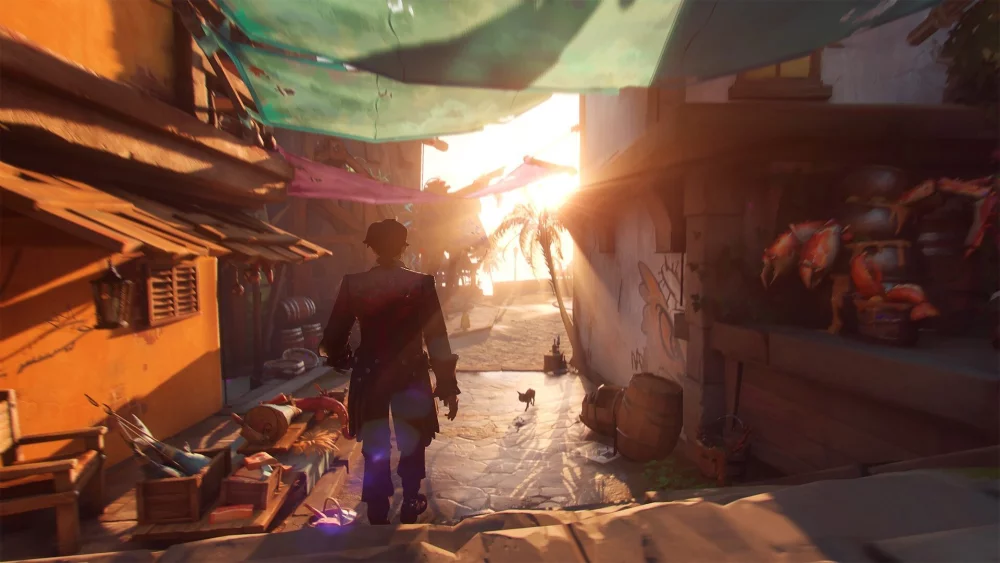
In Sea of Remnants, you are thrust into a vast, mysterious ocean world with nothing but your curiosity and a blank slate. Because the game drops you into a state of total deprivation—lacking both identity and equipment—the first hour is the most critical phase of your journey. To survive the initial trials and establish a foothold, you must transition from a vulnerable wanderer to a capable survivor by mastering the mechanics of resource scarcity and memory recovery. This guide outlines exactly how to navigate your first steps, avoid common pitfalls, and leverage the unique puppet-inspired aesthetics of the world to your advantage.
Reclaiming Your Identity: The Role of Memory Fragments
In Sea of Remnants, "Memory Fragments" are not merely narrative collectibles; they are the mechanical engine of your character’s progression. When you begin, your character is a tabula rasa—you have no base stats, no inherited skills, and no combat proficiency.
Memory Fragments act as the primary catalyst for unlocking your skill tree and establishing your role within the world. Prioritizing these should be your absolute first objective upon spawning. When you identify a fragment, treat it as a mandatory waypoint. As you collect them, your character will regain snippets of their past, which translate into tangible improvements such as increased movement speed, better stamina management, and access to advanced crafting blueprints. If you find yourself struggling against standard environmental hazards, it is almost always because you have skipped too many memory fragments.
Navigating the Puppet-Style Aesthetic
Sea of Remnants features a distinct, puppet-inspired art style that gives the world its haunting, dreamlike atmosphere. While beautiful, this aesthetic can be a functional challenge for new players. The muted color palettes and unique textures can make essential loot blend into the background, leading to "missed interactions" that could have provided early-game relief.
To overcome this, you must train your eyes to scan for "interactive silhouettes." Unlike the static, decorative background objects, functional gear—such as scavenged scrap, rusted blades, or cloth wrappings—often possesses a subtle, distinct sheen or a jagged edge that contrasts with the softer, rounded aesthetic of the puppets.
- The Lighting Trick: Always look for areas where light hits the ground; developers often place loot in high-contrast zones to ensure they remain visible despite the art style.
- Active Scanning: Do not rely on your eyes alone. Use the interaction prompt radius to your advantage. If your crosshair doesn't change, move on—don't waste time investigating inanimate background scenery.
The Scavenger’s Mindset: Prioritizing Loot Over Combat
The most common mistake for new players in Sea of Remnants is attempting to engage in combat immediately. The game provides a sense of freedom, but that freedom is a trap if you are unequipped. Your first hour should be treated as a scavenger hunt, not a combat expedition.
Combat in the early game is high-risk and low-reward. Your starting state is so fragile that even low-level threats can drain your health pool in seconds. Instead, focus on:
- Material Loops: Identify areas with consistent resource spawns (wood, scrap metal, fabric).
- Stat-Boosting Resources: Look for items that provide temporary, stackable buffs to your survival stats.
- Pathing: Avoid "high-aggression" zones marked by dense creature populations. If you hear combat music, you are likely in an area you aren't prepared for yet.
Mapping the Limits of Early-Game Freedom
Sea of Remnants is a true open-world RPG, meaning there are no invisible walls stopping you from walking into end-game territory within your first five minutes. However, the world is gated by difficulty spikes rather than physical barriers.
Use your initial playtime to "map" your surroundings. If you encounter enemies that take more than a few hits to defeat, or if you find yourself running out of stamina before reaching the next landmark, you have likely strayed into a higher-level zone. Retreating is not a sign of failure; it is a tactical necessity. Establish a "Safe Radius" around your initial spawn point and expand it only once you have secured at least two tiers of equipment upgrades.
Strategic Decision-Making: Gear and Crafting
Once you have scavenged your first set of basic gear, your objective shifts toward optimization. In Sea of Remnants, durability is a constant concern. Do not waste high-tier crafting materials on early, temporary gear.
- The Rule of Three: Keep three sets of basic tools on hand. Having a backup prevents you from being stranded in the wilderness if your primary tool breaks during an excursion.
- Inventory Management: Your bag space is limited early on. Prioritize "Memory-Linked" items (found near fragments) as they typically provide better weight-to-utility ratios than standard scavenged junk.
Why This Strategy Works
The design of Sea of Remnants rewards patience and systematic progression. By focusing on memory recovery and gear stabilization, you aren't just surviving; you are building the foundation for your character’s permanent stats. The game is designed to scale with your discoveries. If you rush, the game remains difficult and punishing; if you gather, explore, and "remember," the world opens up, allowing you to dominate the very threats that once posed an immediate danger.
By following this disciplined approach, you ensure that you aren't just drifting through the Sea of Remnants—you are conquering it. Keep your goals small, prioritize your memory, and never underestimate the value of a well-timed retreat. Your journey from a nameless puppet to a master of the seas starts with what you collect in these first few hours.

Free Sea of Remnants Codes
Current active codes and how to redeem them.

Sarah Williams
Sarah specializes in RPG and collection games, explaining team building, character growth, and beginner-friendly ways to avoid expensive early mistakes.
COMMUNITY
Player Comments
148 players commented on this guide.
The explanation is clear, especially for beginners.
This guide answered the exact question I had.
Nice guide. I am checking the other Sea of Remnants articles next.
The tips are practical and easy to follow.