
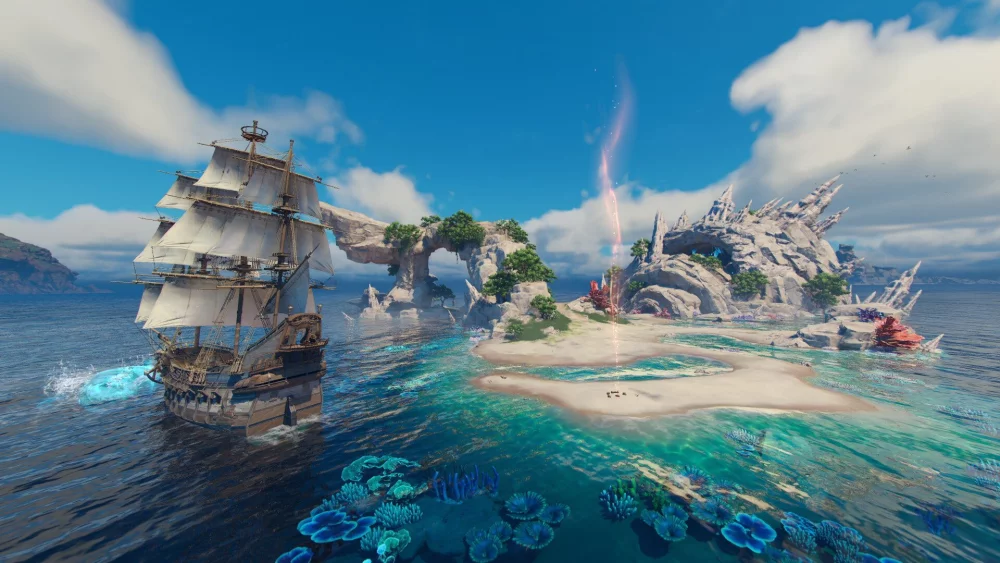
In Sea of Remnants, players are often struck by the sheer density of high-quality assets, detailed narrative, and polished turn-based combat. However, many newcomers find themselves hitting sudden progression walls. These are not accidental; they are intentional pacing mechanics designed by the developers to stretch the gameplay loop. To succeed, you must stop viewing these as "stuck points" and start treating them as tactical constraints that require precise planning.
Understanding the Energy-Gated Progression System
Sea of Remnants utilizes a rigorous stamina recovery model that acts as a gatekeeper for campaign progress. Unlike traditional RPGs that allow for endless grinding, this title limits your session length to ensure you engage with the game’s systems incrementally.
The Stamina Trap
The game’s design forces a transition from a linear, narrative-driven JRPG experience into a broader, resource-gated exploration phase. When your stamina pool is depleted, you are barred from critical combat encounters and high-value exploration nodes.
Expert Tip: Do not attempt to burn through your stamina reserves on minor nodes early in your session. Instead, prioritize "Main Story" or "High-Yield Material" nodes. If you exhaust your stamina on low-value encounters, you will find yourself unable to progress the narrative when you actually have the time to play. Treat stamina as your most precious currency, not as a refillable bar to be emptied mindlessly.
Mastering the Six-Grid Movement Restriction
Navigation on the high seas is governed by a strict "six-grid" movement limit. This mechanic is the primary bottleneck for your exploration speed and map coverage.
Tactical Pathing
Because you are limited to six tiles per movement cycle, every decision counts. If you sail blindly, you will inevitably waste turns backtracking or landing on low-utility tiles.
- Survey the Map: Before moving, scan the fog of war for resource nodes that align with your current objectives.
- The Path of Least Resistance: Calculate the shortest route to your main story objective. If a detour to a minor loot tile costs you a turn that prevents you from reaching a quest-critical node, skip the loot.
- Predictive Sailing: Use your movement to position your ship near high-value clusters. By staying in high-density areas, you maximize the efficiency of your limited daily turns.
Balancing Narrative Depth and Tactical Combat
The structure of Sea of Remnants shifts significantly as you move past the introductory narrative chapters. While the early game feels like a classic JRPG, the late-game experience evolves into a complex, turn-based deck-building challenge.
Why You Hit Difficulty Walls
If you find yourself losing combat encounters, it is rarely due to a lack of "grinding" levels. More often, it is a failure of tactical synergy. The game intentionally obscures the meta early on, forcing you to learn the mechanics of your units and cards.
Strategic Advice: During the periods where you are stamina-locked or movement-restricted, do not simply log off. Use this time to:
- Audit Your Deck: Review the tooltips for your character abilities. Look for hidden synergies between different hero classes.
- Simulate Combinations: Experiment with different team compositions that you might not have considered. The turn-based nature of Sea of Remnants rewards players who understand "combo chains" over those who simply bring the highest-level units.
The Cost of Dense Asset Development
One of the most distinct features of Sea of Remnants is the overwhelming quality of its assets. The UI, animations, and world-building are top-tier, which creates a cognitive dissonance: players feel that such a beautiful game should be played at a fast, immersive pace.
However, the "cost" of this high-fidelity design is the intentional slowing of the game's pace. The developers have invested heavily in the quality of each encounter, meaning that if you were allowed to rush through the content, you would finish the game in a fraction of its intended lifespan.
Embracing the Long-Term Loop
Accept that this is a long-term project. By slowing your pace, you allow yourself to appreciate the nuance of the combat mechanics and the intricate design of the world. Players who try to "speedrun" Sea of Remnants often burn out because they fight the game's inherent rhythm. Those who embrace the daily cycle find a much more satisfying, rewarding, and sustainable progression path.
Strategic Priority Summary for Success
To maintain consistent growth and avoid the pitfalls of the early game, categorize your daily gameplay into these three pillars:
- Stamina Efficiency: Never start an encounter unless you have verified it contributes to your primary gear or level-up goals.
- Grid Optimization: Think two turns ahead. If your six-grid movement cannot guarantee a path to an objective, hold your position or clear the most valuable resource node in range.
- Synergy Building: Spend your "forced downtime" (when stamina is empty) in the preparation menus. Refine your team composition, read through character passives, and optimize your loadout for the next major encounter.
By aligning your strategy with these limitations, you strip away the frustration of the artificial caps. Sea of Remnants is a game of patience and tactical precision; once you stop trying to bypass the constraints and start working within them, you will find a significantly deeper and more rewarding experience.

Free Sea of Remnants Codes
Current active codes and how to redeem them.

Michael Smith
Michael covers live-service games, events, reward systems, and efficient daily routines, turning frequent updates into clear actions for players.
COMMUNITY
Player Comments
76 players commented on this guide.
This saved me time in the early game.
I tried this today and it worked better than my old setup.
This guide answered the exact question I had.
I wish I had read this before upgrading the wrong thing.