
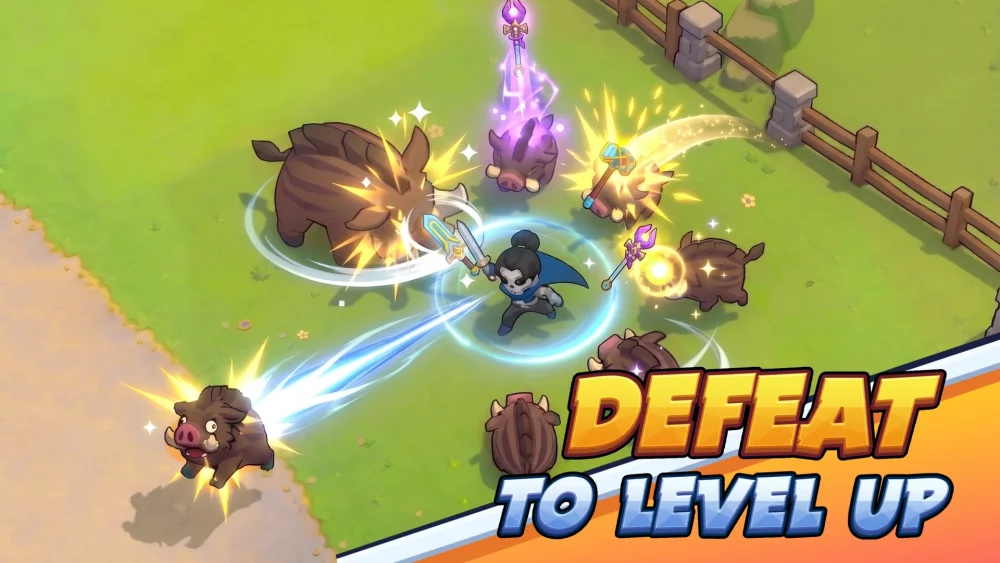
To consistently secure high kill counts in Skull Hero, you must pivot from a defensive, reactive playstyle to one of calculated, relentless aggression. The game’s design rewards players who can manipulate enemy spawns and maintain high damage-per-second (DPS) output across various combat encounters. Reaching the highest kill thresholds requires more than just good aim; it requires an understanding of weapon mechanics, movement rhythm, and the ability to dictate the pace of every battle.
Prioritizing High-Damage Weaponry
In Skull Hero, the efficiency of your run is directly tied to your damage output. To clear mobs before they can swarm you, you need weapons that provide a balance of high fire rate and manageable recoil. Relying on "burst-fire" weapons that force long reloads will leave you vulnerable during high-intensity waves.
When refining your loadout, consider these three pillars of DPS:
- Sustained Fire Rate: Prioritize weapons that allow you to maintain a continuous stream of projectiles. In Skull Hero, the goal is to thin the herd instantly, not to pick off targets one by one.
- Recoil Management: A weapon that deals massive damage but is impossible to control is a liability. Choose rifles that allow for stable tracking, as you will often be engaging multiple moving targets simultaneously.
- Capacity and Reload Speed: High-kill runs often result in "dry-fire" moments if your magazine is too small. Favor weapons with larger magazines or fast reload perks to keep your momentum high.
Mastering Aggressive Positioning
Aggressive positioning is the secret to finding more targets. Many players fall into the trap of holding a single choke point, waiting for enemies to come to them. However, in Skull Hero, the best way to inflate your kill count is to hunt the enemy spawns.
By constantly rotating toward the center of combat zones, you force enemies to react to your presence. This keeps the action constant and prevents you from experiencing "dead air" where you are searching for mobs.
- The "Forward Pressure" Rule: Always move toward the next likely spawn point. If you find yourself stationary for more than five seconds, you are losing potential kills.
- Control the Arena: Use your movement to herd mobs into tighter clusters. This allows you to utilize area-of-effect (AoE) damage or pierce shots to take down multiple threats with a single pull of the trigger.
Leveraging Combat Momentum for Scaling
Combat momentum is a hidden mechanic in Skull Hero that rewards players for chaining encounters. When you clear a wave, do not pause to scan the area for too long. The faster you engage the next group, the more likely you are to trigger optimal spawn density.
The Momentum Loop:
- Engage: Clear the current wave with high-DPS fire.
- Reposition: Immediately rotate toward the next spawn indicator.
- Loot/Recover: Only grab essential resources while on the move. Do not stop to organize your inventory mid-fight.
- Repeat: By keeping the combat rhythm tight, you force the game to keep spawning enemies at a higher frequency, which is essential for record-breaking runs.
Balancing Aggression with Risk Management
Aggression without caution leads to premature failure. The trade-off for staying in the thick of the fight is that you will take more damage from peripheral threats.
To maintain a high-kill pace while staying alive:
- Use Cover as a Pivot: Do not treat cover as a place to hide; treat it as a place to reset. Use it to block incoming fire for the two seconds needed for your health or shields to begin regenerating, then immediately push back out.
- Target Prioritization: Always eliminate ranged threats first. They are the primary reason for "unlucky" deaths during high-aggression runs. Once the ranged enemies are gone, you can kite the melee mobs and clear them at your leisure.
- Shield Awareness: If your shield breaks, your priority must shift to evasion immediately. Do not attempt "one last shot" when you are vulnerable. A dead hero earns zero kills.
Optimizing for Late-Game Consistency
As you progress through the stages, the difficulty of enemy waves increases. This is where your loadout decisions from the early game pay off. If you have neglected your weapon upgrades, you will find it impossible to maintain the DPS required to keep up with the scaling health pools of late-game monsters.
Focus on these late-game optimizations:
- Mobility Buffs: As enemy density increases, raw damage is useless if you are pinned down. Prioritize gear that grants movement speed or dash cooldown reductions.
- Crowd Control Skills: In the final stages, having a skill that can stun or slow enemies is invaluable. It allows you to group enemies together, turning a dangerous swarm into a target-rich environment.
- Environmental Awareness: Learn the layout of the maps. Knowing where the traps are located allows you to bait enemies into them, effectively turning the map's own defenses into your weapon.
Common Mistakes to Avoid
Even expert players can sabotage their high-kill runs by falling into common traps:
- Over-Looting: Spending too much time looking at loot menus is the number one killer of momentum. Learn to identify high-tier gear at a glance.
- Ignoring Sound Cues: Skull Hero provides audio cues for incoming enemies. If you play without sound, you are missing out on critical information about where the next wave is spawning.
- Static Aiming: Never stand still while shooting. Develop the habit of "strafing" even when the enemies don't seem to be firing back. This keeps your reflexes sharp and makes you a harder target for stray projectiles.
By mastering these techniques, you will transition from a standard player to a high-kill specialist. Focus on your movement, keep your DPS output consistent, and never let the enemy dictate the pace of the battle. In Skull Hero, the best defense is truly an overwhelming offense.

Free Skull Hero Codes
Current active codes and how to redeem them.

James Brown
James focuses on Android gaming on PC, emulator setup, controls, performance tuning, and practical troubleshooting for longer play sessions.
COMMUNITY
Player Comments
24 players commented on this guide.
Can you add more details about heroes in a future update?
This helped me understand heroes much better.
Good guide for Skull Hero players. The heroes part was useful.
This saved me time in the early game.