
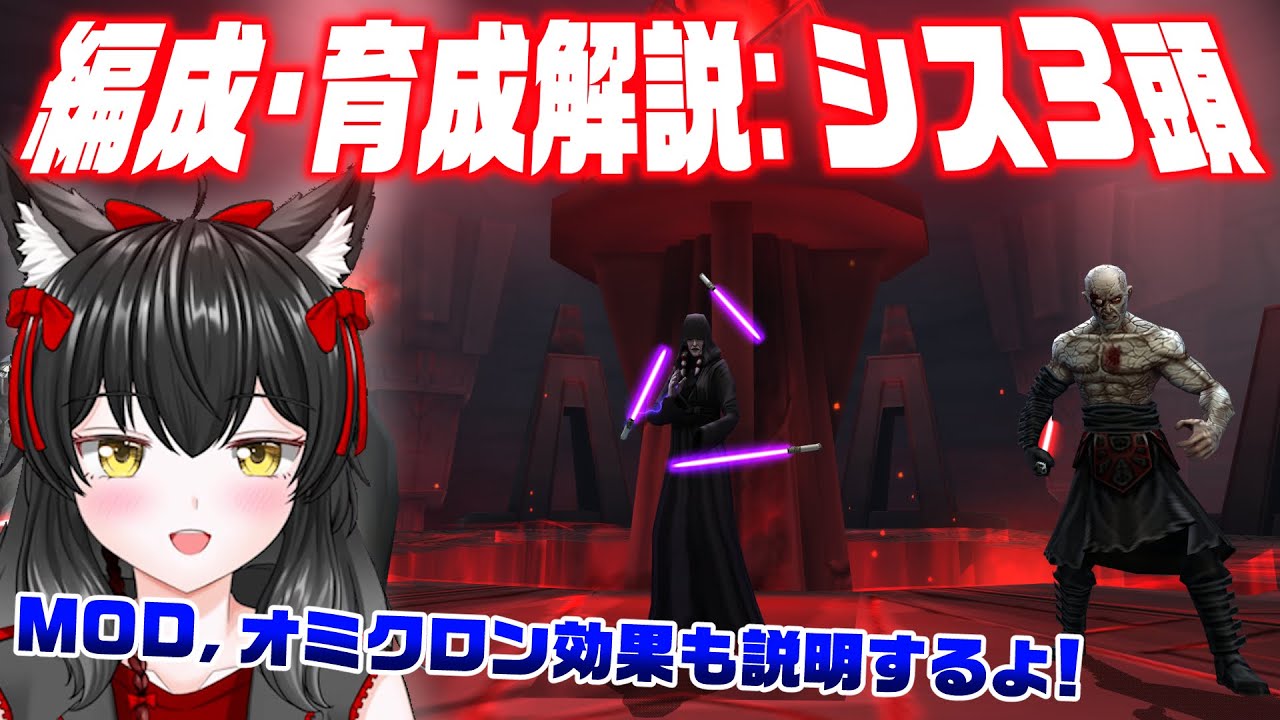
To run the Sith Triumvirate effectively in Star Wars™: Galaxy of Heroes, place Darth Traya in the leader slot alongside Darth Sion and Darth Nihilus, build all three for high durability rather than pure Speed, and reserve Darth Nihilus's Annihilate for the primary opposing threat. In Grand Arena Championship (GAC) formats, apply Traya’s unique Omicron to punish enemy debuff engines and out-of-turn attacks.
Core Mechanics and Role Breakdown
The Triumvirate functions as a reactive attrition squad that penalizes swarming offenses and out-of-turn assist chains.
- Darth Traya (Leader): Her leadership inflicts direct, percent-health damage on enemies whenever they attack out of turn, countering squads like Geonosians and Mon Mothma Rebels. She cleanses all debuffs from Sith allies at the start of their turns in exchange for a percentage of health, which is recovered through Sith life steal against debuffed targets. Her Isolate prevents the targeted unit from gaining buffs, gaining out-of-turn attacks, or utilizing positive passives.
- Darth Sion (Frontline Tank): Inflicts the Pain debuff across enemies. Enemies afflicted with Pain deal reduced damage to Sion while feeding him turn meter whenever they strike him. Cycling Pain charges Held in Hatred, which grants Sion full revive capability, boosted offense, and a complete cooldown reset.
- Darth Nihilus (Executioner): Stacks maximum health via Lord of Hunger as debuffs are applied and enemies fall. Force Drain manipulates enemy cooldowns to delay their special attacks while reducing the cooldown of Annihilate. Annihilate instantly defeats a target, ignores revives, and permanently increases Nihilus's maximum health by the fallen enemy's maximum health.
Modding Priorities and Stat Targets
Community aggregate sites such as SWGOH.gg frequently suggest standard Speed or Critical Damage configurations, but competitive Triumvirate builds prioritize defensive bulk. The team absorbs heavy opening burst damage before seizing control through cooldown increases and instant defeat mechanics.
| Character | Mod Set Configuration | Primary Stat Priorities | Secondary Stat Priorities |
|---|---|---|---|
| Darth Traya | Health (x2) & Defense (x1) or Health (x3) | Health / Protection (Arrow, Triangle, Cross) | Health %, Speed, Defense %, Potency |
| Darth Sion | Defense (x2) & Health (x1) | Defense / Protection (Arrow, Triangle, Cross) | Defense %, Protection %, Potency, Speed |
| Darth Nihilus | Health (x3) or Speed (x1) & Health (x1) | Speed or Health (Arrow), Health % (Cross & Triangle) | Health %, Speed, Protection %, Potency |
- Darth Traya: Requires substantial Health and Defense to survive initial focus fire. Her GAC Omicron scales team damage off debuffs and defensive stats, reducing the necessity of high Speed secondaries relative to raw durability.
- Darth Sion: Requires high Armor and layered Protection. Maximizing defensive stats ensures he survives long enough under heavy fire to trigger Held in Hatred.
- Darth Nihilus: Demands a massive Health pool to withstand early single-target damage until he cycles into Annihilate. Run a Speed arrow if cooldown cycling falls behind, but retain Health % on the Triangle and Cross.
Recommended Fourth and Fifth Teammates
For 5v5 modes like Grand Arena and Territory Wars, select support units that either protect Nihilus during the early turns or provide additional turn manipulation:
- Savage Opress (with Omicron): The standard fifth member in 5v5 GAC. His Omicron provides passive cleanses, self-healing on critical hits, stat ramps, and Overpower instant kills to form an extremely resilient dual-tank frontline.
- Darth Talon: Grants a flat +20 Speed to all Sith allies and brings a Savior mechanic that prevents the early defeat of a core Sith unit, giving Sion and Nihilus the necessary window to stabilize.
- Sith Empire Trooper: Acts as a pre-taunting shield. Use him against high-speed burst compositions to absorb opening damage before Sion establishes Pain.
Turn Order Sequencing
Execute abilities in this order during opening engagements to set up Annihilate efficiently:
- Sion uses Torment: Applies Pain across the enemy team to mitigate incoming damage and accelerate his turn meter.
- Traya uses Isolate: Target the primary enemy damage engine, reviver, or cleanser. Do not waste Isolate on secondary taunting tanks; clear taunts first using Saber Storm or basic attacks.
- Nihilus uses Force Drain: Cast while enemies have Pain. Force Drain requires debuffed targets to reduce the cooldown of Annihilate and increase opposing cooldowns.
- Traya uses Saber Storm: Clears remaining enemy buffs and inflicts Ability Block on priority targets.
- Sion activates Held in Hatred: Use as soon as the ability becomes available to gain revived health protection and stat buffs.
- Nihilus fires Annihilate: Target the primary non-Isolated threat to eliminate revives and secure the advantage.
Target Matchups and Tactical Limits
Deploy the Triumvirate intentionally based on opposing squad mechanics:
Strong Matchups
- Padmé Amidala: Traya's leadership heavily punishes the frequent out-of-turn attacks generated by Padmé squads.
- Geonosians and Clone Squads: Heavy assist frequencies cause these teams to rapidly deplete their own health against Traya's passive damage.
- Inquisitorius: With Traya's GAC Omicron active, Purge applications trigger allied health recovery and defensive scaling.
Matchups to Avoid
- Galactic Legends: High-relic GL lineups like Supreme Leader Kylo Ren and Rey possess raw damage scaling that standard Triumvirate defensive pools cannot survive without dedicated counters.
- High-Tenacity Bounty Hunters: Squads that resist Sion's Pain debuffs delay Nihilus's Force Drain cooldown cycling, leaving him vulnerable to burst executions.
- Turn Meter Train Imperial Troopers: High-speed Veers and Piett lineups can out-cycle Traya's passive damage if they eliminate Nihilus or Traya before Sion can establish taunt mechanics.

Free Star Wars™: Galaxy of Heroes Codes
Current active codes and how to redeem them.

Emily Johnson
Emily writes practical mobile strategy guides with a focus on resource planning, base progression, and the early decisions that shape a long-term account.
COMMUNITY
Player Comments
47 players commented on this guide.
I tried this today and it worked better than my old setup.
The tips are practical and easy to follow.
This guide answered the exact question I had.
Can you add more details about heroes in a future update?