
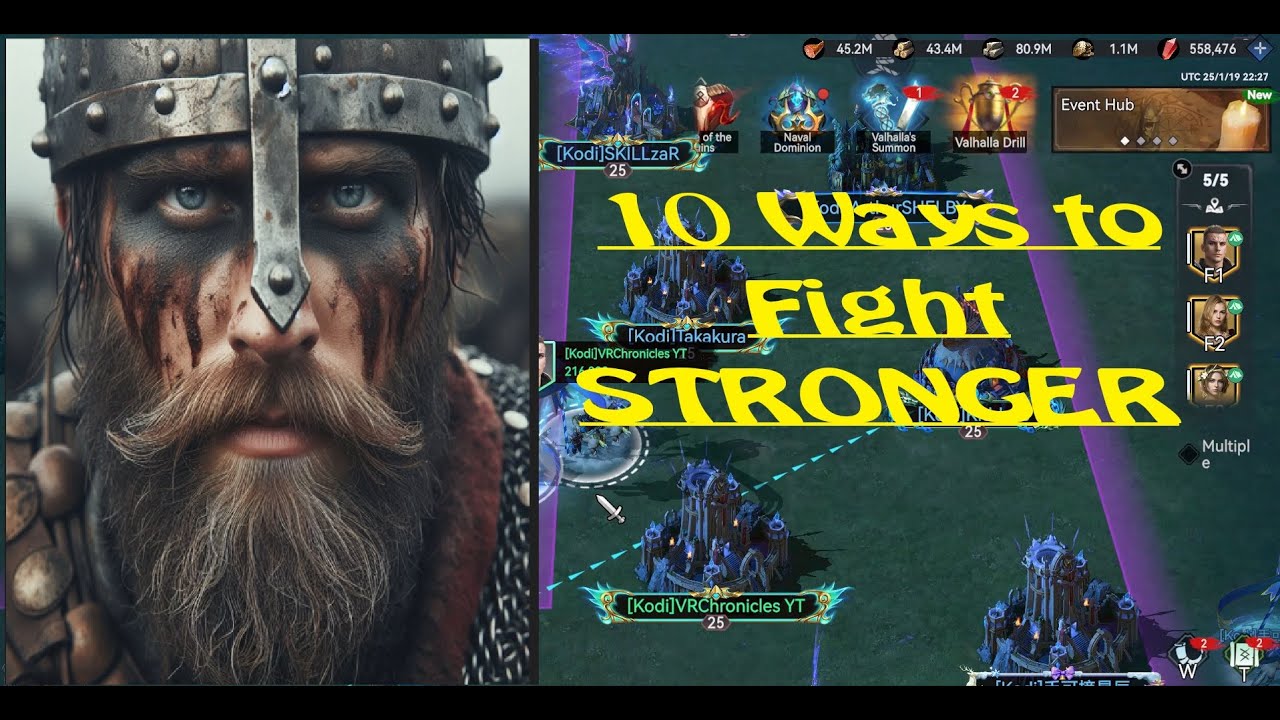
To win open-field fights and minimize hospital losses in Viking Rise, deploy a single optimized march rather than multiple weak squads, match the requested unit type when joining alliance rallies, and fight near allied territory.
Deploy One Elite March to Maximize Stat Concentration
Running one fully optimized march yields far better trades than spreading your army across multiple squads. Spreading your highest-tier units across secondary and tertiary marches dilutes your strength, forcing weaker squads to rely on lower-level commanders with incomplete skill trees and inferior equipment. These split squads take heavy casualties, filling your infirmary quickly and wasting resources on healing.
Consolidating your best units under your primary commander pair concentrates hero buffs, skill synergies, and defense stats. This produces a resilient march capable of withstanding counterattacks and area-of-effect damage.
| Deployment Setup | Stat Concentration | Casualty Risk | Primary Role |
|---|---|---|---|
| Single Elite March | High hero buffs, gear bonuses, and skill procs | Lower; high durability in open-field brawls | Contesting objectives, pushing lines, and brawling |
| Multi-March Split | Diluted across secondary commanders and gear | Extreme; rapidly overflows infirmary space | Resource gathering nodes and low-threat PvE only |
Match Troop Types When Joining Alliance Rallies
Always send the exact troop type requested by the rally leader using your highest tier of soldiers available.
Rally leaders build their commander pairings, talent trees, equipment, and research around a single troop type, such as Infantry, Pikemen, Archers, or Cavalry. Sending off-type units into a specialized rally dilutes those bonuses and weakens passive hero skills.
Follow these rules when reinforcing a rally:
- Send pure unit types: If the lead requests Infantry, fill only with Infantry. Never add Cavalry or Archers.
- Send your highest tier: Mixing low-tier units into an elite rally reduces the overall defensive durability and damage output of the march.
- Stand down if mismatched: If you lack the requested unit type or tier, do not join the rally. Cluttering the rally with improper units lowers combat efficiency for the entire alliance.
Track Infirmary Limits to Prevent Troop Deaths
Monitor your hospital capacity closely during active warfare around passes, shrines, and altars. When your infirmaries reach maximum capacity, any additional wounded soldiers die permanently.
- Pull back at high capacity: If your wounded count approaches the infirmary limit, retreat behind friendly lines immediately and heal troops in batches.
- Fight on alliance territory: Battle within allied boundaries to benefit from territory buffs and shorten your retreat path to safety.
- Keep shields ready: Do not leave your settlement unprotected while fighting in the field unless allied garrison commanders are actively reinforcing your walls.
Maintain Spatial Control and Focus Priority Targets
Surviving open-field combat requires positioning discipline. Units surrounded by multiple enemy squads suffer severe damage penalties, causing even durable marches to fall quickly.
Apply these movement and targeting rules during engagements:
- Anchor to friendly structures: Fight along the edge of allied fortresses and watchtowers so friendly reinforcements can intervene quickly.
- Hold the battle line: Avoid chasing retreating low-health enemies past the main frontline, which exposes your march to counterattacks.
- Disengage early: Path back toward friendly lines as soon as multiple enemy marches target your squad, rather than waiting for critical health.
- Call priority targets: Coordinate with your alliance to focus fire on isolated archers, cavalry flankers, or support squads instead of attacking high-defense frontline units. Collapsing damage onto one squad removes their damage contribution immediately.

Free Viking Rise Codes
Current active codes and how to redeem them.

Emily Johnson
Emily writes practical mobile strategy guides with a focus on resource planning, base progression, and the early decisions that shape a long-term account.
COMMUNITY
Player Comments
155 players commented on this guide.
Can you add more details about strategy in a future update?
I wish I had read this before upgrading the wrong thing.
Good guide for Viking Rise players. The strategy part was useful.
This saved me time in the early game.