
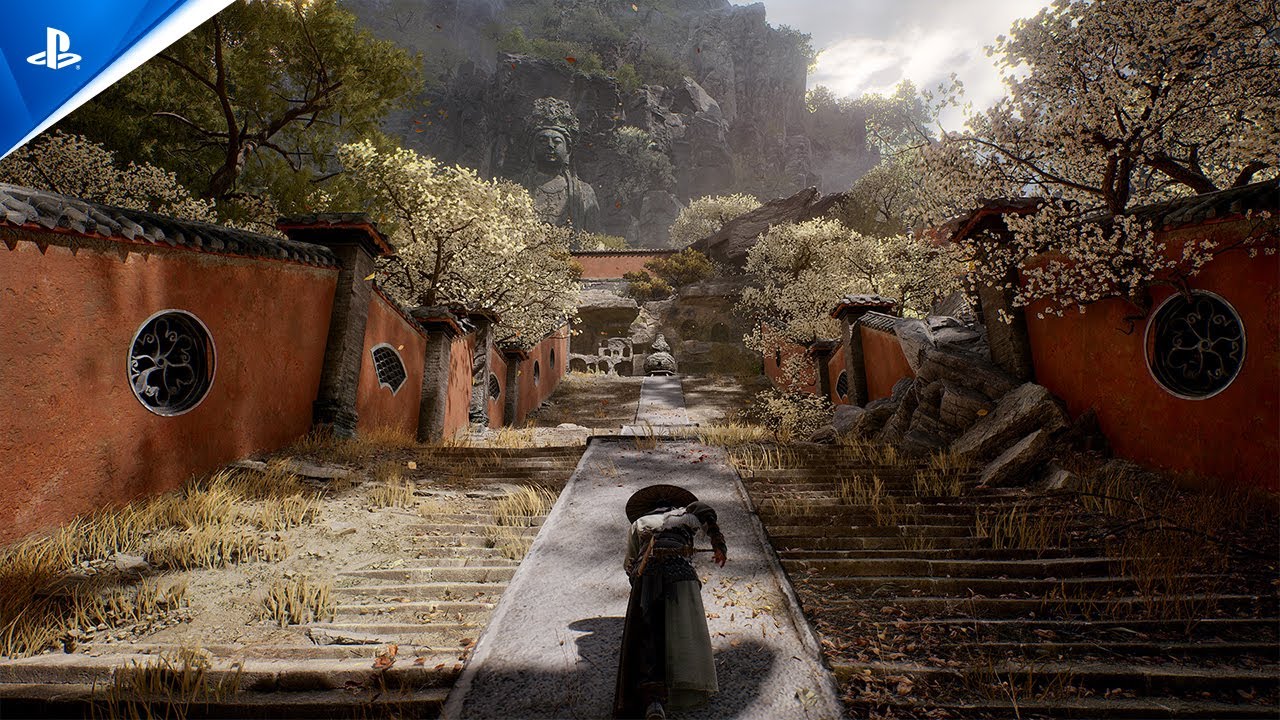
To survive the high-stakes skirmishes in Whisperborne, players must abandon the traditional "tank and spank" playstyle and embrace a fluid, agility-focused approach. In this martial arts ARPG, your survival depends entirely on your ability to read enemy animations, manage your stamina reserves, and utilize the environment to negate numerical disadvantages. Because the game emphasizes precise timing over brute force, understanding the core combat loop is the single most important step for any player looking to master the Jinyiwei arts.
The Core Combat Loop: Why Agility is Your Greatest Asset
In Whisperborne, agility is not merely a movement tool; it is your primary defensive and offensive layer. Unlike traditional action games where blocking is a static state, Whisperborne requires you to maintain constant motion to survive.
When facing groups, standing still is a death sentence. Use short-distance dashes to "orbit" your opponents. By staying on the move, you force the AI to constantly recalculate its positioning, which results in delayed attack wind-ups and missed strikes. Think of your movement as a way to "herd" your enemies—by moving in tight circles, you can pull the most aggressive enemies away from the pack, creating isolated duels that are significantly easier to manage than full-scale skirmishes.
Mastering the Perfect Parry Window
The parry mechanic in Whisperborne is the game’s most rewarding risk-reward system. A successful parry doesn't just negate damage; it shatters the enemy's posture and creates an opening for a devastating follow-up.
Identifying Enemy Tells
Every elite enemy in Whisperborne follows a rhythmic telegraph system. Before a heavy strike, look for these specific indicators:
- The Glint: A distinct visual flash on the enemy’s weapon.
- The Wind-up: A subtle shift in the enemy's center of gravity or a brief hesitation in their animation sequence.
- The Audio Cue: A unique "hiss" or "clash" sound effect that plays just as the enemy commits to a swing.
Pro Tip: Do not panic-press the parry button. If you mistime the input, your character will be left in a vulnerable recovery animation. Practice by engaging lower-level mobs and focusing solely on parrying their first attack without attacking back. Once you can consistently parry the first hit, begin incorporating your own counter-strikes.
Optimizing Skill Chains for Maximum Damage
Combat in Whisperborne flows best when you move from a defensive stance to an offensive burst. The most effective players use "Hit-and-Run" chains to maintain pressure without overextending.
The Standard Engagement Chain
- Initiation: Use a long-range dash attack to close the gap instantly.
- Execution: Link 2–3 light strikes. Do not exceed this unless the enemy is clearly staggered.
- The Pivot: Immediately transition into a side-step or back-dash.
- Observation: Watch the enemy’s posture bar. If it is blinking red, they are vulnerable to a heavy finisher. If not, reset and wait for your next opening.
By keeping your chains short and rhythmic, you avoid the common mistake of being caught in a long attack animation while an elite enemy is winding up a counter-strike.
Stamina Management: The Silent Resource
Your stamina bar is the most precious resource in Whisperborne. Every dash, parry, and heavy attack drains it. If your bar hits zero, you are effectively a sitting duck, unable to dodge out of incoming combos.
- The 50% Rule: Never allow your stamina to dip below 50% during a chaotic fight. This reserve is your "escape buffer," ensuring you have enough energy to perform an emergency dash if you find yourself surrounded.
- Regeneration Windows: When your stamina is low, stop attacking entirely. Use your agility to create distance, circling the perimeter of the arena until your stamina replenishes. In Whisperborne, retreating to reset the pace of the battle is not a sign of weakness; it is a fundamental pillar of expert play.
Exploiting Environmental Awareness
The battlefields in Whisperborne are designed to be used, not just observed. As you fight, pay attention to the terrain:
- Funneling: If you are outnumbered, retreat toward narrow corridors or doorways. This forces enemies to approach you one at a time, turning a 1v5 fight into a series of five 1v1 duels.
- Elevation: Use stairs or ledges to your advantage. Attacking from a higher elevation often forces enemies into a "stumble" animation, giving you a free hit to start your combo.
- Obstacle Blocking: Use large pillars or environmental props to block line-of-sight for ranged attackers, allowing you to focus on the immediate melee threat without taking chip damage from the background.
Common Mistakes to Avoid
- Button Mashing: This is the fastest way to lose in Whisperborne. The game queues inputs; if you mash, you will be trapped in animations, unable to react when an enemy changes their target.
- Target Fixation: New players often lock onto one enemy and ignore the others. Always keep your camera unlocked or rotate it frequently to ensure you can see the entire battlefield.
- Ignoring the Posture Bar: Focus on depleting the enemy's posture rather than their health bar. A broken posture is the key to executing high-damage lethal finishers.
Final Decision Making in Combat
Deciding when to fight and when to flee is the hallmark of a master player. If you find yourself surrounded, or if your stamina is depleted, do not hesitate to break line-of-sight and reset. Whisperborne rewards patience and tactical movement. By treating every encounter as a dance rather than a brawl, you will find that even the most difficult elite duels become manageable. Maintain your rhythm, conserve your energy, and always look for the moment your opponent overextends.

Free Whisperborne Codes
Current active codes and how to redeem them.

Michael Smith
Michael covers live-service games, events, reward systems, and efficient daily routines, turning frequent updates into clear actions for players.
COMMUNITY
Player Comments
132 players commented on this guide.
Can you add more details about strategy in a future update?
This saved me time in the early game.
I wish I had read this before upgrading the wrong thing.
This guide answered the exact question I had.