
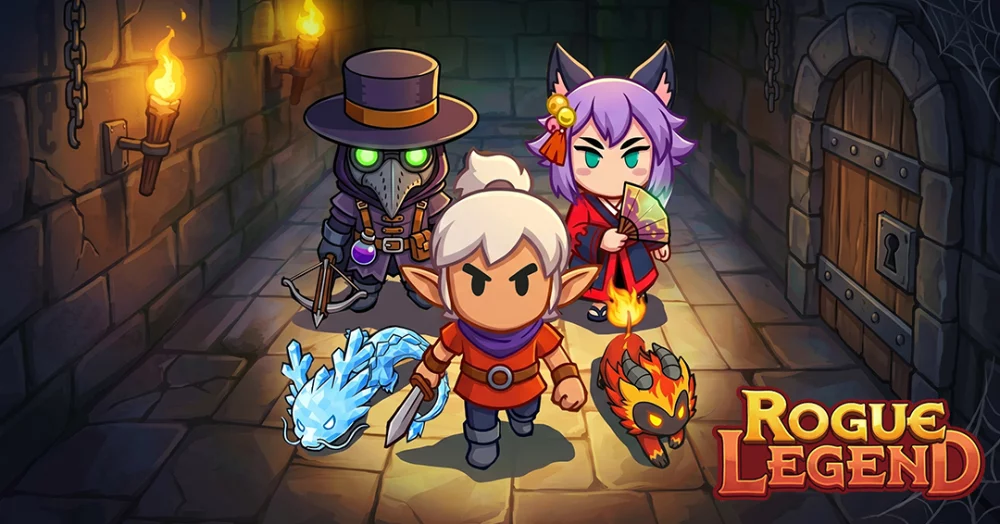
Rogue Legend distinguishes itself as an intense action-roguelike RPG that forces players to balance board-based movement with precise, turn-by-turn combat decisions. Unlike traditional RPGs, success in Rogue Legend isn't just about raw stats; it is about managing resource scarcity, understanding the synergy between your hero’s deck, and knowing exactly when to push for an objective versus when to consolidate your defenses.
To excel in this environment, you must shift your mindset from "power-leveling" to "strategic adaptation." This guide provides the tactical foundation required to navigate the game’s board-based encounters and maximize your progression efficiency.
The Core Mechanics of Board-Based Encounters
At the heart of Rogue Legend is the grid-based encounter system. Every movement choice dictates the difficulty of your next engagement. When navigating the board, keep the following tactical principles in mind:
- Risk vs. Reward Positioning: High-value nodes often place you in unfavorable terrain or proximity to elite enemies. Always assess your current health and deck strength before committing to "Greedy" paths.
- Action Economy: Your hero has a limited pool of actions per turn. Using a movement ability to reposition for a better attack angle is often more valuable than a low-percentage damage strike.
- Environmental Utility: Use the board to your advantage. Many encounters feature terrain that can be used to funnel enemies or break lines of sight. If an enemy has a long-range attack, use obstacles to force them into a melee range where you have the advantage.
Developing Effective Deck Archetypes
Your deck is the primary driver of your success. A common mistake new players make is filling their deck with high-damage cards that lack synergy. Instead, focus on building an archetype that functions as a cohesive unit.
Recommended Early-Game Archetypes:
- The Sustain Tank: Focus on cards that generate block, armor, or passive health regeneration. This archetype is forgiving of mistakes and excels in long, drawn-out boss battles where chip damage is inevitable.
- The Burst Aggro: Prioritize high-damage, low-cooldown cards that allow you to eliminate high-threat targets in a single turn. This is the fastest way to clear early boards but requires careful resource management to avoid being overwhelmed by swarms.
- The Utility/Crowd Control Specialist: Use cards that stun, slow, or knock back enemies. By controlling enemy movement, you effectively negate their ability to deal damage, making this the most consistent archetype for endgame success.
Strategic Boss Fight Tactics
Bosses in Rogue Legend are the primary "skill checks" for your build. If you reach a boss and find your cards ineffective, it is usually a sign that your deck lacks a "win condition"—a specific combo or synergy that allows you to output massive damage or survive massive incoming bursts.
- Phase Tracking: Most bosses rotate through predictable patterns. Dedicate your first two turns of a boss fight to observation rather than all-out aggression. Note when they prime their ultimate ability.
- Cooldown Syncing: Save your most powerful "Finisher" cards for when the boss is vulnerable (e.g., after they use a high-cost ability or enter a stunned state).
- Aggro Management: If the encounter involves minions, don't ignore them. Use your utility cards to keep the board clear so you can focus 100% of your damage output on the boss during their "down" phases.
Character Customization and Progression Logic
Progression in Rogue Legend is not linear. You are constantly balancing permanent upgrades with temporary run-specific power boosts.
The Rule of Three for Upgrades:
When choosing upgrades after an encounter, follow this hierarchy:
- Synergy: Does this card/item make my existing cards stronger? (e.g., a card that draws more cards if I play a specific attack).
- Weakness Mitigation: Does this cover a hole in my build? (e.g., an item that provides life steal if I have low defensive capabilities).
- Raw Power: Is this simply the highest numerical value available? Only choose this if your current deck is already functionally stable.
Common Mistakes to Avoid
Even experienced players fall into traps that shorten their runs. Avoiding these three pitfalls will immediately increase your success rate:
- Over-Drafting: Do not add a card to your deck just because it looks "cool" or "strong." Every card you add reduces the consistency of drawing your core combo pieces. Keep your deck lean.
- Forgetting to Trash: Visit shops frequently to remove weak, basic cards from your deck. A smaller deck size guarantees that your powerful cards appear more frequently.
- Neglecting Hero Stats: Your hero’s base stats are just as important as your cards. Always prioritize equipment that boosts your primary scaling stat (e.g., Strength, Magic, or Agility) to ensure your cards remain viable in later stages.
Advanced Strategies for Late-Game Consistency
As you progress deeper into the game, the difficulty spikes significantly. To survive, you must move beyond basic mechanics and start thinking about "Engine Building."
Engine building involves creating a cycle where your cards pay for themselves. For example, if you have a card that generates energy and another that draws cards, you can theoretically play your entire deck in a single turn. Always look for these "infinite" loops in your card shop drafts. If you identify a potential loop, pivot your entire build to support it.
Furthermore, pay close attention to your Pathing Strategy. Always look two or three nodes ahead on the map. If you see an elite encounter followed by a shop, ensure you save your gold and your health potions for the shop, rather than burning them on the elite fight if you can manage the encounter with basic skills.
Conclusion: Mastering the Rogue Legend Loop
Rogue Legend rewards patience, analytical thinking, and the willingness to discard a failing strategy before it ends your run. By focusing on tight deck construction, understanding the action economy, and prioritizing synergy over raw damage, you can overcome even the most challenging encounters. Remember: every defeat is a data point. Analyze which encounter drained your resources, adjust your deck for the next run, and keep pushing your hero to the next level.

Free Rogue Legend Codes
Current active codes and how to redeem them.

Michael Smith
Michael covers live-service games, events, reward systems, and efficient daily routines, turning frequent updates into clear actions for players.
COMMUNITY
Player Comments
142 players commented on this guide.
This helped me understand heroes much better.
I tried this today and it worked better than my old setup.
This saved me time in the early game.
Can you add more details about heroes in a future update?