
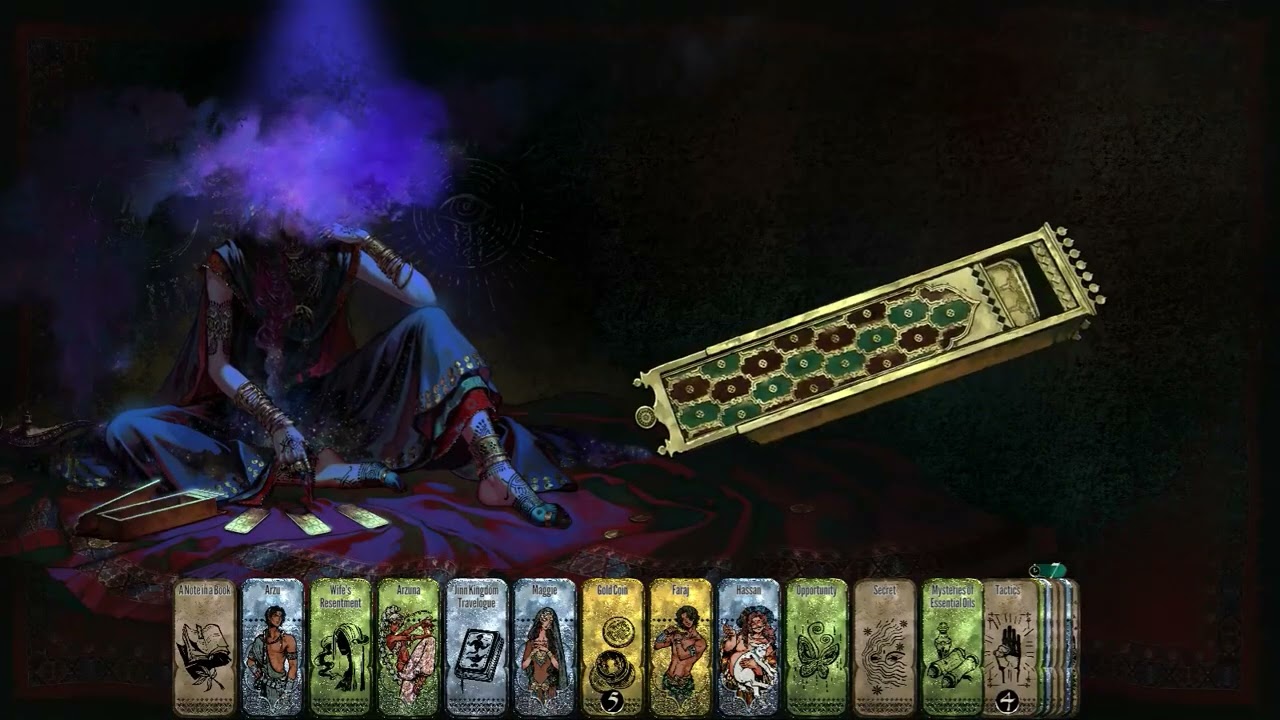
In Sultan's Game, the "Break All Cards" ending is a rare, subversive conclusion that ignores the traditional goal of kingdom survival. To achieve it, you must treat your deck not as a set of tools for prosperity, but as a finite resource to be burned as quickly as possible. This guide details the mechanics of deck depletion, the specific decision-making strategies required to reach the terminal state, and the common pitfalls that keep most players from triggering this unique narrative resolution.
Understanding the Break All Cards Mechanic
The "Break All Cards" ending is a mechanical "crash" of the game’s narrative loop. Sultan's Game is built on a cycle of drawing cards, making choices, and managing kingdom stats. Normally, players attempt to balance these factors to survive for as long as possible. However, the game engine tracks your deck count—the total number of cards remaining in your draw pile.
The "Break All Cards" ending is triggered the moment your deck count hits zero. Unlike a standard "Game Over," which occurs when your health or court favor reaches zero, this ending is a deliberate, player-driven state. By intentionally exhausting your deck, you bypass the standard survival narrative and force the game to reconcile its internal logic, leading to a unique sequence that acknowledges your total abdication of the Sultan’s responsibilities.
The Strategy of Aggressive Consumption
To reach the ending, you must flip your mindset. In a standard run, you look for cards that offer stability, gold, or influence. For this ending, you must prioritize "destructive" choices—options that consume cards without offering replenishment.
1. Identify High-Burn Choices
Every interaction in Sultan's Game has a cost. Look for cards that include:
- Discard Penalties: Any choice that forces you to discard cards from your hand or deck to resolve a narrative conflict is a "high-value" choice.
- Irreversible Sacrifices: Choose events that require you to destroy court assets or burn resources. These choices often move the game state forward while removing cards from the total pool.
- The "No-Win" Path: If an event offers a choice between a "safe" path (which usually draws a card) and a "risky" path (which usually discards or consumes), always pick the risky, destructive path.
2. Avoiding "Draw" Mechanics
The biggest enemy of this ending is the "Draw" mechanic. Many events in the game reward you with extra cards for making "wise" or "diplomatic" choices. Avoid these at all costs. Even if a choice seems beneficial to your current stats, if it adds a card back into your deck, it is delaying your progress. You must strictly avoid any interaction that increases your deck size, as every card added is one more turn you must play before reaching the end.
Managing Resource Trade-offs and Survival
It is important to understand that your Sultan’s stats—Health, Gold, and Court Favor—are largely irrelevant when pursuing the "Break All Cards" ending. Because the game ends the moment the deck is empty, you do not need to worry about the long-term sustainability of your kingdom.
- Accept the Decline: You will likely trigger negative status effects, lose allies, and plummet into poverty. Let it happen. These penalties are often part of the "high-burn" choices that help you reach the end faster.
- Ignore the "Game Over" Threshold: You might be tempted to stabilize your kingdom to avoid a traditional death. Resist this. If your health is low, continue to make choices that burn your remaining deck. Often, the game will allow you to reach the "Break All Cards" ending even while your kingdom is in tatters, provided you hit the zero-deck count before you hit the zero-health count.
Recognizing the Terminal State
As your deck nears depletion, the game will change. You will notice fewer choices appearing on the screen. This is a sign that you are reaching the end of the narrative sequence. The game will often attempt to force you into a "check" or a "decision" that is meant to save your kingdom.
When you have only a few cards left, look for the final, most catastrophic choice available. In Sultan's Game, there is usually a "final act" card that acts as a catalyst. By selecting the most destructive path possible—the one that effectively ends your reign—you are triggering the final deck-consuming event. If you see the deck counter at 1 or 2, look for the choice that seems the most final, and execute it. The screen will transition, and you will see the unique ending sequence.
Common Pitfalls to Avoid
Even experienced players struggle to reach this ending because they fall into the "Survival Mindset." Here are the most common reasons players fail:
- Hoarding Resources: If you are trying to maximize your gold or influence, you are likely drawing more cards than you are burning. This is the opposite of what you need.
- Playing Too Conservatively: If you play as if you want to win, you will draw cards. You must play "recklessly" to win this specific ending.
- Fearing Negative Outcomes: Don't fear the "Bad Ending" or "Game Over" notifications. Your goal is the "Break All Cards" sequence, which is distinct from failing to survive. If you are playing correctly, your kingdom should be failing.
Summary Checklist for Success
To ensure you successfully unlock the ending, follow this logical flow every session:
- Start the Session: Check your current deck count.
- Evaluate Choices: For every card, identify if the choice results in a net gain or loss of cards.
- Execute Burn: Always select the option that results in a net loss.
- Monitor Progress: Ensure the deck count is trending downward. If it holds steady, you are choosing "balanced" options that you must stop picking immediately.
- Trigger the End: Once the deck count hits single digits, select the most dramatic or destructive option to force the final sequence.
By focusing purely on the mechanics of the deck rather than the narrative of the Sultan, you will successfully break the game's loop and achieve this elusive ending. Remember: in Sultan's Game, sometimes the only way to win is to ensure that no cards remain to be played.

Free Sultan's Game Codes
Current active codes and how to redeem them.

Emily Johnson
Emily writes practical mobile strategy guides with a focus on resource planning, base progression, and the early decisions that shape a long-term account.
COMMUNITY
Player Comments
87 players commented on this guide.
This guide answered the exact question I had.
The tips are practical and easy to follow.
I tried this today and it worked better than my old setup.
The explanation is clear, especially for beginners.